
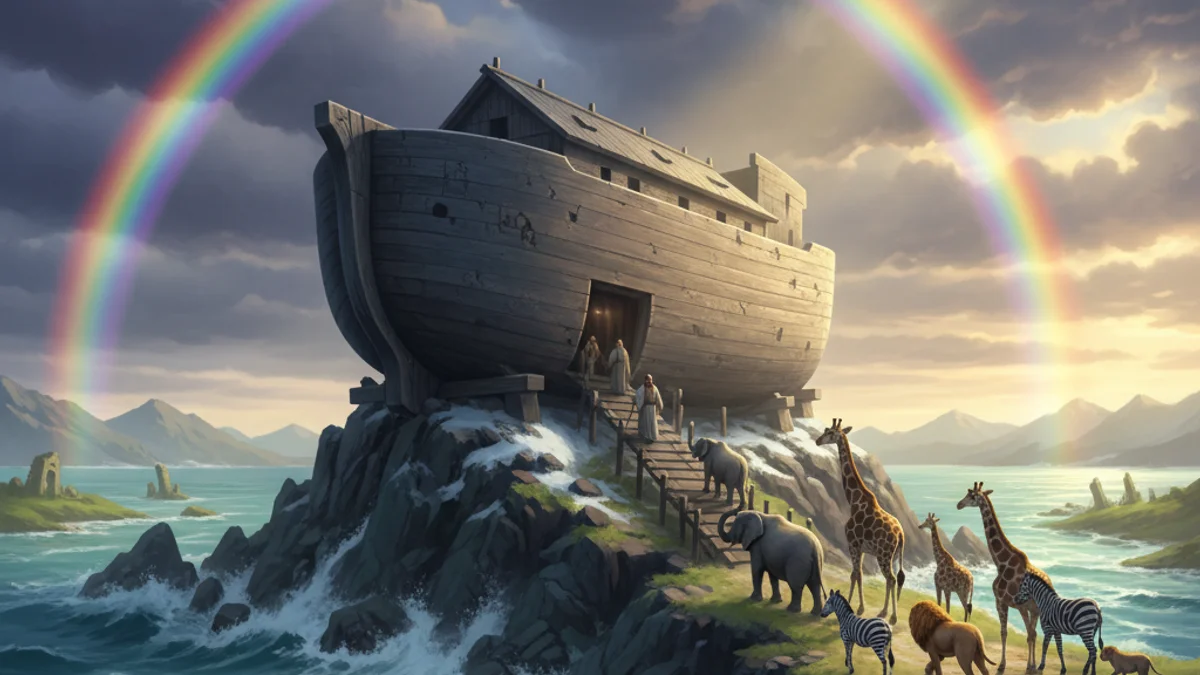
In a world clouded by corruption, Noah stood as a man of integrity. Divine guidance warned him of a great deluge destined to cleanse the earth, instructing him to build a massive wooden ark. For years, Noah labored against the mockery of his neighbors, constructing a vessel of gopher wood and sealing it with pitch. He gathered his family and pairs of every living creature, from the mightiest lions to the smallest insects, ensuring the survival of all species. As the heavens opened, torrential rains fell for forty days and nights, submerging even the highest peaks. Within the ark, life persisted amidst the chaos of the storm. When the waters finally began to recede, Noah sent out a dove which returned with an olive branch, signaling the return of dry land. Stepping onto the rocky slopes of Mount Ararat, Noah offered thanks, and a vibrant rainbow arched across the sky—a celestial promise that such a flood would never again consume the world.
Faithfulness and preparation in the face of adversity lead to survival and the hope of a new beginning.
Questions about this story
What is the moral of Noah's Ark (Extended)?
The story emphasizes that righteousness and obedience to a higher calling can provide safety through life's greatest storms. It also highlights the theme of a fresh start and the preservation of life through preparation.
How long did it rain during the Great Flood?
According to the traditional narrative, it rained for forty days and forty nights. This period represents a time of complete transformation and cleansing of the earth's surface.
What bird did Noah send out to find land?
Noah first sent out a raven to scout the area. Later, he sent a dove, which eventually returned with a freshly plucked olive leaf, signaling that land was once again habitable.
Where did Noah's Ark land after the flood?
The ark is said to have come to rest on the mountains of Ararat. This location is traditionally identified with the high peaks in modern-day eastern Turkey.
Advertisement
Good night.
