
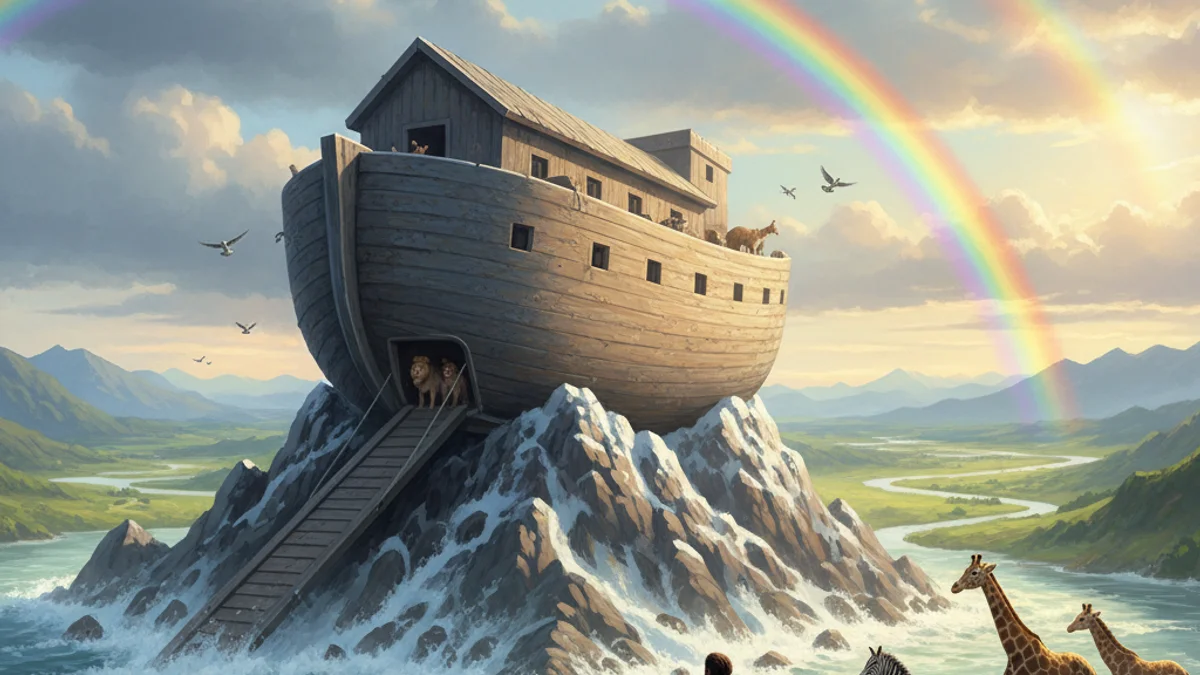
In a generation that had turned toward corruption and violence, Noah alone remained a righteous man. Seeing the earth filled with lawlessness, God decided to bring a great flood to cleanse the world but commanded Noah to build a massive ark of gopher wood. For years, Noah worked on the vessel, enduring the mockery of his neighbors as he followed divine instructions precisely. When the time came, Noah gathered his family and pairs of every animal on earth into the sanctuary. The windows of heaven opened, and the fountains of the deep burst forth, raining for forty days and forty nights until the highest mountains were submerged. For months, the ark drifted on a world of water until a wind blew and the depths receded. Noah sent out a raven and then a dove; when the dove returned with a fresh olive branch, he knew life had returned to the soil. Stepping onto dry land at Mount Ararat, Noah built an altar of thanks. In response, God set a shimmering rainbow in the clouds as a sign of an eternal covenant, promising never again to destroy all life by a flood.
Righteousness and faith provide a sanctuary during the storms of life, leading to a promise of renewal and hope.
Questions about this story
What is the moral of Noah's Ark?
The moral is that righteousness and unwavering faith provide a path through chaos. It teaches that even when the world seems lost, one person’s integrity can preserve the future.
Why did God choose Noah to build the ark?
God chose Noah because he was 'blameless in his generation' and walked faithfully with God. While the rest of humanity had turned to violence and corruption, Noah remained a beacon of morality.
How long did the flood last in the story of Noah?
The rain fell for forty days and forty nights, but the waters remained for much longer. Noah and the animals were actually aboard the ark for over a year before the earth was dry enough to exit.
What does the rainbow symbolize in Noah's Ark?
The rainbow serves as a divine sign of a covenant, or a sacred promise. It represents God's commitment to the preservation of life and the assurance that a global flood will never happen again.
Advertisement
Good night.
