
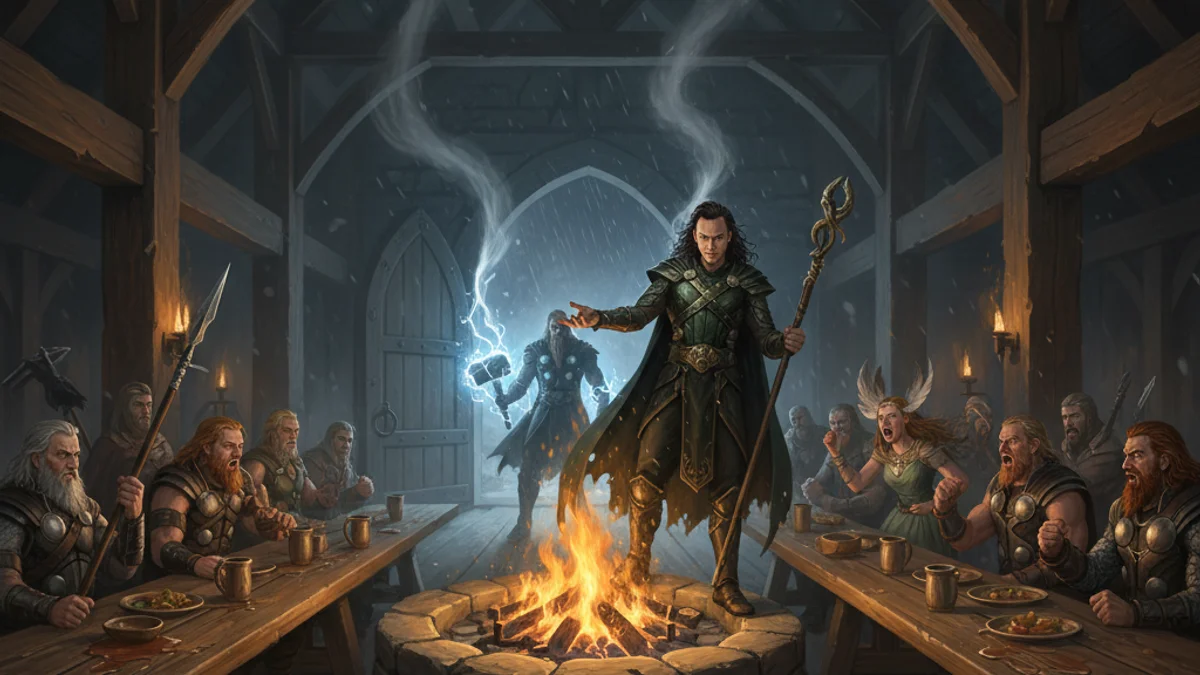
The sea-god Ægir hosted a grand feast for the Aesir, but Loki was not welcome. Enraged by the praise given to others, Loki slew a servant and was driven out, only to return and demand his right to hospitality through blood-brotherhood with Odin. Once seated, he unleashed a torrent of 'flyting'—ritualized insults—against every deity present. He mocked Odin’s wanderings, Frigg’s infidelities, and the perceived cowardice of the heroes, weaving uncomfortable truths with malicious intent. The hall fell into a stunned silence as the trickster exposed the gods' deepest shames. The verbal onslaught only ceased when Thor arrived, thunderous and wielding Mjölnir. Facing the hammer's certain wrath, Loki finally fled, but the damage to the gods' dignity was already done, marking a final fracture in the peace of the Aesir before Ragnarok.
Malicious honesty used purely to hurt others is a form of betrayal that eventually leads to total isolation and ruin.
Questions about this story
What is the moral of Loki's Flyting?
The story teaches that truth spoken with malice can be just as destructive as a lie. It warns that bridge-burning and public shaming often lead to the speaker's own downfall and isolation.
What does the term 'flyting' mean?
Flyting was a traditional Norse and Germanic practice of exchanging ritualized, poetic insults. It functioned as both entertainment and a way to demonstrate wit and social standing during feasts.
Why was Loki so angry at the gods?
Loki was jealous of the praise given to Ægir's servants and felt excluded from the divine inner circle. His resentment fueled a desire to humiliate the Aesir by revealing their secret sins.
How does Thor stop Loki's insults?
Unlike the other gods who tried to argue or reason with Loki, Thor used the threat of physical force. He arrived late to the feast and promised to crush Loki with his hammer if he did not remain silent.
Advertisement
Good night.
