
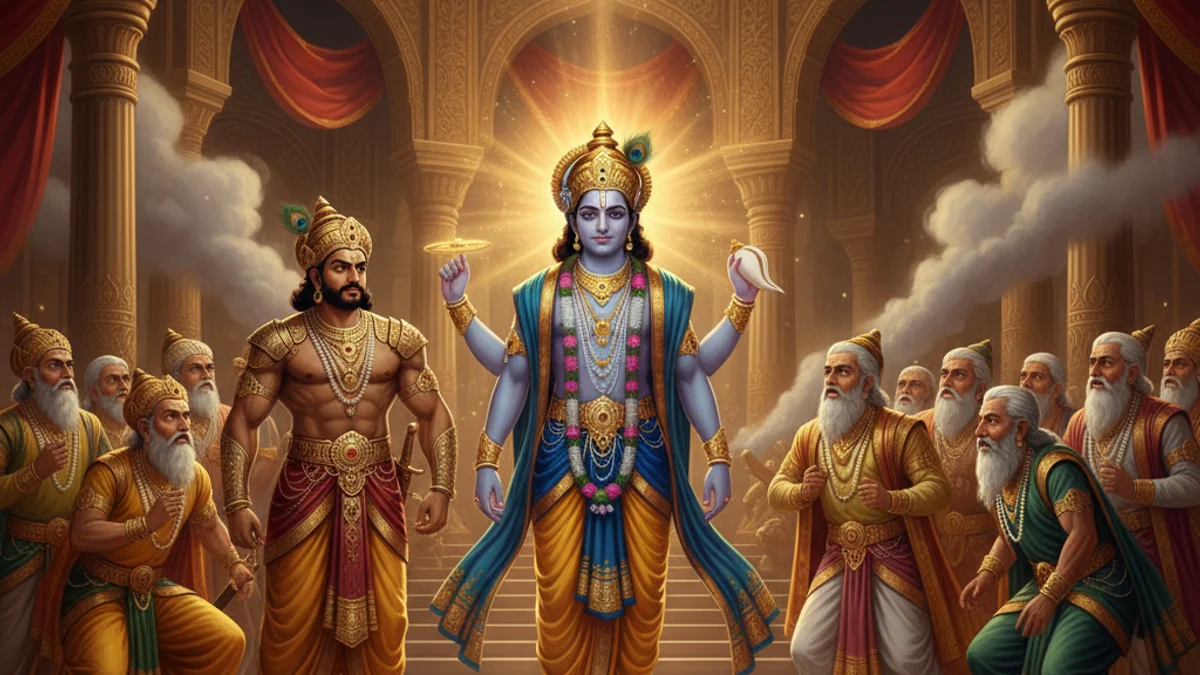
As the shadow of war loomed over the Kurukshetra plains, Lord Krishna embarked on a final diplomatic journey to Hastinapur. Acting as the envoy for the Pandavas, his goal was to avert a catastrophic conflict that would destroy dynasties. In the royal court of King Dhritarashtra, Krishna pleaded for justice, asking only for five villages for the five Pandava brothers to ensure peace. Despite the wise counsel of Vidura and Bhishma, the arrogant Prince Duryodhana refused, declaring he would not give as much land as the point of a needle. In a fit of hubris, Duryodhana even attempted to arrest the divine messenger. Krishna laughed, his form expanding into the blinding, cosmic Vishwaroopam, revealing the entire universe within himself. Terrified and humbled, the court realized they were dealing with the Supreme Being, yet Duryodhana’s ego remained unshaken. The mission failed, proving that when peace is rejected by the wicked, war becomes the only path to restore Dharma.
Peace should be sought with every effort, but when diplomacy is met with stubborn injustice, one must stand for righteousness.
Questions about this story
What is the moral of Krishna's Peace Mission?
It teaches that peace is the highest virtue, but it cannot be achieved at the cost of justice. When all diplomatic avenues for Dharma are exhausted, conflict may become an inevitable duty.
What did Krishna ask for during his peace mission?
Krishna asked for just five villages—one for each Pandava brother—to avoid a total war. This modest request was intended to show the Pandavas' willingness to compromise for the sake of peace.
Why did Duryodhana refuse Krishna's peace proposal?
Duryodhana was blinded by greed and ego. He believed that the Pandavas had no right to the kingdom and refused to grant even a needle-point of territory, despite the warnings of his elders.
What happened when Duryodhana tried to arrest Krishna?
When Duryodhana attempted to capture him, Krishna revealed his Vishwaroopam, or universal form. The court saw the entire cosmos within him, proving his divinity and the futility of trying to bind God.
Advertisement
Good night.
