
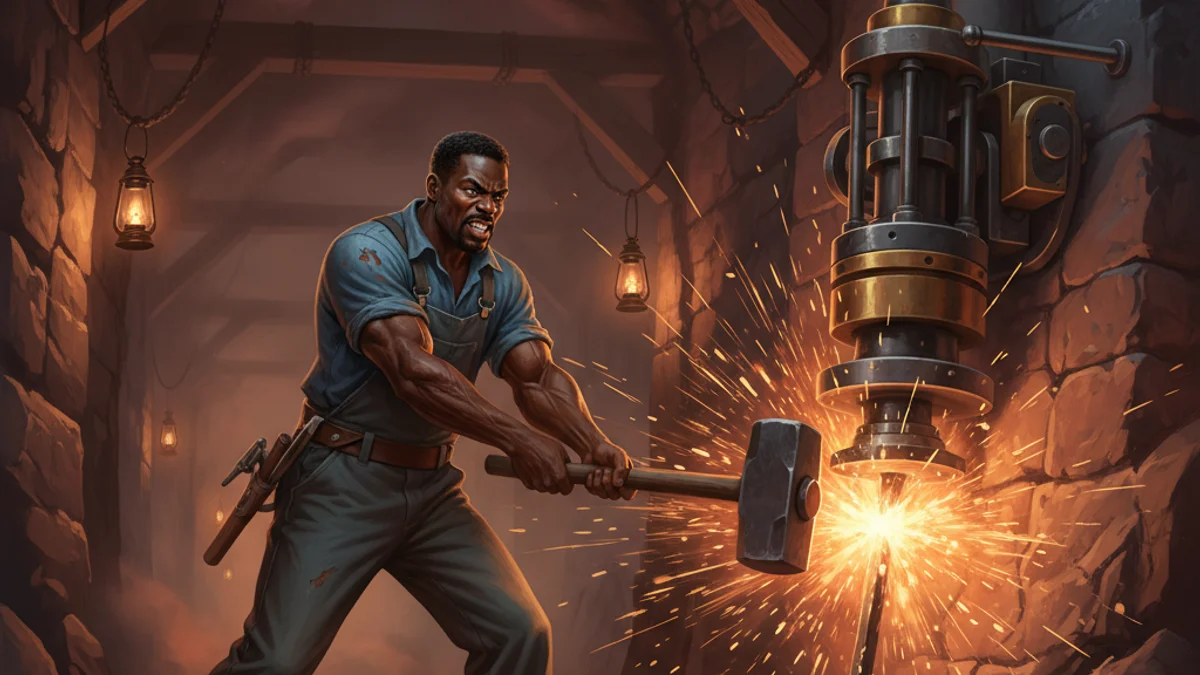
John Henry was born with a hammer in his hand and a spirit as vast as the mountains. As the strongest steel-driving man on the Chesapeake & Ohio Railway, he was a legend among the workers of the Big Bend Tunnel. When a salesman arrived with a steam-powered drill, boasting it could outwork any man alive, the Captain accepted the challenge. John Henry stepped forward to defend the dignity of his fellow laborers. With a twelve-pound hammer in each hand, he swung with a rhythm that shook the earth, his muscles glistening under the lantern light. For hours, the man and the machine battled in the dark heart of the mountain. When the dust finally settled, John Henry had driven fifteen feet while the steam drill had managed only nine. The workers cheered, but the victory came at a heavy price. John Henry, having pushed his body beyond its limits, collapsed and died with his hammer still clutched in his hand, a hero who proved that the human heart is more powerful than any machine.
The human spirit possesses an inherent dignity and strength that cannot be replicated by machinery, though progress often comes with a heavy sacrifice.
Questions about this story
What is the moral of John Henry the Steel Driver?
The story highlights the dignity of hard work and the triumph of the human spirit over dehumanizing technology. it shows that a person's worth and determination are irreplaceable, even in the face of industrial progress.
Was John Henry a real person?
Many historians believe the legend is based on a real person, likely a convict laborer named John William Henry who worked on the Big Bend Tunnel in the 1870s. While the race may be folklore, the person likely existed.
How did John Henry die in the legend?
In the most common versions of the tale, John Henry's heart bursts from the physical strain of outworking the steam drill. He dies immediately after winning the contest, symbolizing the ultimate sacrifice for human labor.
What does the steam drill represent?
The steam drill represents the Industrial Revolution and the replacement of human skill with automated machines. It symbolizes the threat to the livelihoods and the humanity of the working class during the late 19th century.
Advertisement

Good night.
