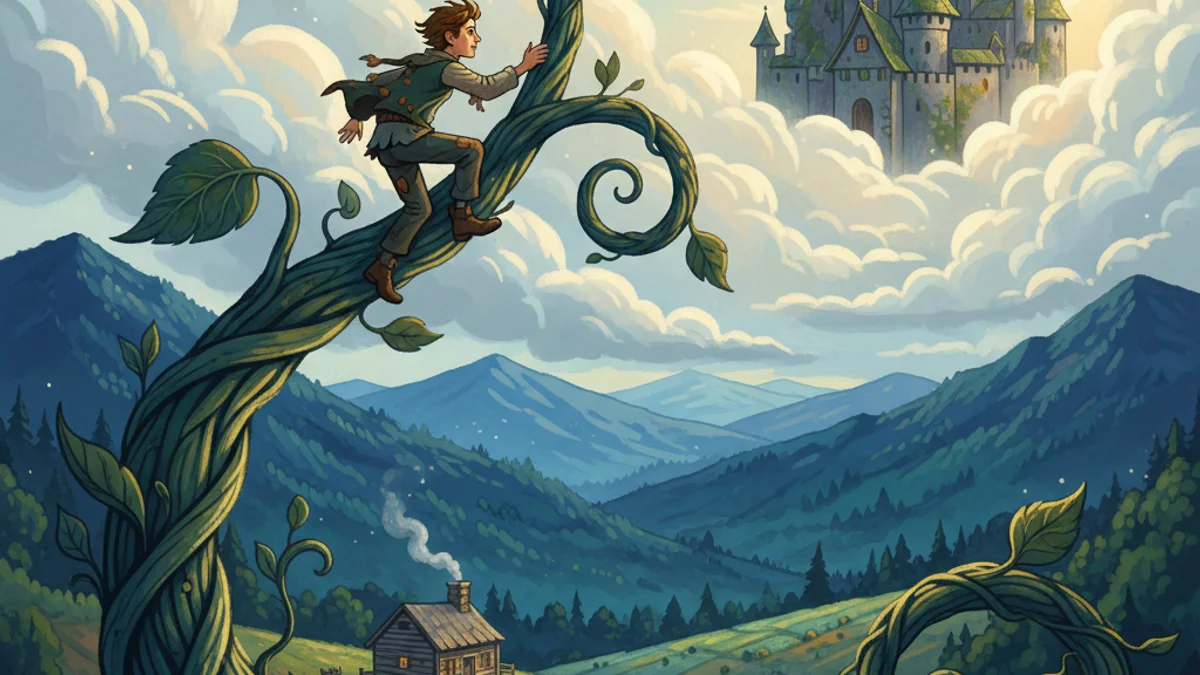
High in the Appalachian Mountains, Jack and his mother were starving and down to their last crust of bread. Jack set out to sell their old cow but met a stranger who traded him a handful of magic beans for her. His mother, heartbroken and angry, threw the beans out the window. By morning, a colossal bean tree had grown until its top was lost in the clouds. Jack climbed the vine for hours until he reached a giant's house in the sky. With the help of the giant's wife, Jack hid in a butter churn and waited. He eventually made off with a bag of gold, a hen that laid golden eggs, and a singing harp. The giant gave chase, his footsteps shaking the mountain. Jack scrambled down and chopped the tree with his axe, sending the giant crashing down. With the giant gone, Jack and his mother never went hungry again.
Fortune favors the bold and the resourceful, especially those who can think on their feet in the face of overwhelming odds.
Questions about this story
What is the moral of Jack and the Bean Tree?
The story teaches that bravery and quick thinking can help overcome seemingly impossible obstacles. It also highlights how taking a risk can lead to great rewards for one's family.
How is this different from Jack and the Beanstalk?
The Appalachian 'Bean Tree' version uses regional dialect and settings specific to the American South. Jack is portrayed as a clever 'trickster' hero typical of mountain lore.
Is Jack considered a hero in this story?
In Appalachian folklore, Jack is a trickster hero who uses his wits to survive. While he steals from the giant, he is seen as a champion of the poor against a greedy oppressor.
What does the giant represent in Appalachian tales?
The giant often represents the overwhelming forces of nature or social inequality. Defeating the giant symbolizes reclaiming power and securing a better life through ingenuity.
Advertisement


Good night.
