
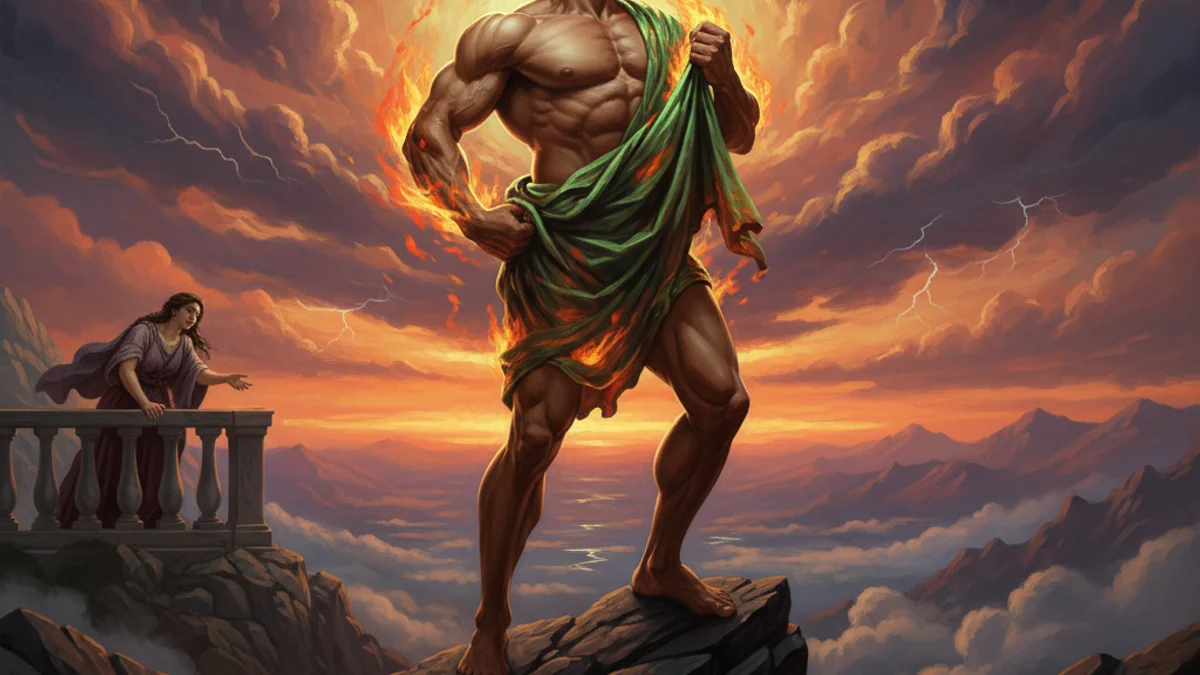
Hercules, the greatest of heroes, won the hand of Princess Deianira after wrestling the river-god Achelous. While traveling to Tiryns, they reached the swollen river Euenos. The centaur Nessus offered to carry Deianira across while Hercules swam. Mid-river, Nessus attempted to abduct her. Hearing her screams, Hercules shot the centaur with an arrow dipped in the lethal venom of the Lernaean Hydra. As he lay dying, the vengeful Nessus told Deianira his blood was a powerful love charm that would ensure Hercules’ eternal fidelity. Years later, fearing Hercules had fallen for another, Deianira soaked a tunic in the preserved blood and sent it to him. Upon wearing it, the Hydra’s venom burned Hercules’ flesh. Realizing her fatal mistake, Deianira took her own life in despair. Hercules, unable to die due to his divine strength but in excruciating pain, built his own funeral pyre. As his mortal half burned away, Zeus brought his immortal soul to Olympus to live among the gods.
Blind jealousy and misplaced trust in an enemy's words can destroy even the strongest of bonds.
Questions about this story
What is the moral of Hercules and Deianira?
The story teaches that jealousy is a destructive force that clouds judgment. It also warns that advice from a defeated enemy should never be trusted, regardless of how helpful it seems.
How did Hercules die in the story?
Hercules died because of the Tunic of Nessus, which was soaked in blood poisoned by the Hydra's venom. The pain was so intense that he built a funeral pyre to end his mortal suffering.
Who was Nessus in Greek mythology?
Nessus was a centaur who acted as a ferryman. He was killed by Hercules for trying to kidnap Deianira, but he got his revenge by tricking her into using his toxic blood as a love potion.
Why did Deianira poison Hercules?
Deianira did not intend to kill Hercules; she was trying to win back his affection. She believed the centaur's lie that his blood would act as a charm to keep Hercules faithful to her.
Advertisement

Good night.
