
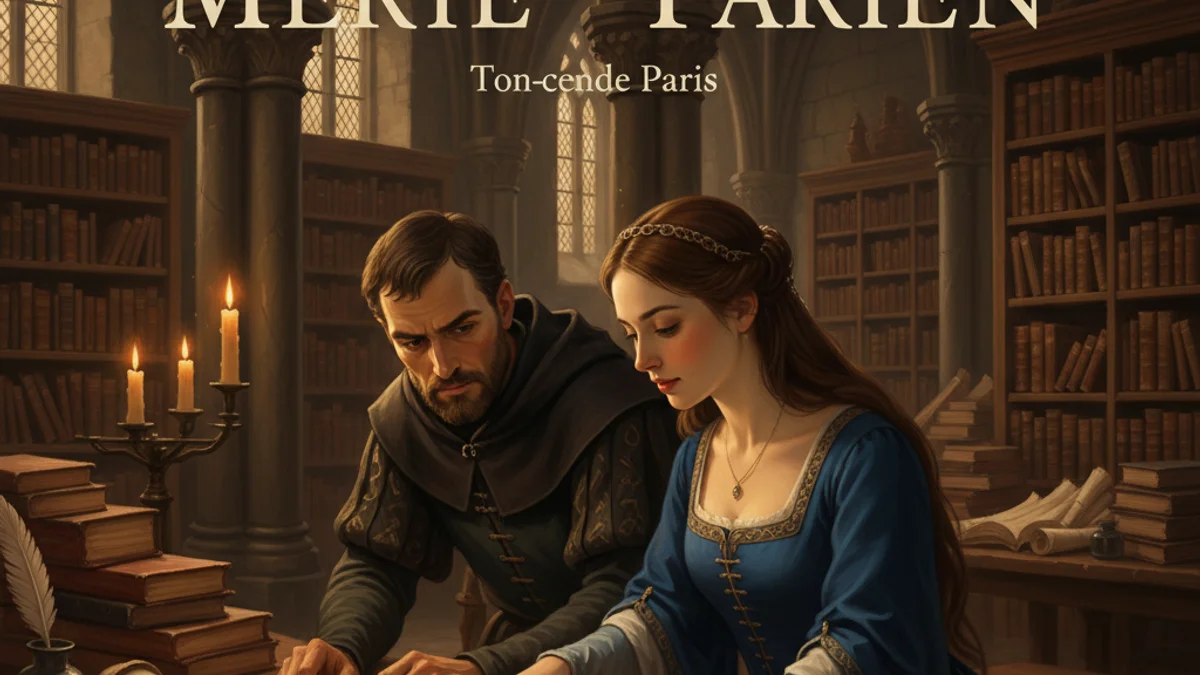
In the vibrant intellectual heart of 12th-century Paris, Peter Abelard was a renowned philosopher and teacher whose brilliance drew students from across Europe. Among them was Heloise, a young woman of extraordinary intellect and grace, living under the care of her uncle, Canon Fulbert. Hired as her tutor, Abelard soon found that their lessons in philosophy drifted into the deeper language of the heart. Their secret romance blossomed into a passionate affair, leading to a clandestine marriage and the birth of a son. However, when Fulbert discovered the union, he felt his honor was betrayed. In a fit of vengeful rage, he sent men to break into Abelard's room and brutally castrate him. Devastated and humiliated, Abelard sought refuge in a monastery and insisted that Heloise take her vows as a nun. Though separated by stone walls and religious orders for the rest of their lives, their connection remained unbroken. They exchanged a series of profound letters that explored the complexities of love, faith, and human suffering. Their intellectual and emotional bond endured until death, proving that while bodies may be broken and lives separated, a union of souls remains eternal.
True love is a union of the spirit and intellect that can endure physical separation, social disgrace, and the passage of time.
Questions about this story
What is the moral of Heloise and Abelard?
The story teaches that true love transcends the physical realm. Despite suffering and permanent separation, their intellectual and spiritual connection remained their greatest strength.
Who were Heloise and Abelard in real life?
They were historical figures in 12th-century France; Abelard was a famous scholastic philosopher, and Heloise was a brilliant scholar and later an influential abbess.
Why did their relationship end in tragedy?
Their secret marriage angered Heloise's uncle, Fulbert, who ordered a violent physical attack on Abelard. This led Abelard to enter a monastery and Heloise to enter a convent.
Why are their letters so famous?
Their correspondence is considered a masterpiece of medieval literature. The letters provide a rare, deeply personal look into the conflict between human passion and religious devotion.
Advertisement
Good night.
