
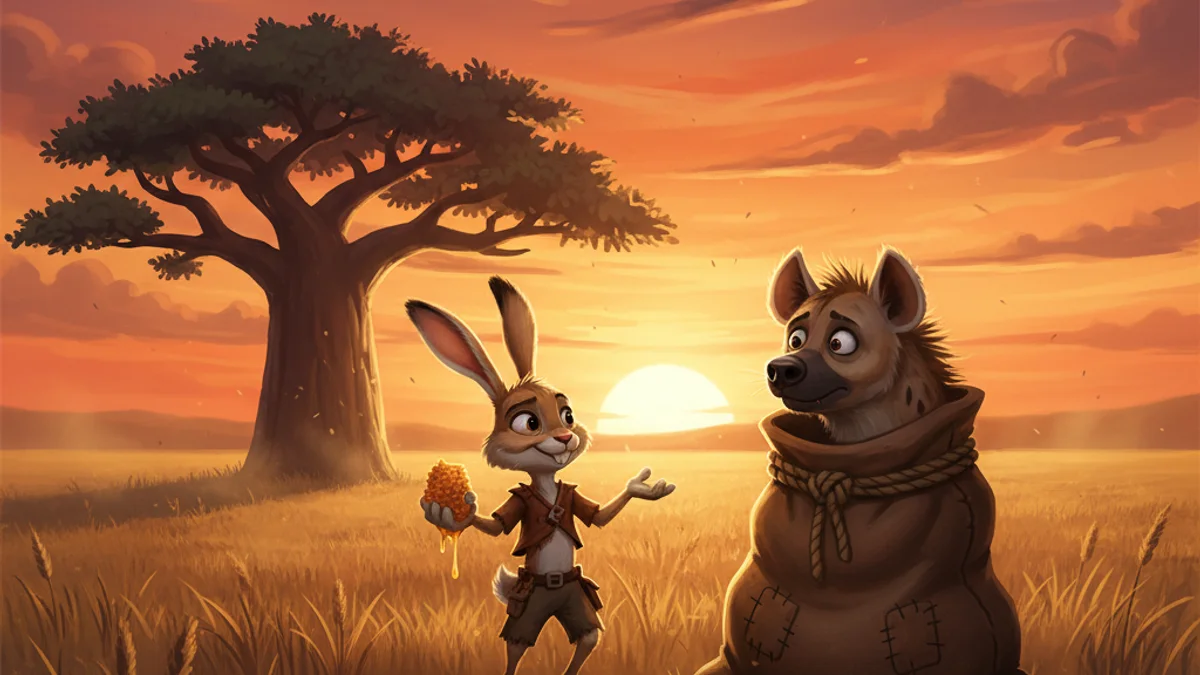
During a season of great hunger, Hare and Hyena agreed to hunt together. They eventually found a large pot of honey hidden in the hollow of a baobab tree. Being the smaller of the two, Hare climbed inside to retrieve the prize. To keep the bounty for himself, Hare looked at the rising red sun and shouted, 'Hyena, look! A great fire is coming to burn the plains! You must hide!' Terrified, the greedy Hyena begged for help. Hare told him to crawl into a large leather sack to stay safe. Once Hyena was zipped inside, Hare tied the bag to a high branch and enjoyed the honey at his leisure. When Hyena finally realized there was no fire, Hare was long gone, leaving the gluttonous predator hungry and humiliated. Through his quick thinking, Hare proved that a sharp mind is the best defense against a greedy neighbor.
Greed makes one easy to deceive, and intelligence is a more powerful tool than physical strength.
Questions about this story
What is the moral of Hare and the Hyena?
The moral of the story is that greed and gluttony often lead to one's own downfall. It also illustrates that a smaller, weaker individual can overcome a larger opponent through the use of wit and intelligence.
Who is the trickster in African folklore?
In East and Southern African folklore, the Hare is the ultimate trickster figure. He is a clever character who uses his brain to survive against much larger and more dangerous predators.
Why does Hare always outsmart Hyena?
Hare outsmarts Hyena because Hyena is typically depicted as being blinded by his own greed and belly. This lack of foresight makes him the perfect target for Hare's elaborate ruses and quick thinking.
What are the origins of the Hare and Hyena stories?
These stories originate from the oral traditions of various Bantu-speaking peoples across the African continent. They were used as educational tools to teach children about social dynamics and morality.
Advertisement

Good night.