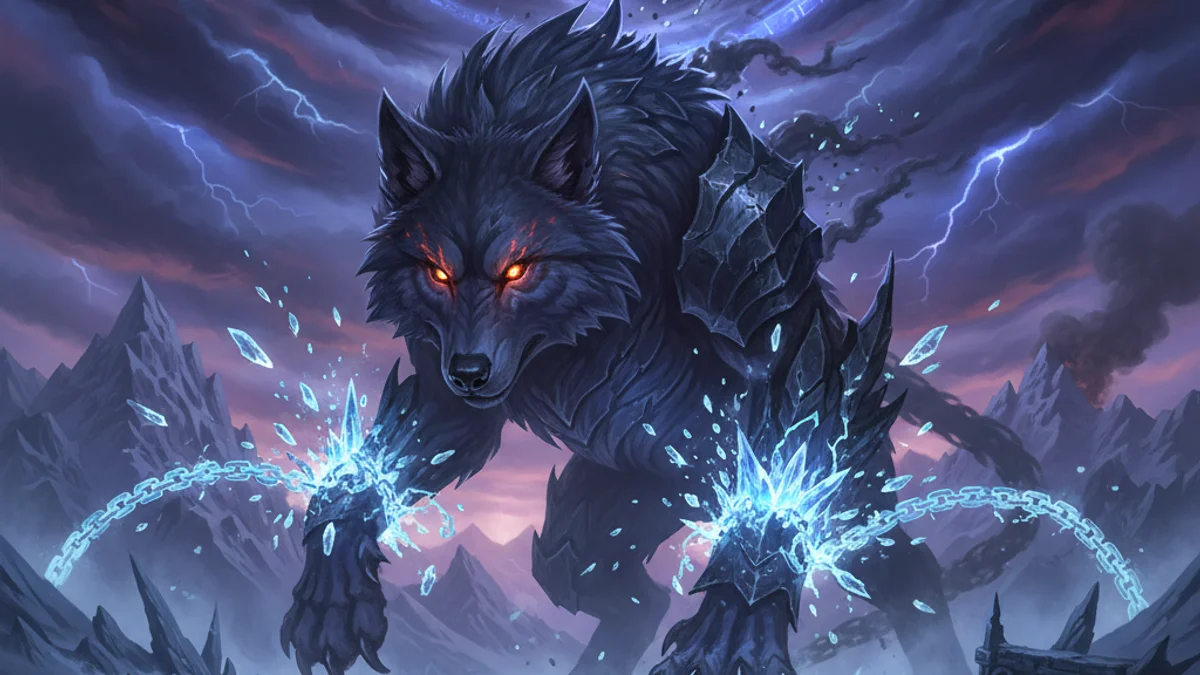
For eons, the monstrous wolf Fenrir remained bound by the magical ribbon Gleipnir, a tether forged by dwarves from the impossible. But as the Fimbulwinter gripped the realms in an endless frost, the foundations of the world began to crack. With a roar that shook the nine realms, Fenrir strained against his invisible prison. The ribbon, once unbreakable, snapped like dry parchment. His jaws, which reached from earth to heaven, gaped wide as he sought his long-denied vengeance. Beside his father Loki and the giants of the frost, the great wolf marched toward the field of Vígríðr. The prophecies of the Völva were coming to fruition; the bound beast was loose, and the twilight of the gods had finally arrived. The breaking of Fenrir's chains signaled that the end was no longer a shadow, but a terrifying reality.
Fate cannot be avoided by force or deceit; the very actions taken to prevent a catastrophe often ensure its occurrence.
Questions about this story
What is the moral of Fenrir Breaks Free?
The moral is that fate is inevitable and attempting to suppress a problem through fear and restraint can lead to a more violent eruption later. It reflects the Norse belief that destiny is fixed and cannot be escaped.
What chain was used to bind Fenrir initially?
Fenrir was bound by Gleipnir, a thin, silk-like ribbon made by dwarves from six impossible ingredients: the sound of a cat's footfall, the beard of a woman, the roots of a mountain, the sinews of a bear, the breath of a fish, and the spittle of a bird.
Who sacrificed a hand to bind Fenrir?
The god Tyr sacrificed his right hand. He placed it in Fenrir's mouth as a pledge of good faith while the gods bound the wolf, knowing he would lose it once Fenrir realized he was truly trapped.
How does Fenrir die in Norse mythology?
After Fenrir swallows Odin during the battle of Ragnarok, Odin's son Vidar kills the wolf. Vidar steps on Fenrir's lower jaw with a massive leather boot and rips the wolf's jaws asunder.
Advertisement
Good night.
