
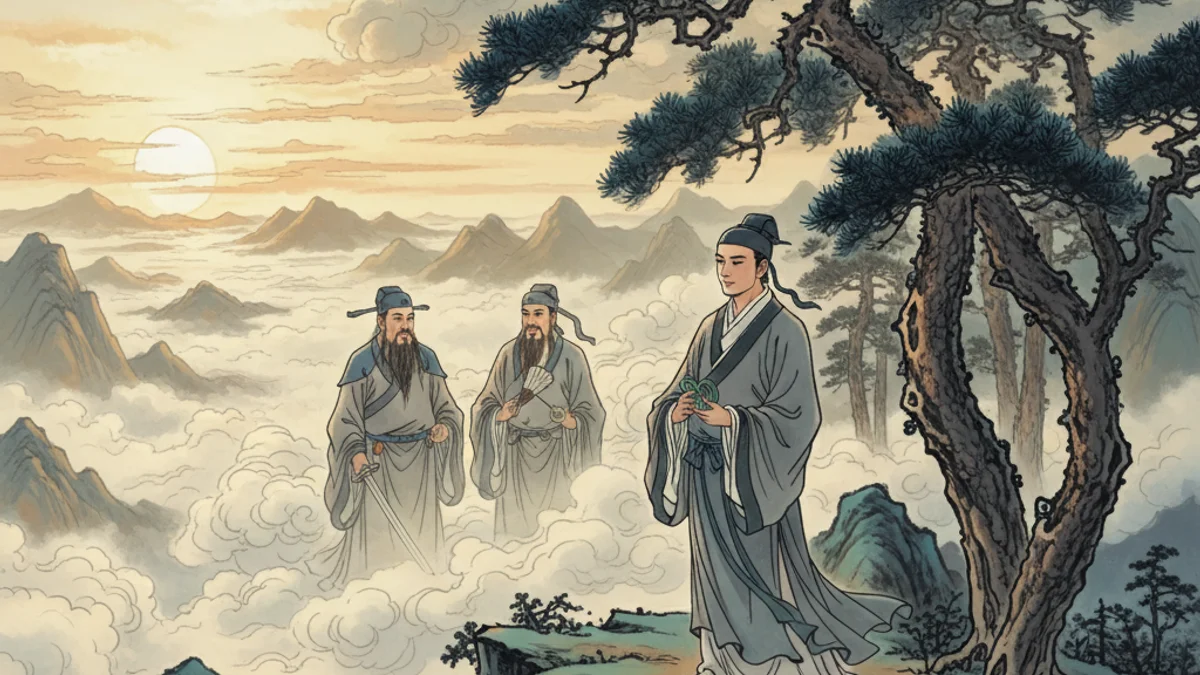
Cao Guojiu was a nobleman of the Song Dynasty and the brother of an Empress. While he was a man of virtue, his younger brother was a cruel tyrant who used their family’s prestige to commit heinous crimes. Overcome with shame and realizing that worldly power often bred corruption, Cao Guojiu decided to renounce his status. He distributed his vast wealth to the poor and abandoned the royal court to seek the essence of the Dao in the mountains. Clad in simple hermit's robes, he lived a life of quiet meditation. One day, he encountered the immortals Zhongli Quan and Lu Dongbin. They tested him, asking where the Dao could be found. Cao Guojiu simply pointed to his heart. Recognizing his sincere enlightenment and his rejection of material vanity, the immortals granted him the secret of eternal life. He became the final member of the Eight Immortals, carrying ceremonial jade tablets not as symbols of rank, but as tools for spiritual rhythm.
True nobility is found in the integrity of the heart and the courage to renounce worldly greed for spiritual truth.
Questions about this story
What is the moral of Cao Guojiu's Redemption?
The story teaches that spiritual integrity is more valuable than worldly power or family status. It emphasizes that anyone can achieve enlightenment through sincere effort and the renunciation of greed and vanity.
Who was Cao Guojiu before becoming an immortal?
He was a high-ranking official and the brother of Empress Cao during the Song Dynasty. His name literally translates to 'Uncle of the State,' reflecting his high royal connections.
Why did Cao Guojiu leave his royal life?
He was deeply ashamed of his younger brother's criminal behavior and corruption. He realized that his family's prestige provided no protection for the soul and chose to seek a more virtuous path.
What are Cao Guojiu's traditional symbols?
He is usually depicted holding a pair of jade castanets or ceremonial tablets. These represent his former court rank and his talent for music, which he uses to express the rhythms of nature.
Advertisement
Good night.
