
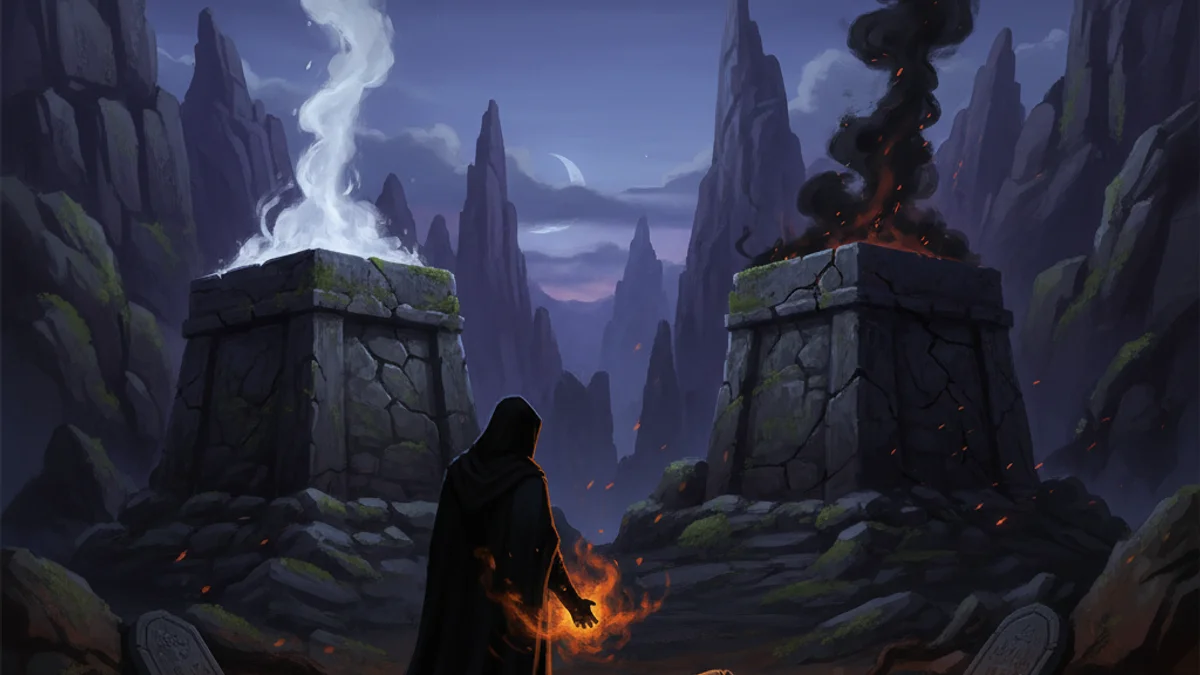
After their exile from Eden, Adam and Eve had two sons: Cain, a tiller of the soil, and Abel, a keeper of sheep. In time, both brothers brought offerings to God. Cain presented the fruits of the ground, while Abel offered the choicest firstborn of his flock. God looked with favor upon Abel’s sacrifice, but not upon Cain’s. Consumed by resentment, Cain’s countenance fell. God warned him that sin crouches at the door, but Cain did not master his impulse. He invited Abel into the field and, in a fit of jealous rage, struck and killed him. When God asked, 'Where is your brother?' Cain famously replied, 'Am I my brother's keeper?' For his crime, Cain was cursed to wander the earth, marked by God so that no one would kill him, forever bearing the weight of his brother's blood.
Unchecked jealousy leads to irreparable destruction, and we each hold a sacred responsibility for the lives and well-being of our fellow human beings.
Questions about this story
What is the moral of Cain and Abel?
The story teaches that jealousy is a destructive force and that humans have a moral obligation to care for one another. It emphasizes that we are indeed our 'brother's keeper' and must master our darker impulses.
Why did God reject Cain's offering?
In many interpretations, Abel offered the very best of his flock with a sincere heart, while Cain's offering was considered perfunctory or of lesser quality. It highlights the importance of the intent and quality behind one's devotion.
What was the 'Mark of Cain'?
The Mark of Cain was a physical sign placed on Cain by God after he was exiled. Its purpose was not just a brand of shame, but a protective measure to ensure that no one would kill him during his wanderings.
Who were Cain and Abel's parents?
Cain and Abel were the first two sons of Adam and Eve, the first humans created by God according to the Torah and the Book of Genesis.
Advertisement


Good night.
