
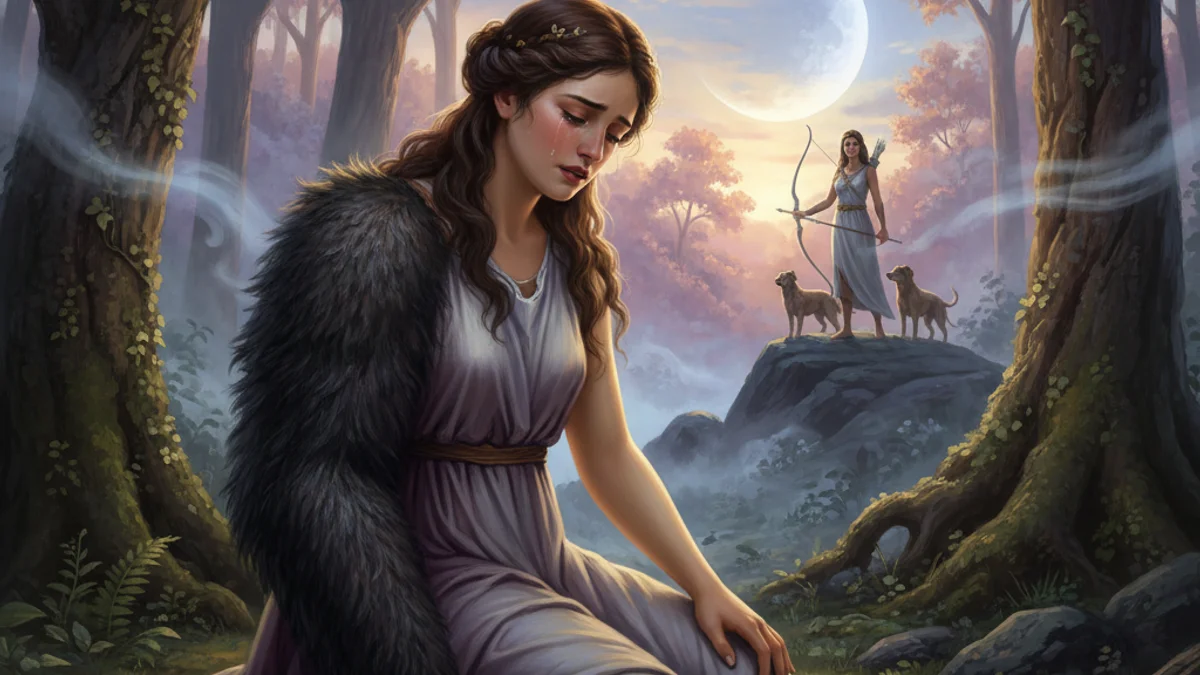
Callisto was a beautiful nymph and a devoted follower of Artemis, the goddess of the hunt. Like all of Artemis's companions, she swore a sacred vow of chastity. However, the king of the gods, Zeus, became infatuated with her. Disguising himself to win her trust, Zeus seduced Callisto, leaving her pregnant and terrified. She hid her condition for months until one day, while bathing in a mountain stream, Artemis discovered the truth. Enraged by the perceived betrayal of her laws, Artemis banished Callisto from her presence. After Callisto gave birth to a son named Arcas, the vengeful Queen Hera transformed the nymph into a shaggy bear as punishment for her husband's infidelity. For years, Callisto wandered the woods in fear. One day, she encountered Arcas, now a young hunter. Not recognizing his mother, Arcas raised his spear to kill her. Before the tragedy could unfold, Zeus intervened, snatching them both up and placing them in the heavens as the constellations Ursa Major and Ursa Minor.
The story illustrates how the innocent often suffer for the whims and conflicts of the powerful, while also explaining the eternal nature of the stars.
Questions about this story
What is the moral of Artemis and Callisto?
The moral highlights the tragic vulnerability of mortals caught in the whims of gods. It reflects how innocence can be punished by those in power, regardless of intent or deception.
Why did Artemis banish Callisto?
Artemis banished Callisto because the nymph had broken her sacred vow of chastity. Even though Callisto was deceived by Zeus, the goddess demanded absolute purity from her followers.
Who turned Callisto into a bear?
In the most common versions of the myth, Hera turned Callisto into a bear out of jealousy over Zeus's affection. Some alternative versions suggest Artemis did it as punishment.
What constellation did Callisto become?
Callisto became the constellation Ursa Major, also known as the Great Bear. Her son, Arcas, was placed beside her as Ursa Minor, the Little Bear.
Advertisement

Good night.
