
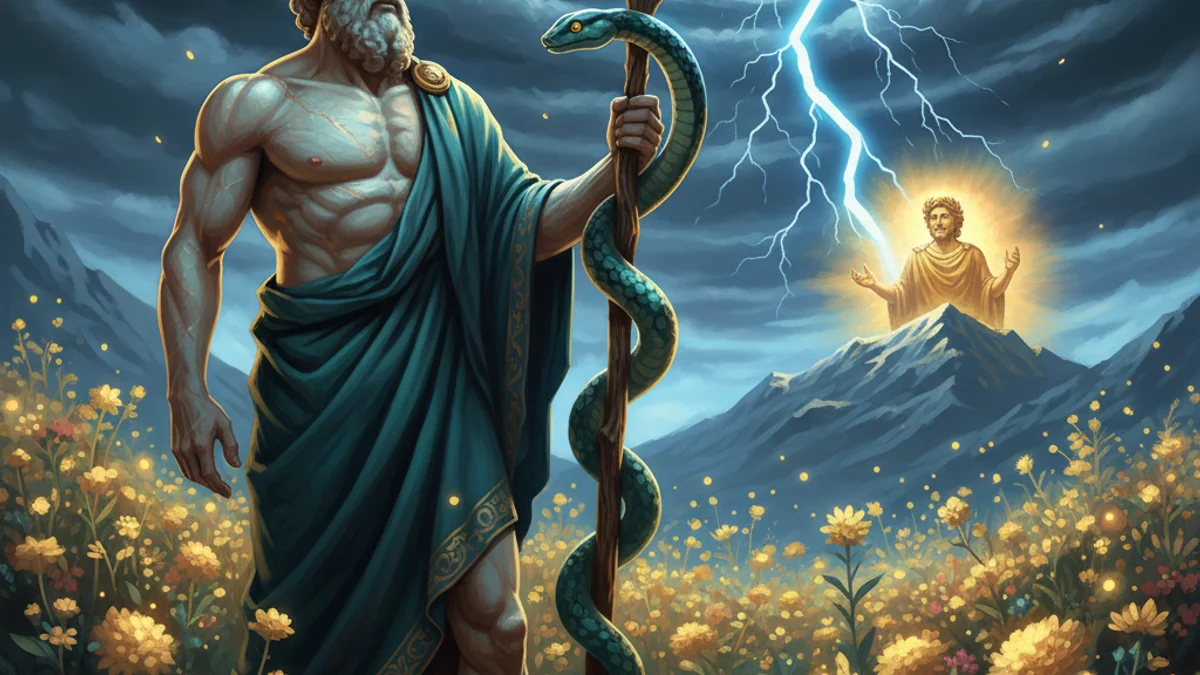
Apollo, the god of light, fell in love with the mortal princess Coronis. When a white crow brought news of her infidelity, Apollo in a rage turned the bird’s feathers black and had his sister Artemis slay Coronis. Regretting the violence, Apollo rescued his unborn son, Asclepius, from the funeral pyre and entrusted him to the wise centaur Chiron. Under Chiron's tutelage, Asclepius became the greatest healer the world had ever known. His skills grew so profound that he eventually mastered the art of bringing the dead back to life. However, this mastery upset the cosmic balance. Hades complained that his realm was being emptied, and Zeus feared that mortals would become equal to gods. To preserve the natural order, Zeus struck Asclepius down with a thunderbolt. Heartbroken and vengeful, Apollo killed the Cyclopes who forged Zeus's lightning. In the end, to appease Apollo and honor the healer’s virtue, Zeus placed Asclepius among the stars as the constellation Ophiuchus and elevated him to the status of a god.
Even the most noble talents must respect the boundaries of nature and the laws of the universe.
Questions about this story
What is the moral of Apollo and Asclepius?
The story teaches that humans and demigods must respect the natural cycle of life and death. Even with the best intentions, defying the laws of the universe can lead to tragic consequences.
Who killed Asclepius and why?
Zeus killed Asclepius with a thunderbolt because the healer began resurrecting the dead. This threatened the division between mortals and gods and upset the balance of the underworld managed by Hades.
What is the symbol of Asclepius?
His symbol is the Rod of Asclepius, a single snake entwined around a staff. It remains the universal symbol for medicine and healing today, representing rejuvenation and the physician's power.
How did Apollo react to his son's death?
Grief-stricken and angry, Apollo retaliated by killing the Cyclopes, the beings who forged Zeus's thunderbolts. As punishment for this act, Zeus forced Apollo to serve a mortal king for one year.
Advertisement

Good night.
