
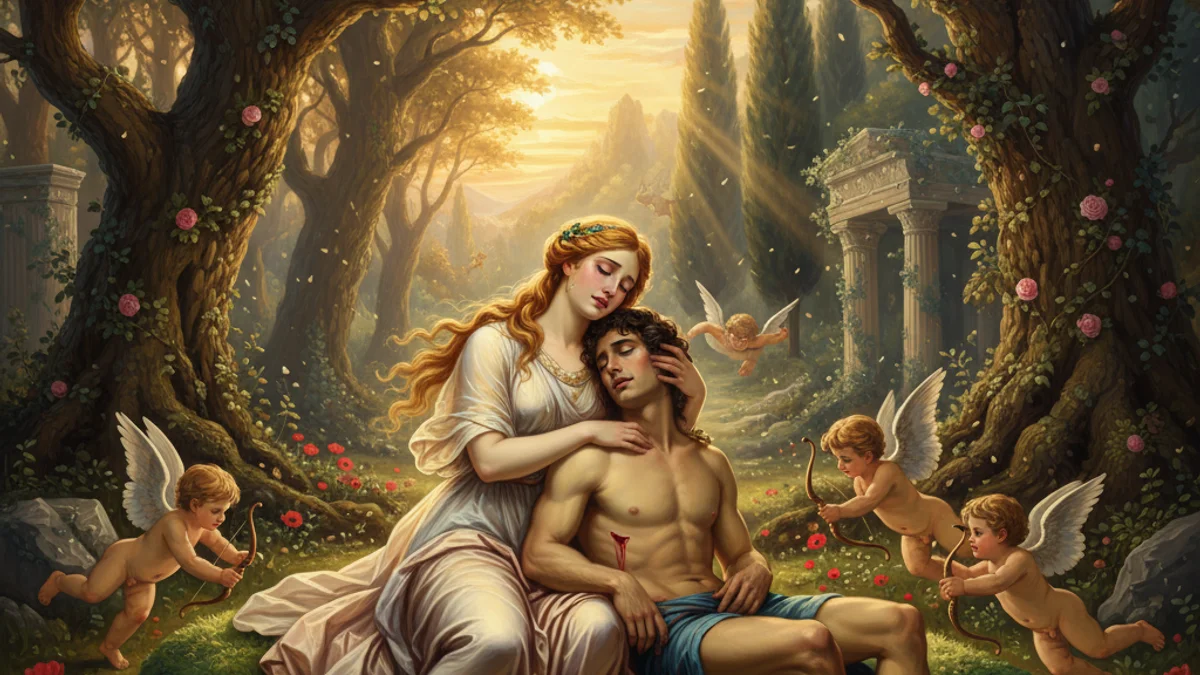
When Aphrodite, the goddess of love, was accidentally grazed by one of Eros's arrows, she fell deeply in love with the mortal hunter Adonis. His beauty was so peerless that she neglected her divine duties on Olympus to follow him through the woods. Knowing the dangers of the wild, Aphrodite constantly warned Adonis to hunt only timid creatures and to avoid ferocious beasts like lions and boars. However, the youth's spirit was daring. One morning, while Aphrodite was away, Adonis tracked a massive wild boar. He struck the beast with his spear, but the wounded animal turned and gored him with its tusks. Hearing his cries, Aphrodite rushed to his side, but it was too late. As Adonis took his final breath, the grieving goddess sprinkled nectar upon his blood. From the earth, delicate crimson anemone flowers sprang forth, a fleeting tribute to a love cut short by fate.
Even the most powerful love cannot shield someone from the consequences of their own recklessness or the inevitability of fate.
Questions about this story
What is the moral of Aphrodite and Adonis?
The moral is that fate is inescapable and that even divine love cannot protect a person from their own nature or mortality. It also serves as a warning against ignoring the advice of those who care for our safety.
How did Adonis die in Greek mythology?
Adonis died after being gored by a wild boar during a hunt. Despite Aphrodite's warnings to avoid dangerous animals, his thirst for adventure led him to confront the beast, which proved fatal.
Why did Aphrodite love Adonis?
Aphrodite fell in love with Adonis because of his extraordinary beauty, which was said to surpass even that of the gods. Her affection was intensified after she was accidentally scratched by one of Cupid's golden arrows.
What flower came from Adonis's blood?
The anemone flower, also known as the windflower, was created from the blood of Adonis. Aphrodite transformed his lifeblood into these delicate red blossoms so his memory would return every spring.
Advertisement

Good night.
