
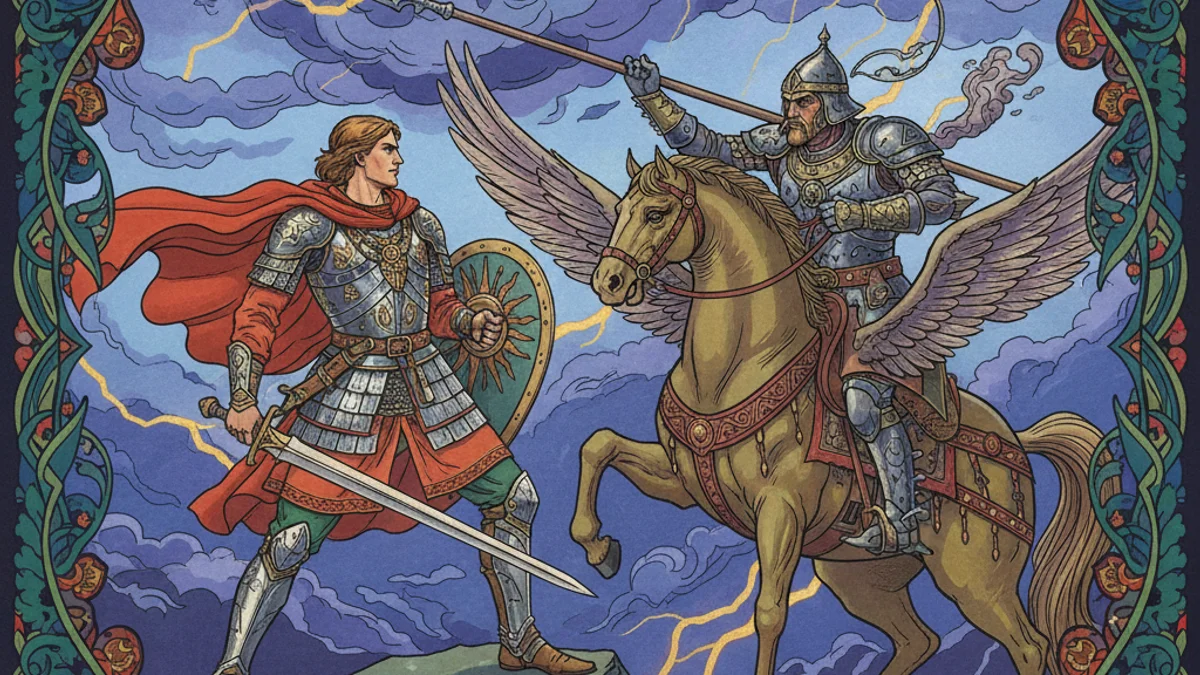
Alyosha Popovich, the son of a priest, was the youngest of the three legendary bogatyrs. Unlike his brothers-in-arms Ilya Muromets and Dobrynya Nikitich, Alyosha was not known for immense strength, but for his cleverness and sharp tongue. One day, Alyosha arrived at the court of Prince Vladimir in Kiev, where he found the feast being disrupted by the monstrous Tugarin Zmeyevich. Tugarin was a gluttonous, dragon-like warrior who insulted the Prince and devoured entire oxen in a single bite. Unable to stand the disrespect, Alyosha challenged the giant to a duel. As they met on the field, Alyosha looked up and prayed for rain to dampen Tugarin’s paper wings. A sudden storm broke out, grounded the villain, and allowed the agile Alyosha to strike him down with his sword. Through quick thinking and unwavering courage, the young hero freed Kiev from the golden-winged terror.
Cunning and wit can often overcome brute strength and arrogance.
Questions about this story
What is the moral of Alyosha Popovich?
The story teaches that intelligence and resourcefulness are more valuable than raw power. Alyosha survives and wins because he outthinks enemies who are physically superior to him.
Who is Tugarin Zmeyevich?
Tugarin is a monstrous, dragon-like villain in Slavic folklore who represents the threat of nomadic invaders. He is often depicted as gluttonous, arrogant, and capable of flight using magical wings.
Is Alyosha Popovich based on a real person?
Yes, many historians believe he was inspired by a historical boyar named Alexander Popovich from Rostov. He was a celebrated warrior who reportedly died at the Battle of the Kalka River in 1223.
What are Alyosha Popovich's defining traits?
Alyosha is characterized by his youthful energy, sharp wit, and occasional trickery. While he is a brave bogatyr, he is more likely to use a ruse or a clever insult than a direct frontal assault.
Advertisement

Good night.
