
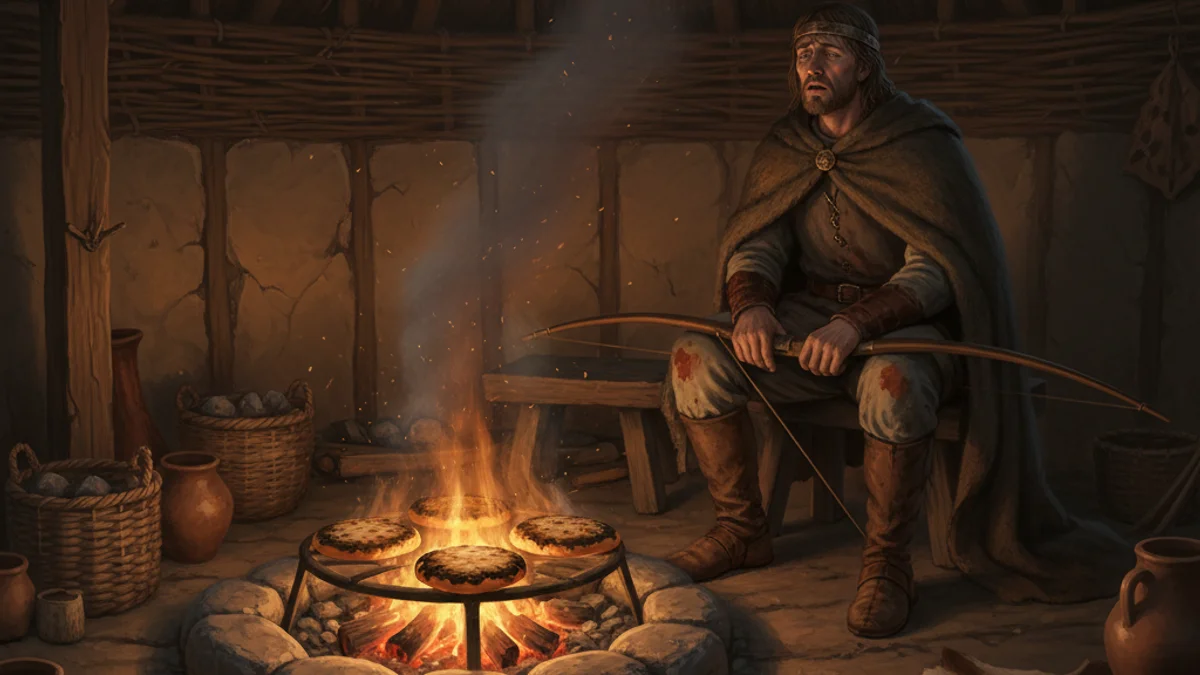
In the winter of 878, King Alfred the Great was forced into hiding after a Viking invasion devastated his kingdom of Wessex. Seeking refuge in the remote marshes of Athelney, he arrived at the humble cottage of a cowherd. Disguised as a common traveler, Alfred was granted shelter. One afternoon, the cowherd's wife asked the stranger to watch the wheaten cakes baking on the hearth while she went out to milk the cows. Preoccupied with the weight of his fallen kingdom and plans for a counter-attack, Alfred sat by the fire, lost in thought. He failed to notice the smell of smoke until the woman returned to find her bread charred and ruined. Not knowing he was her king, she scolded him harshly, crying out that he was quick enough to eat the cakes but too lazy to turn them. Alfred did not grow angry or reveal his identity; instead, he humbly apologized and set about helping her, realizing that a leader who cannot manage small tasks cannot hope to manage a kingdom.
True greatness is found in humility and the understanding that no task is beneath one's attention, especially in times of crisis.
Questions about this story
What is the moral of Alfred and the Cakes?
The moral is that leaders must remain grounded and attentive to all responsibilities, no matter how small. It also highlights the virtue of humility, as Alfred accepts a commoner's rebuke without using his power to retaliate.
Is the story of Alfred and the Cakes a true historical event?
While Alfred the Great was a real king, historians generally consider the cake story to be a legend. It first appeared in written records about a hundred years after his death, likely as a way to illustrate his character.
Who was King Alfred the Great?
Alfred the Great was the King of Wessex in the late 9th century. He is famous for successfully defending his kingdom against Viking attempts at conquest and for being a proponent of education and law.
Why was King Alfred hiding in a cowherd's hut?
He was hiding because the Viking Great Heathen Army had launched a surprise attack on his royal manor at Chippenham. He was forced to flee into the Somerset Levels to regroup and lead a guerrilla war.
Advertisement


Good night.
