
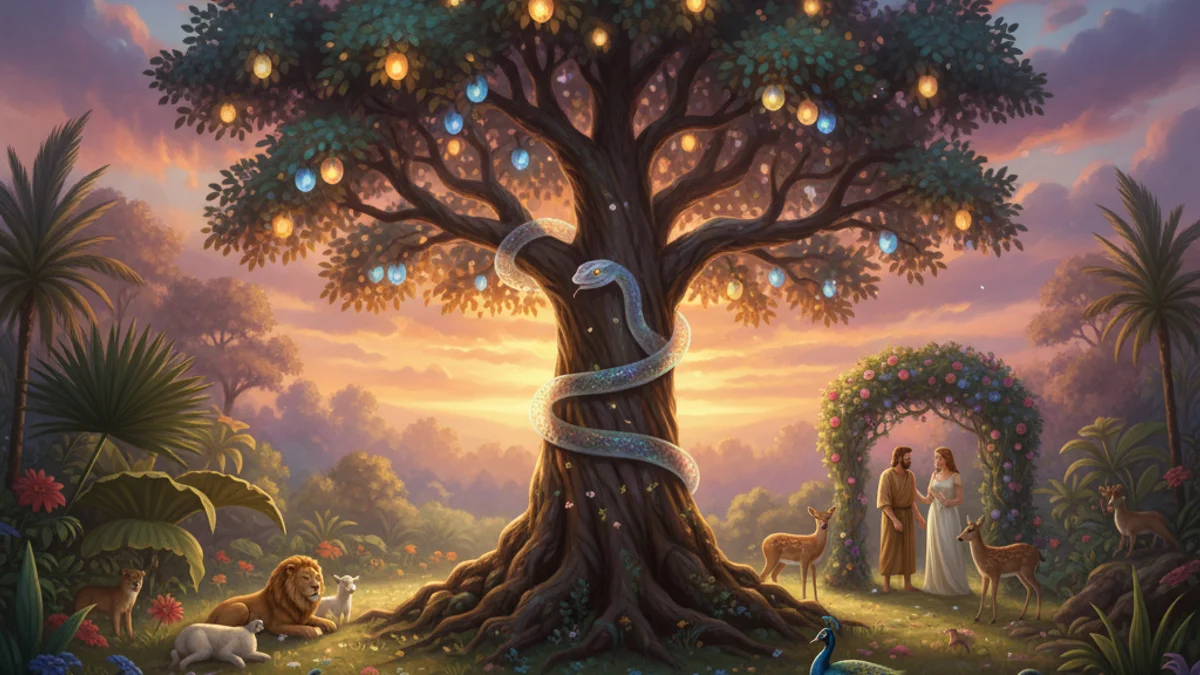
In the beginning, God formed Adam from the dust of the earth and breathed life into him, placing him in the lush Garden of Eden. Seeing that man should not be alone, God created Eve from Adam’s side to be his partner. They lived in a state of perfect innocence, permitted to eat from every tree except the Tree of Knowledge of Good and Evil. However, the serpent, the most cunning of creatures, tempted Eve by claiming the fruit would grant them wisdom like that of God. She ate the fruit and shared it with Adam. Immediately, their eyes were opened; they felt shame for their nakedness and hid. When God discovered their disobedience, he explained the hardships they would now face—toil, pain, and mortality. They were cast out of Eden, with cherubim and a flaming sword placed to guard the way back, marking the end of innocence and the beginning of the human struggle.
With the gift of free will comes the weight of responsibility and the inevitable consequences of our choices.
Questions about this story
What is the moral of Adam and Eve?
The moral centers on the concept of free will and the idea that every action has a consequence. It highlights how the pursuit of forbidden knowledge leads to the loss of innocence and the introduction of earthly hardships.
What was the forbidden fruit in the Torah?
While often depicted as an apple in Western art, the Torah does not name the fruit. Jewish tradition offers various interpretations, suggesting it might have been a fig, a grape, a pomegranate, or even wheat.
Why did the serpent trick Eve?
The serpent is often characterized as being motivated by cunning or envy of the humans' status. By convincing Eve to eat the fruit, the serpent introduced doubt and disobedience into the perfect harmony of Eden.
What happened to Adam and Eve after they were expelled?
After leaving Eden, they entered the world of mortality where they had to work the land for food and experience the pains of childbirth. They began the human lineage, facing a life defined by physical labor and moral decisions.
Advertisement



Good night.
