
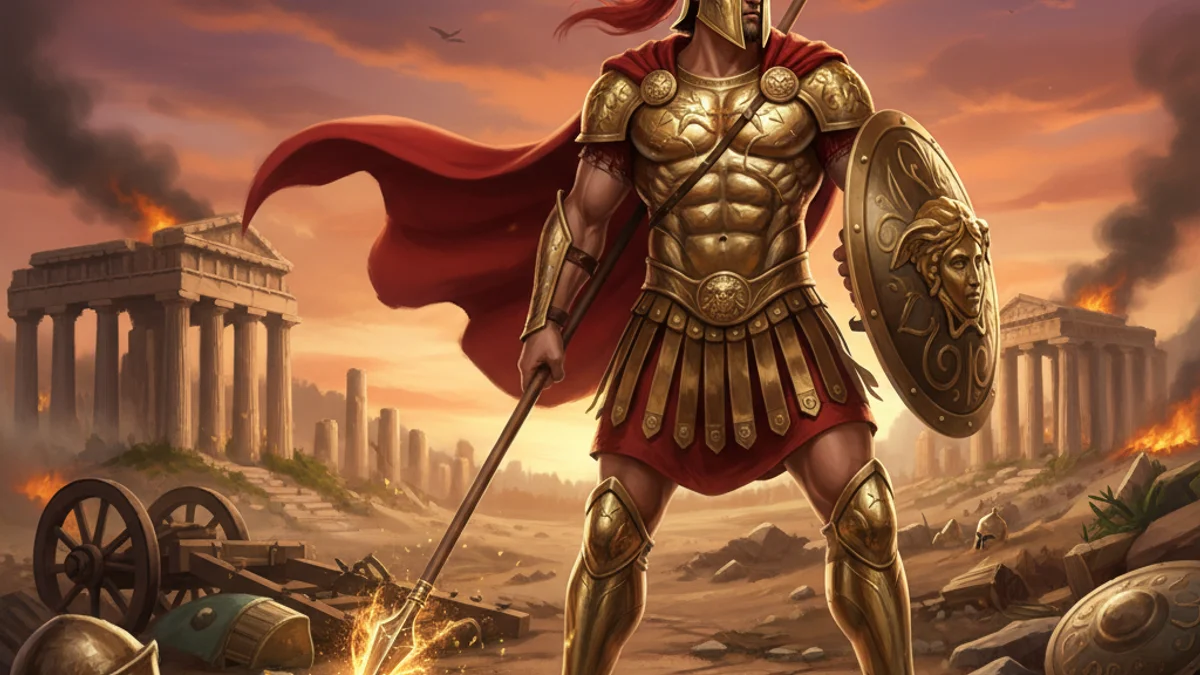
Achilles was born to the sea nymph Thetis and King Peleus. Desperate to make her son immortal, Thetis took the infant to the River Styx, whose waters were said to grant invulnerability. Holding him by his left heel, she dipped him into the sacred river. Every part of his body touched by the water became iron-clad and indestructible, but the heel she gripped remained dry and vulnerable. Achilles grew into the greatest warrior of the Trojan War, a hero of unmatched strength and speed. He seemed invincible on the battlefield, striking fear into the hearts of the Trojans. However, the god Apollo, knowing the hero's secret, guided the hand of the Trojan prince Paris. Paris loosed an arrow that struck Achilles directly in his vulnerable heel. The wound, though small, proved fatal, bringing the mighty warrior to his knees and ending his life at the gates of Troy.
No matter how powerful or gifted an individual may be, everyone possesses a vulnerability that can lead to their downfall if they become overconfident.
Questions about this story
What is the moral of Achilles and His Heel?
The story teaches that everyone has a weakness, regardless of their strength or status. It serves as a reminder to remain humble and aware of one's own limitations to avoid a tragic downfall.
Why was Achilles' heel his only weak spot?
When his mother, Thetis, dipped him into the River Styx to make him immortal, she held him by his heel. Because that part of his body never touched the magical water, it remained human and vulnerable.
Who killed Achilles and how?
Achilles was killed by the Trojan prince Paris, who shot a poisoned arrow into his heel. The god Apollo is said to have guided the arrow's flight to ensure it hit the hero's only weak point.
What does the term 'Achilles' heel' mean today?
In modern language, an 'Achilles' heel' refers to a person's principal weakness or a small but fatal flaw in an otherwise strong system or character.
Advertisement

Good night.
