
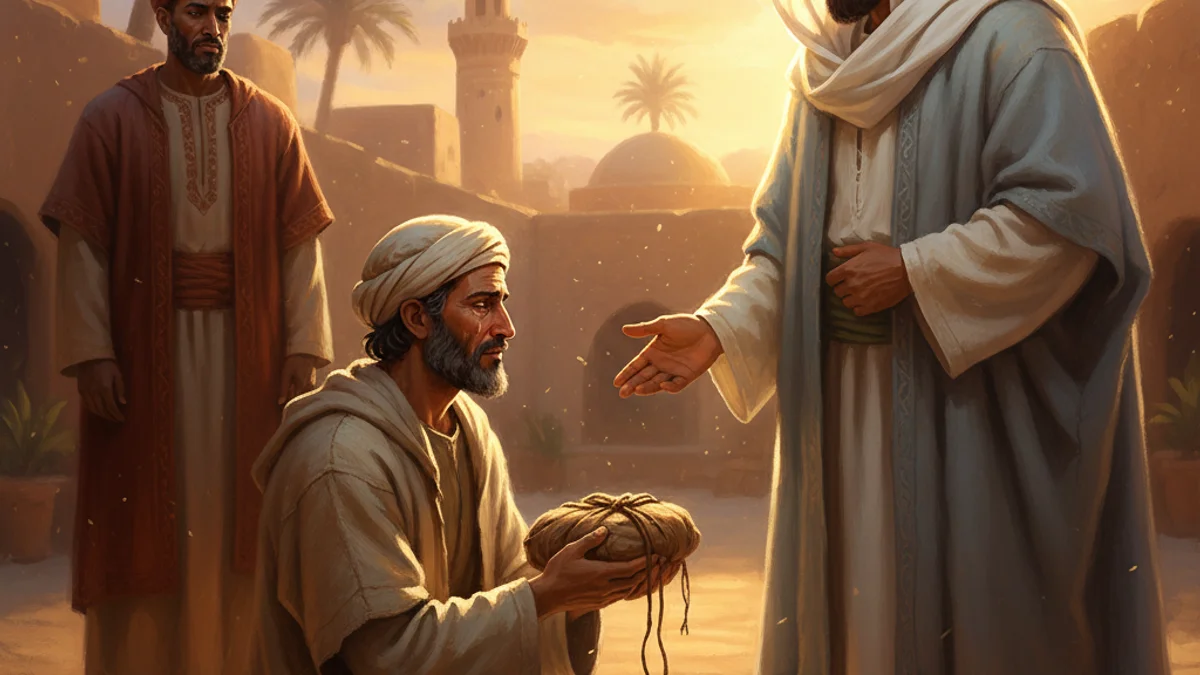
During the preparations for the Expedition of Tabuk, the Prophet Muhammad (peace be upon him) called upon his companions to contribute from their wealth. Umar ibn al-Khattab, a man of great strength and character, thought to himself that this was the day he might finally surpass Abu Bakr in charity. Umar went home and brought half of everything he owned. When the Prophet asked him what he had left for his family, Umar replied, 'An equal amount to what I have brought.' Then Abu Bakr arrived, carrying a humble bundle containing every single possession he had. The Prophet turned to him and asked, 'O Abu Bakr, what have you left for your family?' With a heart full of peace, Abu Bakr replied, 'I have left for them Allah and His Messenger.' Hearing this, Umar wept, realizing that he could never hope to compete with the spiritual depth and absolute devotion of Abu Bakr.
True devotion is measured by the sincerity of the heart and the completeness of one's trust in God, rather than the material value of the gift.
Questions about this story
What is the moral of Abu Bakr's Sacrifice?
The moral is that absolute trust in God (Tawakkul) and sincere devotion are more valuable than any material possession. It teaches that giving from a place of total faith is the highest form of charity.
For which event was Abu Bakr giving his wealth?
He was contributing toward the Expedition of Tabuk, a significant military campaign during the life of the Prophet Muhammad that required immense resources.
What did Umar ibn al-Khattab give in this story?
Umar gave half of his entire wealth, hoping to match or exceed the generosity of Abu Bakr, but he realized that Abu Bakr's spirit of sacrifice was unparalleled.
What was Abu Bakr's famous response to the Prophet?
When asked what he left for his family, Abu Bakr famously replied, 'I have left for them Allah and His Messenger,' signifying his total reliance on Divine providence.
Advertisement
Good night.
