
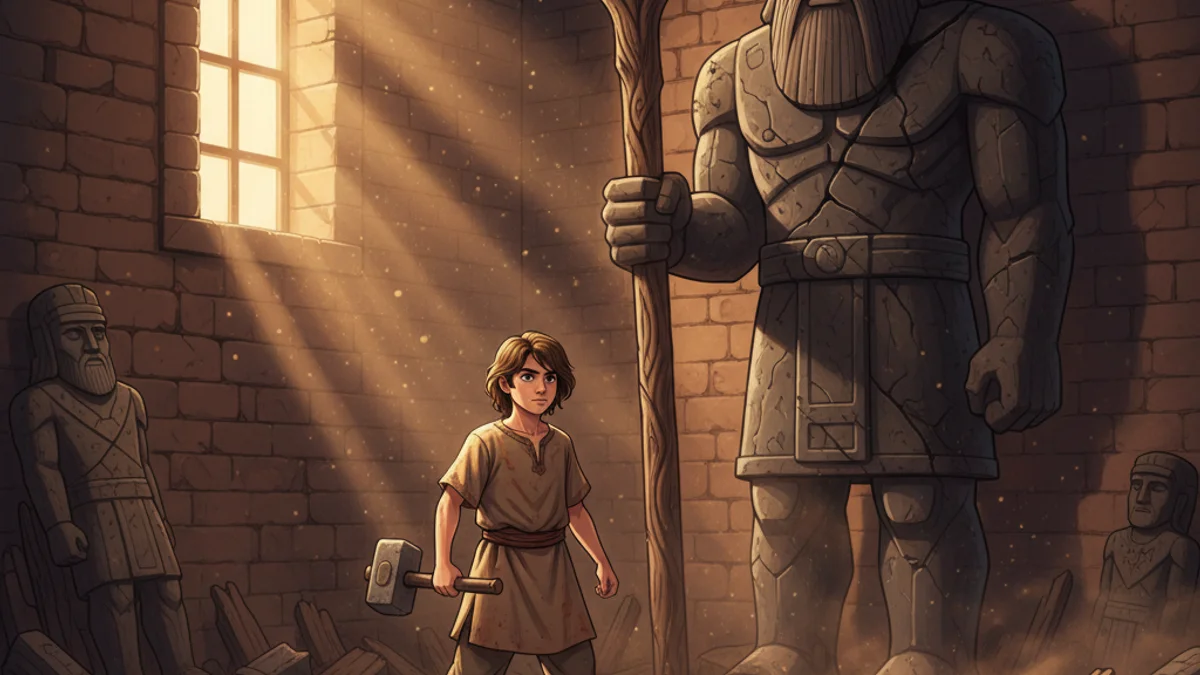
In the ancient city of Ur, young Abraham’s father, Terah, owned a shop where he carved and sold idols. One day, left alone to mind the store, Abraham watched as people came to offer prayers to the lifeless statues. Driven by his growing belief in a single, invisible Creator, he took a staff and smashed every idol in the shop except for the largest one, placing the weapon in its stone hand. When Terah returned and demanded an explanation for the wreckage, Abraham calmly said that the idols had brawled over an offering of fine flour, and the biggest idol had emerged victorious. Terah roared in anger, 'These are but stone and wood! They cannot move or fight!' Abraham replied softly, 'Then why, father, do you worship them?' Silenced by his son's logic, Terah could not answer.
True faith is discovered through reason and the courage to challenge traditions that do not align with the truth.
Questions about this story
What is the moral of Abraham and the Idols?
The moral is that faith should be based on reason rather than blind adherence to tradition. It highlights the importance of questioning false beliefs to find a deeper, singular truth.
Is the story of Abraham and the idols in the Bible?
No, this specific story is not found in the Book of Genesis. It originates from the Midrash, which are ancient Jewish commentaries and legends that expand on biblical narratives.
Who was Abraham's father in this story?
Abraham's father was Terah, who is described as a merchant and manufacturer of idols in the city of Ur. He represents the polytheistic culture that Abraham eventually left behind.
Why did Abraham leave one idol standing?
He left the largest idol intact to create a logical trap for his father. By blaming the large idol for the destruction, he forced his father to admit that the statues were powerless and inanimate.
Advertisement
Good night.
