Story Summary
Read the classic Panchatantra tale, The Deer Without a Heart. A clever jackal tricks a foolish deer twice, leading to its demise in this fable about wit.
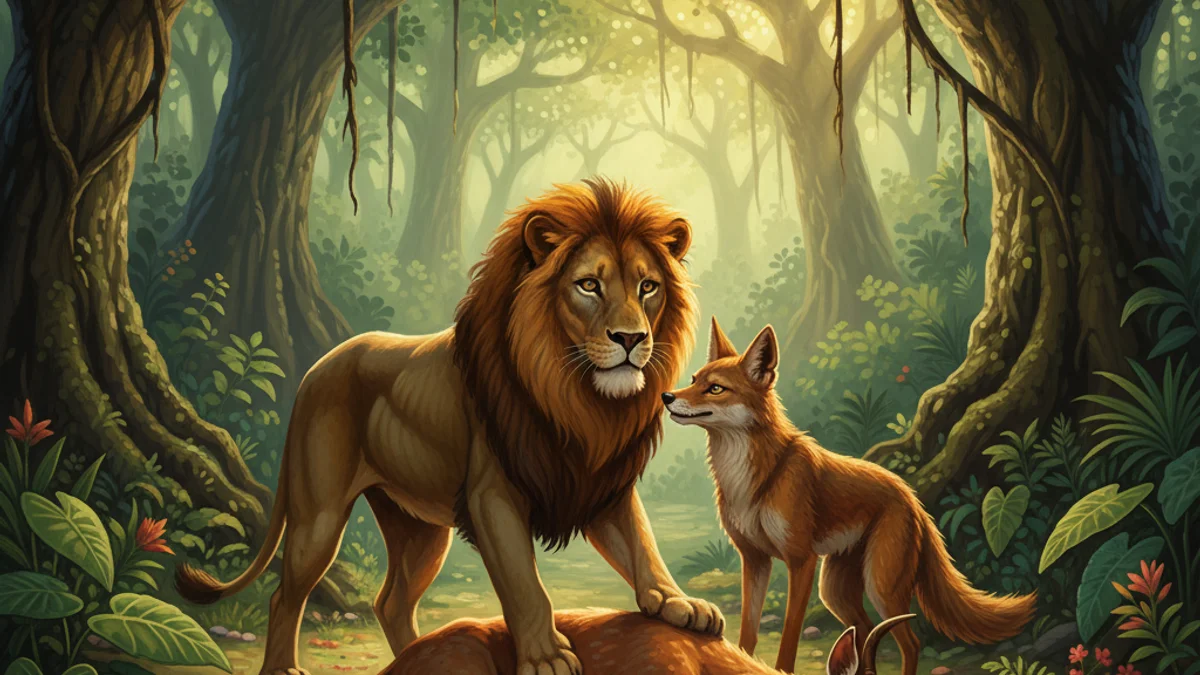
In a dense forest lived Karalakesara the lion and his loyal servant, Chaturaka the jackal. One day, the lion was severely wounded in a fight with an elephant, rendering him unable to hunt. Starving, the lion asked the jackal to find easy prey. The jackal spotted a deer and lured him by promising that the lion wanted to crown the deer as the king of the forest. Despite his fear, the deer followed. However, the weakened lion missed his pounce, and the terrified deer fled. The jackal, determined, tracked the deer again and convinced him that the lion’s lunge was actually a 'violent embrace' of affection. Foolishly, the deer returned. This time, the lion killed him instantly. While the lion went to bathe before the meal, the jackal quickly ate the deer's heart and ears. When the lion returned and questioned the missing parts, the jackal laughed and said, 'My Lord, this deer had no heart or ears. If he did, would he have ever returned to his killer a second time?' The lion, convinced by this logic, finished the rest of the meal.
The Moral
Greed and a lack of discernment can lead to ruin, especially when one ignores a clear warning of danger.
“If he had a heart to think or ears to hear the truth, would he have returned to his own death?”
Fun Fact
This story belongs to the fourth book of the Panchatantra, titled 'Labdhapranasam' (Loss of Gains), which focuses on how people lose what they have already gained through folly.
Frequently Asked Questions
What is the moral of The Deer Without a Heart?
The moral is that those who lack the intelligence to learn from their mistakes or ignore clear danger due to greed will eventually face destruction. It emphasizes that wit can often overcome brute strength.
Who is the protagonist of this Panchatantra story?
The jackal, Chaturaka, is the central figure who drives the plot. While he is deceptive, the story highlights his superior wit and survival instincts compared to the lion and the deer.
How did the jackal convince the deer to return?
The jackal used flattery and a clever lie, telling the deer that the lion’s initial attack was actually a passionate gesture of love and a ritual for the coronation. The deer's vanity clouded his judgment.
Why did the jackal eat the deer's heart and ears?
The jackal was hungry and knew these were the tastiest parts. He used a clever logical fallacy to trick the lion into believing they never existed, ensuring he got the best portion for himself.
Is 'The Deer Without a Heart' based on a true story?
It is a fictional fable from the Panchatantra, an ancient Indian collection of interrelated animal fables in Sanskrit verse and prose, designed to teach political and life lessons.
What does the deer represent in this story?
The deer represents a person who is easily swayed by flattery and fails to use their common sense. His character serves as a warning against being gullible and ignoring red flags.
Discussion (0)
Share your thoughts on this story
No comments yet. Be the first to share your thoughts!