Story Summary
Explore the inspiring story of Bilal and the Call to Prayer. From a persecuted slave to Islam's first Muezzin, Bilal's journey is a testament to faith and equality.
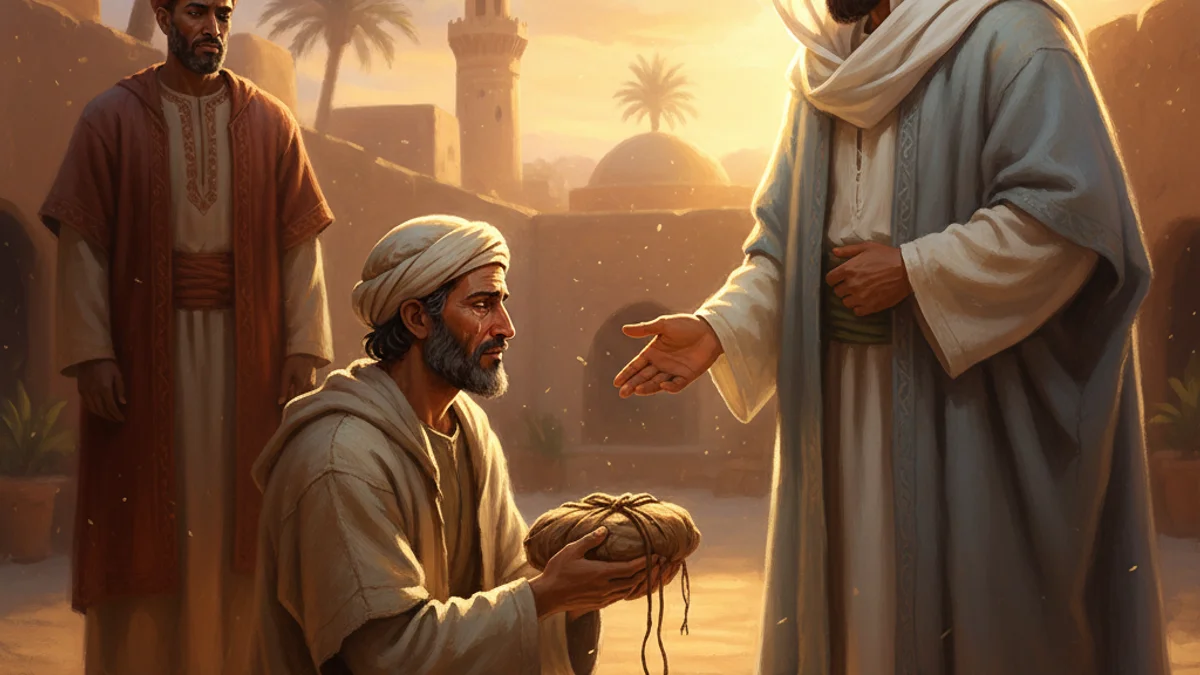
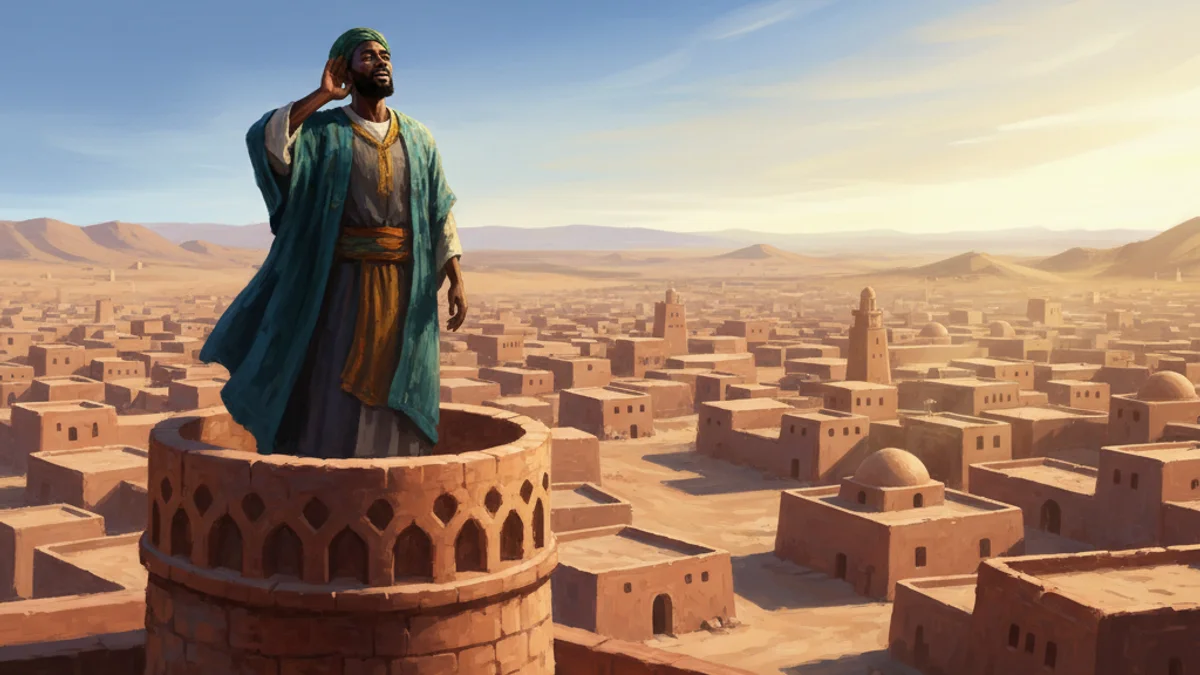
In the early days of Islam in Makkah, Bilal ibn Rabah, an enslaved man of Ethiopian heritage, found truth in the message of Prophet Muhammad. His master, Umayyah ibn Khalaf, was furious and sought to force him back to idolatry. Bilal was taken to the scorching desert sands, where a massive, heavy rock was placed upon his chest. Despite the agonizing pain and heat, Bilal did not yield. He repeated only two words: 'Ahad! Ahad!' (One! One!), affirming the oneness of God. Moved by his resilience, Abu Bakr as-Siddiq purchased Bilal and set him free. Bilal became a close companion of the Prophet, known for his beautiful, resonant voice. When the need for a formal call to prayer (Adhan) arose in Medina, the Prophet chose Bilal for the honor. Climbing to the highest roof, Bilal’s voice rang out, calling the faithful to success. He became the first Muezzin of Islam, a position of immense dignity that proved faith and character, not social status or race, determine a person’s worth.
The Moral
Faith and character are the true measures of a person's worth, proving that devotion can elevate anyone regardless of their social standing or background.
“Ahad! Ahad! (One! One!)”
Fun Fact
Bilal ibn Rabah is often called 'Sayyiduna' (Our Master) by Muslims today, a title usually reserved for the highest leaders, showcasing his lasting legacy of dignity.
Frequently Asked Questions
What is the moral of Bilal and the Call to Prayer?
The moral is that true honor comes from faith, steadfastness, and character rather than social status or race. Bilal’s rise from slavery to a position of high religious honor serves as a timeless lesson in equality.
Who was Bilal ibn Rabah?
Bilal was an Ethiopian companion of the Prophet Muhammad who became the first Muezzin (caller to prayer) in Islam. He is celebrated for his unwavering faith under extreme persecution.
What does 'Ahad, Ahad' mean?
It means 'One, One' in Arabic, referring to the Oneness of God. This was Bilal’s defiant cry while he was being tortured for his beliefs in the desert of Makkah.
Who freed Bilal from slavery?
Abu Bakr as-Siddiq, the closest friend of the Prophet Muhammad and later the first Caliph, purchased Bilal from his cruel master and immediately set him free.
Why was Bilal chosen as the first Muezzin?
The Prophet Muhammad chose Bilal because of his beautiful, powerful voice and his deep, sincere devotion to God, emphasizing that piety is the most important trait in a believer.
What happened to Bilal after the Prophet passed away?
Overwhelmed by grief, Bilal found it difficult to call the Adhan in Medina because it reminded him too much of the Prophet. He eventually moved to Syria but returned once to Medina to give one final, emotional call to prayer.