Story Summary
Discover the myth of Zeus and Io, where a mortal priestess is transformed into a heifer to hide from Hera’s wrath in this classic tale of Greek mythology.
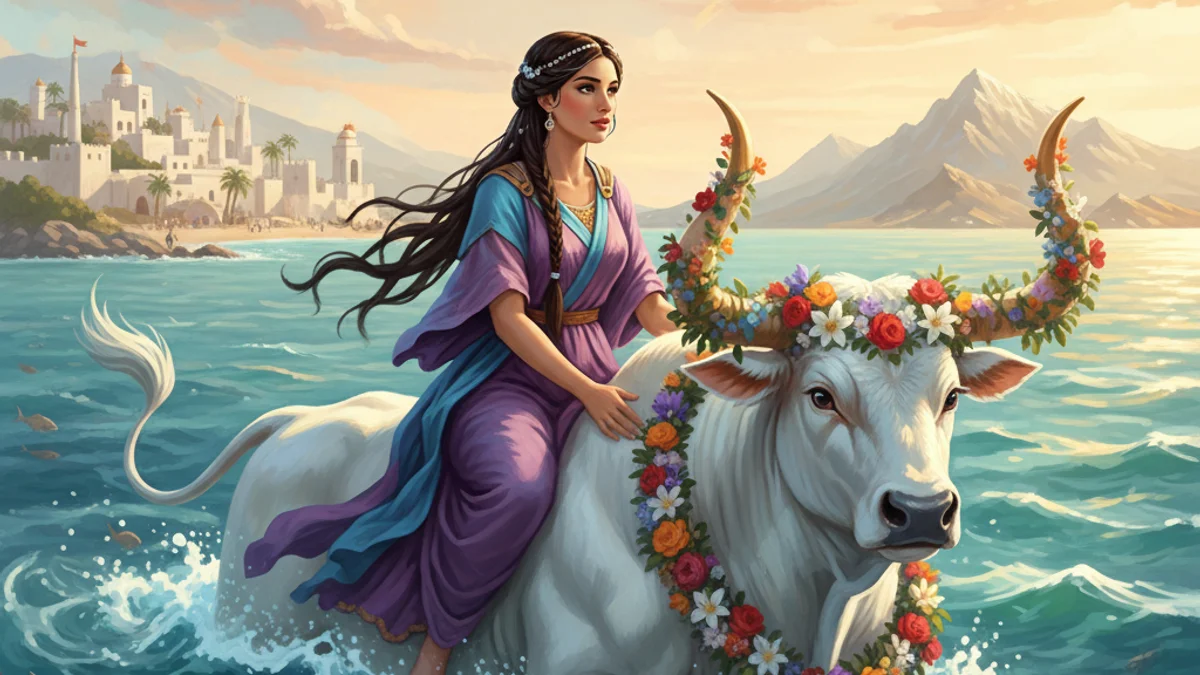
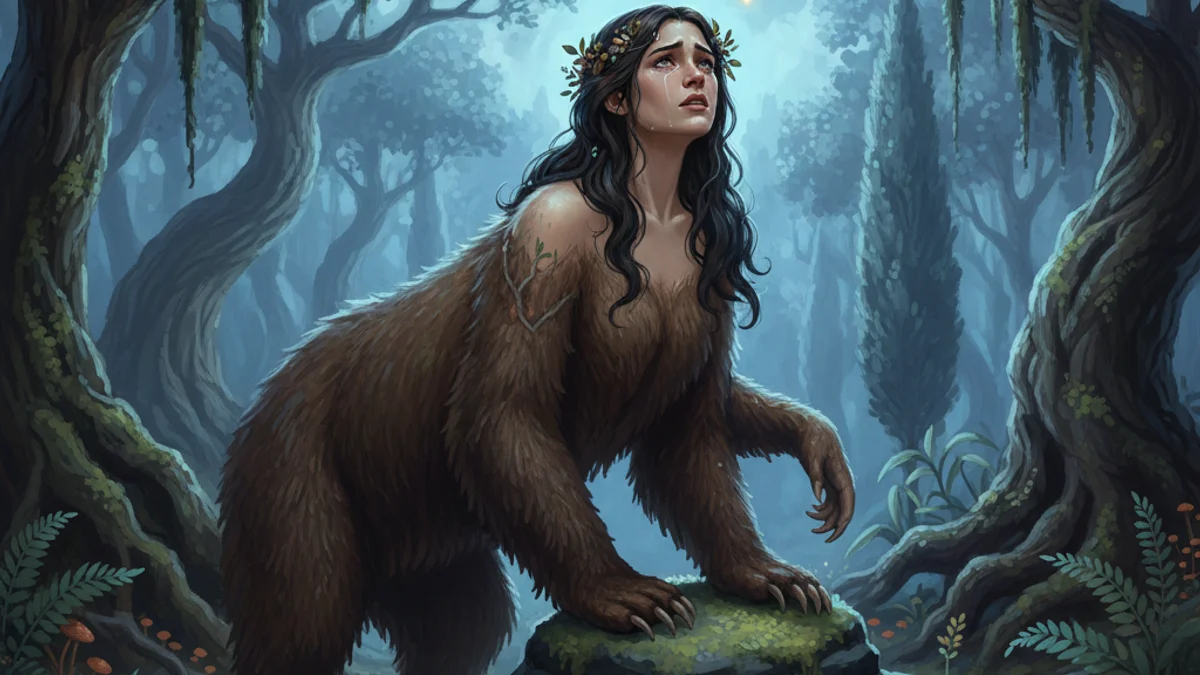
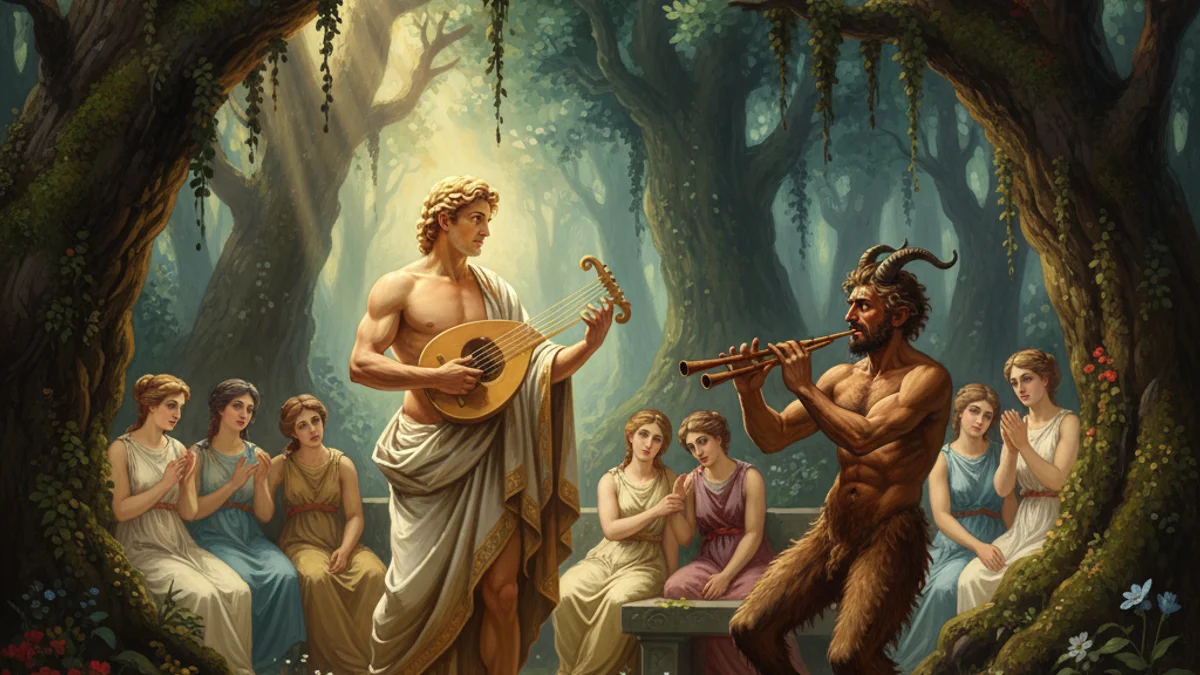
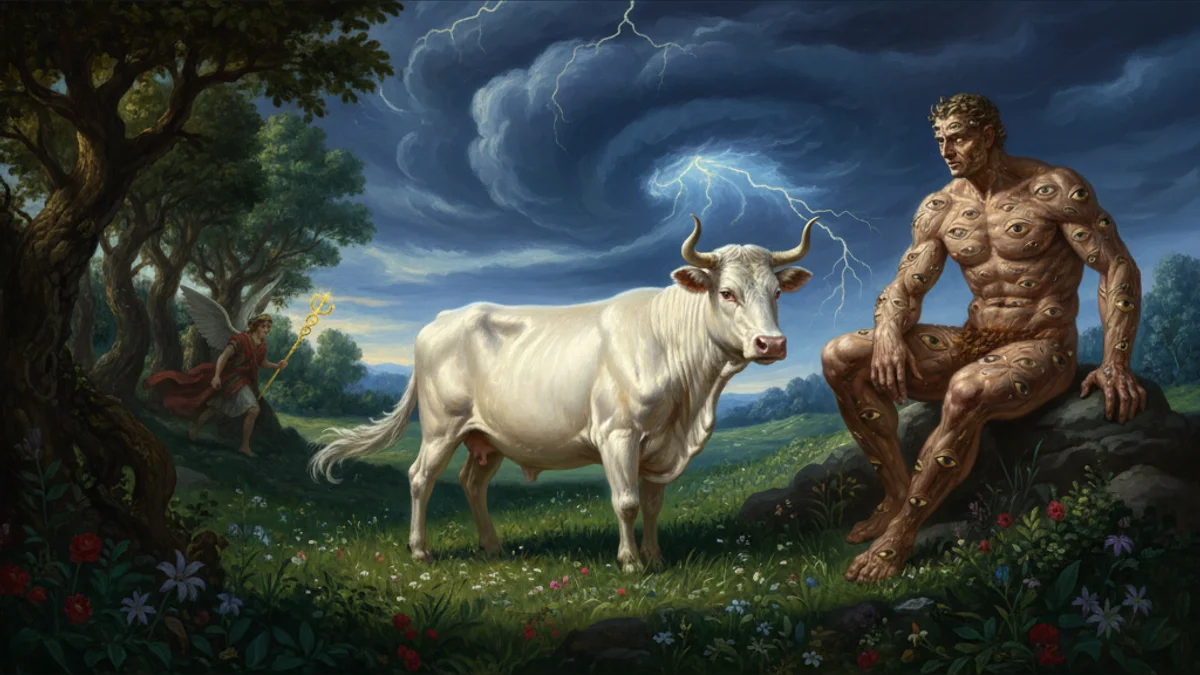
Zeus, king of the gods, fell in love with Io, a beautiful priestess of Hera. To hide his infidelity from his suspicious wife, Zeus covered the earth in a thick mist and transformed Io into a snow-white heifer. Hera, seeing through the ruse, demanded the cow as a gift and placed her under the watchful guard of Argus Panoptes, a giant with a hundred eyes who never slept with all eyes closed at once. Distraught by Io's suffering, Zeus sent Hermes to rescue her. By playing a flute and telling long tales, Hermes lulled all of Argus’s eyes to sleep before slaying him. Enraged, Hera sent a gadfly to relentlessly sting Io, driving her to wander the world in madness. After crossing many lands, including the strait that would be named the Bosphorus in her honor, Io reached Egypt. There, Zeus restored her to human form, allowing her to find peace and bear a royal lineage.
The Moral
Mortals often suffer the most when caught in the crossfire of divine conflicts and the jealousies of the powerful.
“Not even a hundred eyes can see the truth when the gods weave a veil of sleep.”
Fun Fact
The Ionian Sea is also named after Io, marking the path of her wandering while she was in the form of a heifer.
Frequently Asked Questions
Why did Zeus turn Io into a cow?
Zeus transformed Io into a white heifer to hide her from his wife Hera after she nearly caught them together. He hoped the disguise would prevent Hera from discovering his infidelity.
Who is the hundred-eyed giant in the story of Io?
Argus Panoptes was a giant tasked by Hera to guard the transformed Io. Because he had one hundred eyes and never closed them all at once, he was considered the ultimate watchman.
How did Hermes kill Argus?
Hermes killed Argus by disguising himself as a shepherd and playing a flute to lull the giant to sleep. Once all one hundred eyes were closed, Hermes used a stone or sword to kill him and free Io.
Why does the peacock have eyes on its feathers?
According to the myth, Hera took the hundred eyes of her fallen servant Argus and placed them on the tail of her favorite bird, the peacock, as a memorial to his service.
Where does the name Bosphorus come from?
The Bosphorus strait, meaning 'Ox-Ford,' is named after Io. She crossed this body of water while fleeing the tormenting gadfly sent by Hera to drive her into madness.
How did Zeus and Io's story end?
Io eventually arrived in Egypt, where Zeus restored her to human form. she gave birth to Zeus's son Epaphus and became a queen, eventually becoming an ancestor to the hero Heracles.