Story Summary
Discover the Taoist wisdom of The Lost Pearl, where the Yellow Emperor learns that truth is found not through logic or sight, but through effortless non-action.
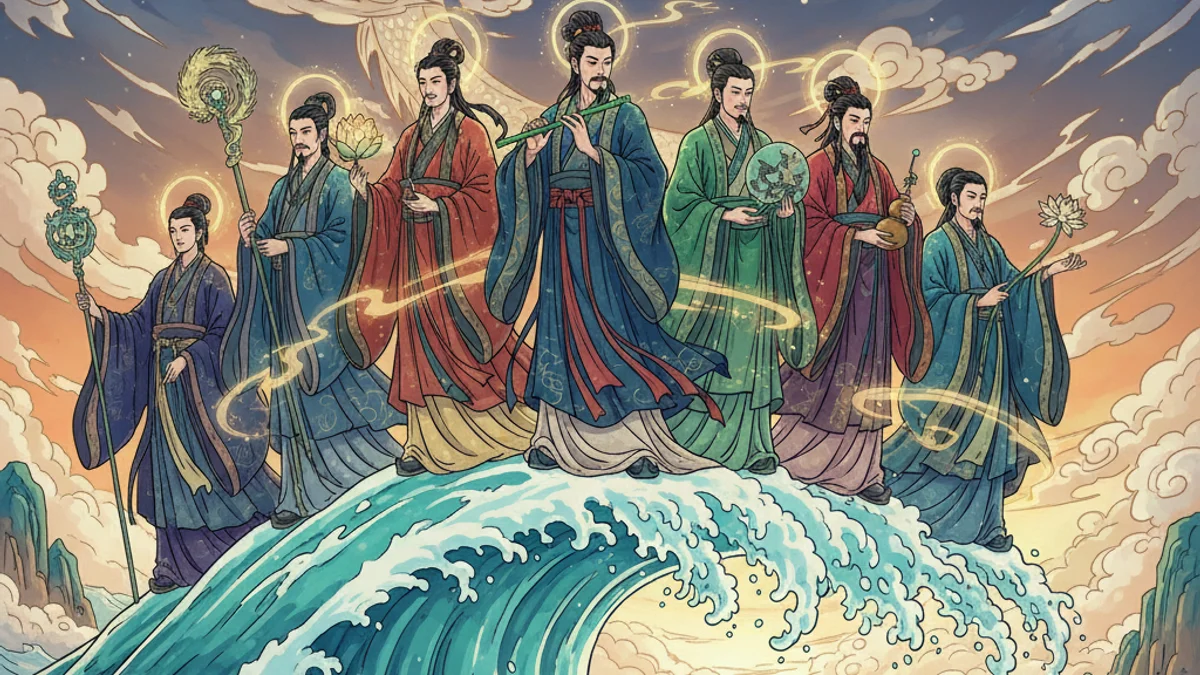
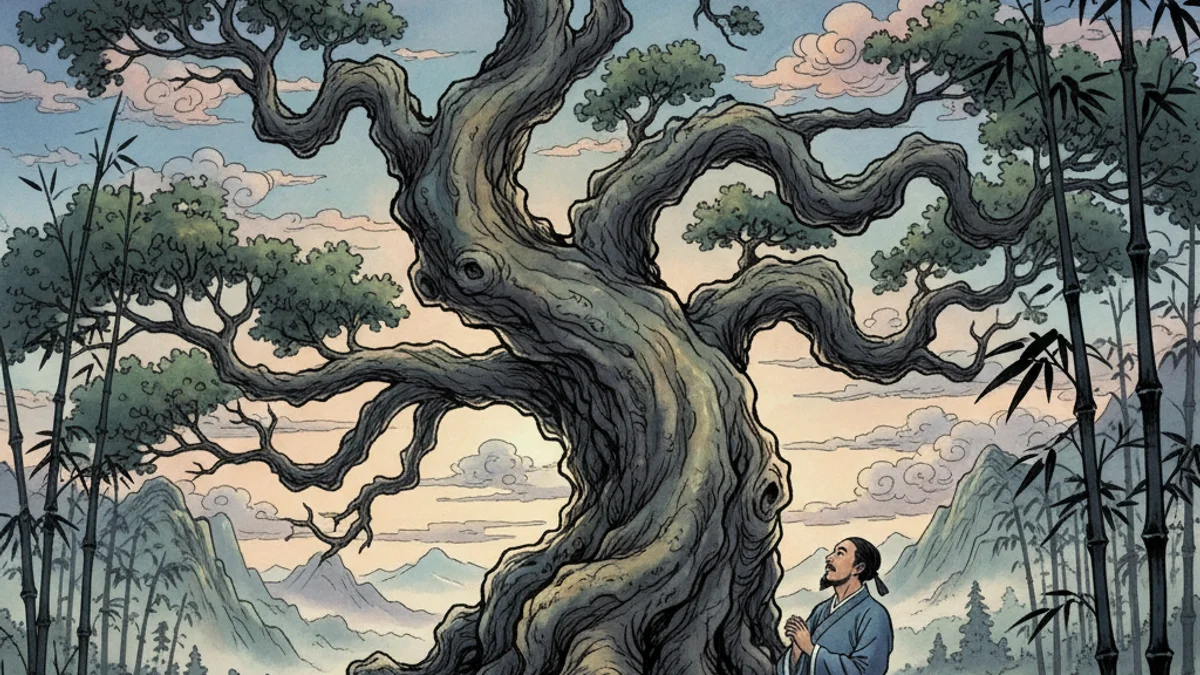
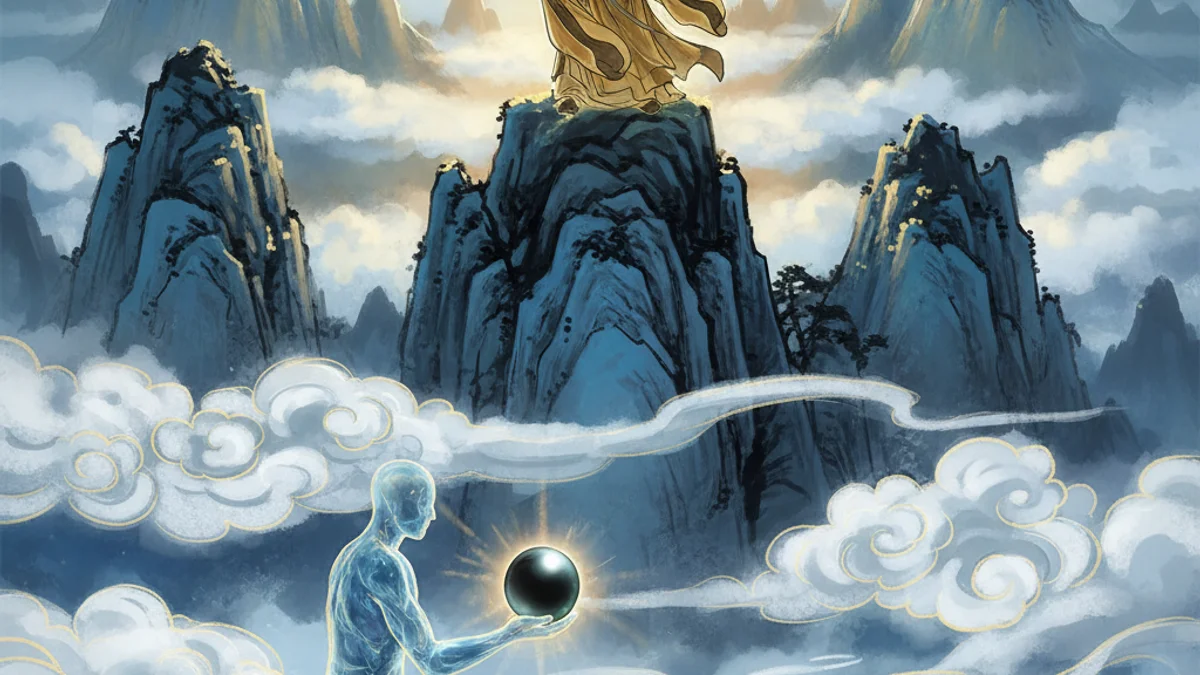
While wandering near the Red Water, the Yellow Emperor ascended the heights of the Kunlun Mountains. Upon his return, he realized he had lost his mysterious black pearl, the symbol of primordial wisdom. He first sent Knowledge to find it, but Knowledge returned empty-handed, unable to comprehend its location. He then sent Sharp-Sight to scan the valleys and peaks, but the pearl remained hidden from physical eyes. He sent Eloquence to seek it through debate and reasoning, yet it too failed to produce results. Finally, the Emperor turned to Non-Action, also known as Mindlessness. Without searching, without striving, and without using intellect, Non-Action found the pearl immediately and returned it. The Emperor was amazed, remarking on the paradox that only the one who did not seek was able to find the truth.
The Moral
True wisdom and the essence of the Tao cannot be grasped through intellect or effort, but are revealed only through a state of effortless non-doing.
“How strange it is that Mindlessness was the one to find it!”
Fun Fact
This story originates from the 'Zhuangzi,' a text written in the 4th century BCE that is famous for its use of humor and irony to challenge conventional wisdom.
Frequently Asked Questions
What is the moral of The Lost Pearl?
The moral is that the ultimate truth, or the Tao, cannot be grasped through intellectual effort or physical senses. It is only when one stops striving and enters a state of Wu Wei (non-action) that wisdom reveals itself naturally.
Who is the Yellow Emperor in this story?
The Yellow Emperor, or Huangdi, is a legendary sovereign and cultural hero in Chinese mythology. In Taoist literature, he often represents a seeker of wisdom who must learn to move beyond worldly logic.
What does the pearl represent in Taoism?
The pearl symbolizes the Tao, the mysterious and primordial source of all things. It is often described as 'dark' or 'hidden' because it exists beyond the comprehension of ordinary human senses and rational thought.
Why did Knowledge and Sight fail to find the pearl?
Knowledge and Sight represent the limited tools of the human ego. Because they are focused on specific details and rational distinctions, they are blind to the holistic and effortless nature of the Tao.
What is the meaning of Non-Action (Wu Wei)?
Wu Wei is the Taoist principle of 'effortless action.' it involves acting in harmony with the natural flow of the universe rather than forcing one's will or using excessive intellectual energy to achieve a goal.
Is The Lost Pearl from a specific book?
Yes, this parable is found in the 'Zhuangzi', one of the foundational texts of Taoism. It uses allegory and paradox to explain complex philosophical concepts to the reader.
Discussion (0)
Share your thoughts on this story
No comments yet. Be the first to share your thoughts!