Story Summary
Experience the poignant Japanese legend of The Grateful Crane. Discover how a simple act of mercy leads to a magical weaver and a lesson about broken promises.
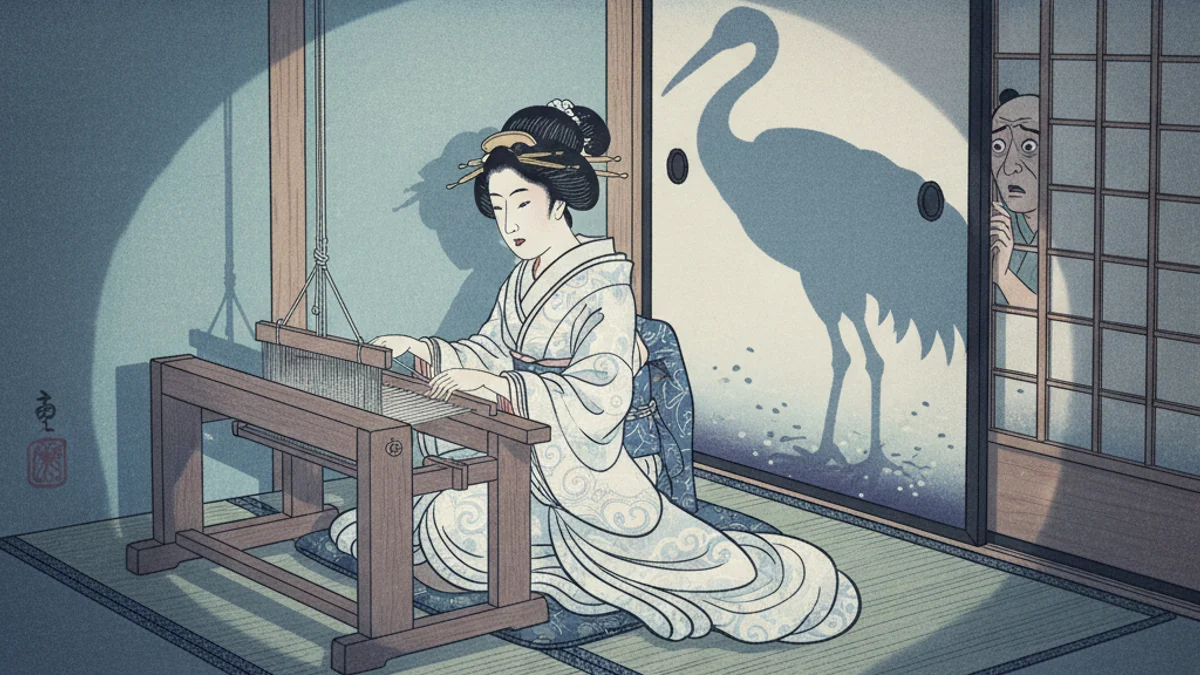
One snowy evening, a poor man found a majestic crane struggling in a hunter’s trap. Moved by pity, he released the bird, which flew gracefully into the winter sky. That night, a beautiful young woman arrived at his door, seeking shelter. She eventually became his wife, bringing joy to his humble home. To help with their poverty, she offered to weave a special silk, but on one condition: he must never look inside the room while she worked. She produced cloth of such exquisite beauty that it sold for a fortune. However, curiosity eventually poisoned the man's mind. Peeking through the door, he was horrified to see a crane plucking its own white feathers to weave the loom. Because the secret was revealed, the crane—his wife—had to leave. She took to the sky, leaving the heartbroken man to regret his broken promise forever.
The Moral
Respect the boundaries of others and cherish the trust placed in you, for curiosity can destroy the very things you love.
“You must promise me one thing: never look into the room while I am weaving my cloth.”
Fun Fact
In Japan, the crane is a popular subject for origami, and it is believed that folding 1,000 paper cranes can grant a person one special wish.
Frequently Asked Questions
What is the moral of The Grateful Crane?
The moral is that trust is fragile and must be respected. It teaches that breaking a promise out of curiosity can lead to the loss of something precious and irreplaceable.
Why did the crane woman leave at the end?
The crane woman had to leave because her true identity was discovered by the man. In Japanese folklore, once a supernatural being's secret is revealed to a human, the magical bond is broken.
What is the Japanese title of this story?
The story is known in Japan as 'Tsuru no Ongaeshi,' which translates to 'The Crane's Repayment of Gratitude.' It is one of the most famous examples of the 'repayment of a favor' motif.
What was the woman weaving in the story?
She was weaving a supernatural cloth made from her own feathers. This act represents her deep sacrifice and gratitude for the man who saved her life from the hunter's trap.
Is The Grateful Crane a true story?
No, it is a traditional Japanese folk tale or 'minwa.' It serves as a metaphorical story to teach cultural values like gratitude, kindness to animals, and the importance of keeping one's word.
What does the crane symbolize in Japanese culture?
The crane is a powerful symbol of longevity, luck, and fidelity. It is often said to live for a thousand years, making it a sacred bird in many East Asian mythologies.