Story Summary
Discover the story of Diogenes and the Lantern, a classic tale where the Greek philosopher searches broad daylight for an honest man to expose human hypocrisy.
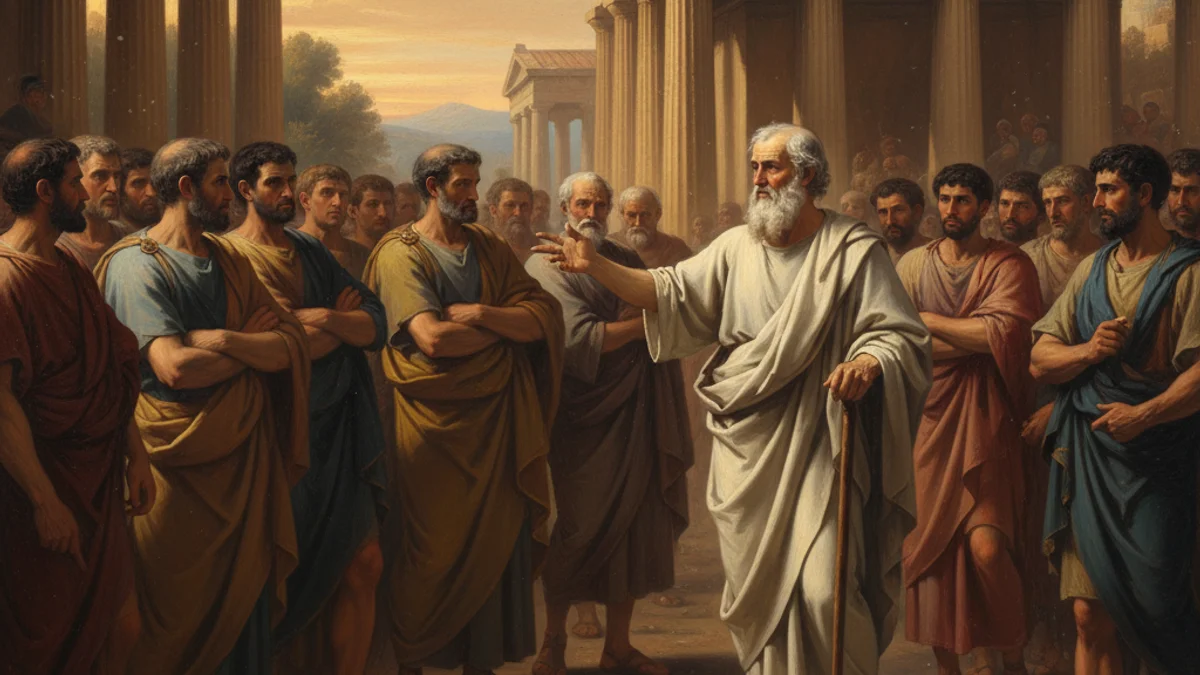
In the bustling marketplace of ancient Athens, beneath a blazing midday sun, the philosopher Diogenes of Sinope engaged in a peculiar protest. He walked through the crowded streets holding a lit lantern aloft, peering intently into the faces of those he passed. The citizens, amused and bewildered, began to mock him. 'Diogenes, have you lost your mind?' they laughed. 'Why do you carry a lamp when the sun is at its zenith?' Diogenes did not smile. He raised the lantern to the eyes of his mockers and replied with a voice full of weary conviction, 'I am merely looking for an honest man.' He continued his walk, ignoring their jests, highlighting through his silent search that while the city was full of people, it was tragically empty of those with true integrity and virtue.
The Moral
True integrity is rare and often hidden behind social masks; we must strive to be people of substance rather than just faces in a crowd.
“I am looking for an honest man.”
Fun Fact
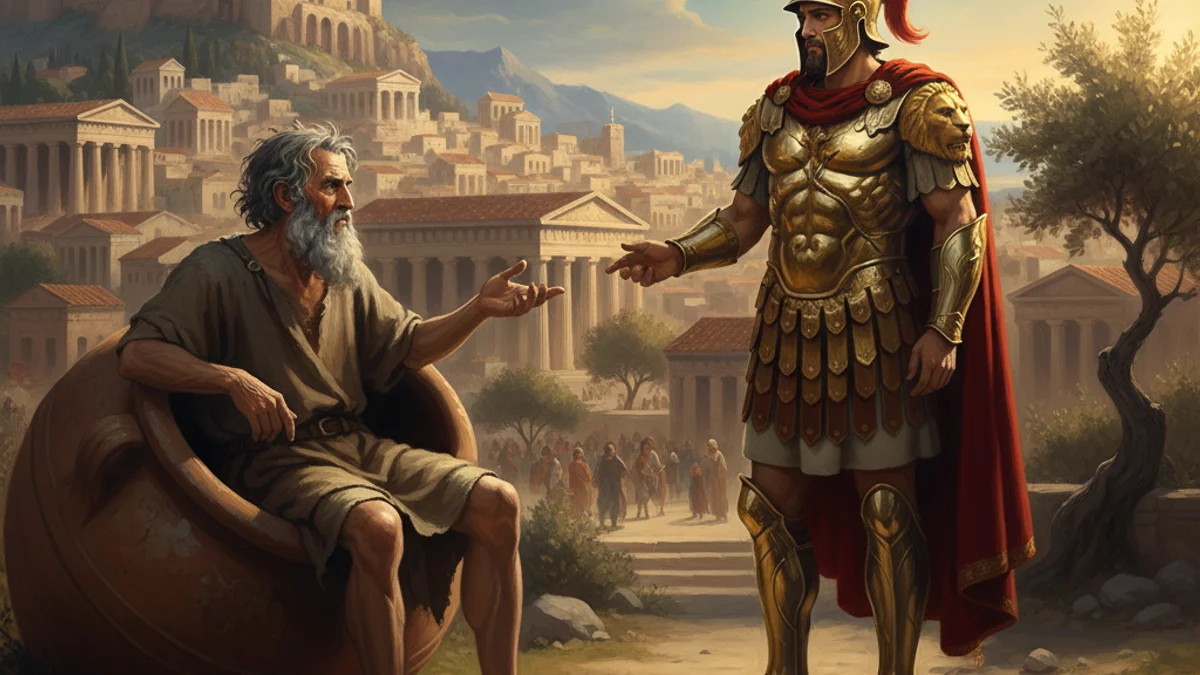
Diogenes was known for his extreme minimalism; he reportedly lived in a large wine jar and once threw away his only cup after seeing a child drink water with his hands.
Frequently Asked Questions
What is the moral of Diogenes and the Lantern?
The moral is that true virtue and honesty are rare qualities that are often missing even in crowded societies. It serves as a critique of hypocrisy and a call for individuals to live more authentically.
Why did Diogenes carry a lantern in the daytime?
He carried the lantern as a symbolic gesture to show that even with the brightest sunlight, it was difficult to find a person of genuine character. It was a visual metaphor for his philosophical search for truth.
Did Diogenes ever find an honest man?
According to legend, Diogenes never found the person he was looking for. His failure to find an 'honest man' was his way of stating that Athenian society had become morally bankrupt.
Who was Diogenes of Sinope?
Diogenes was a founder of the Cynic school of philosophy who lived in a large ceramic jar. He was famous for his extreme poverty, his wit, and his public challenges to social norms.
What does the lantern symbolize in this story?
The lantern symbolizes the light of reason and the deliberate search for truth. It represents the effort required to look past superficial appearances to find the actual essence of a person.
What is Cynicism in ancient philosophy?
In ancient Greece, Cynicism was a school of thought that advocated living in virtue and according to nature. It rejected conventional desires for wealth, power, and fame in favor of a simple, honest life.
Discussion (0)
Share your thoughts on this story
No comments yet. Be the first to share your thoughts!