Story Summary
Explore the tragic Greek myth of Apollo and Marsyas, where a satyr’s musical hubris leads to a deadly contest against the god of music and a gruesome fate.
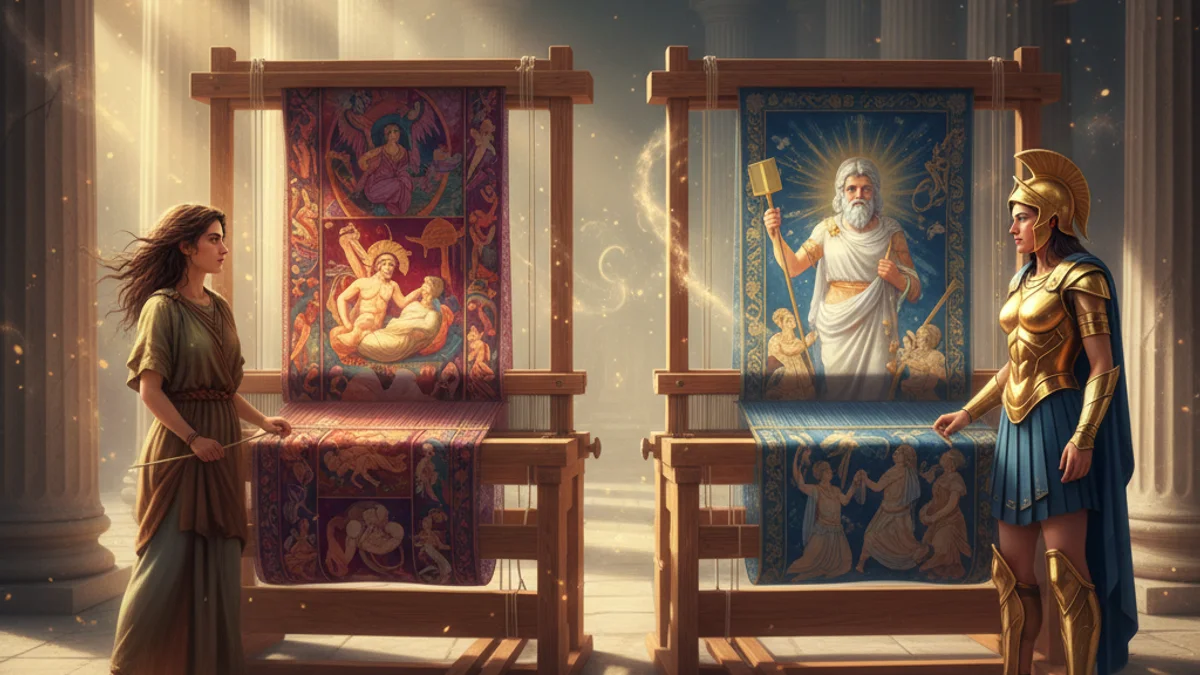
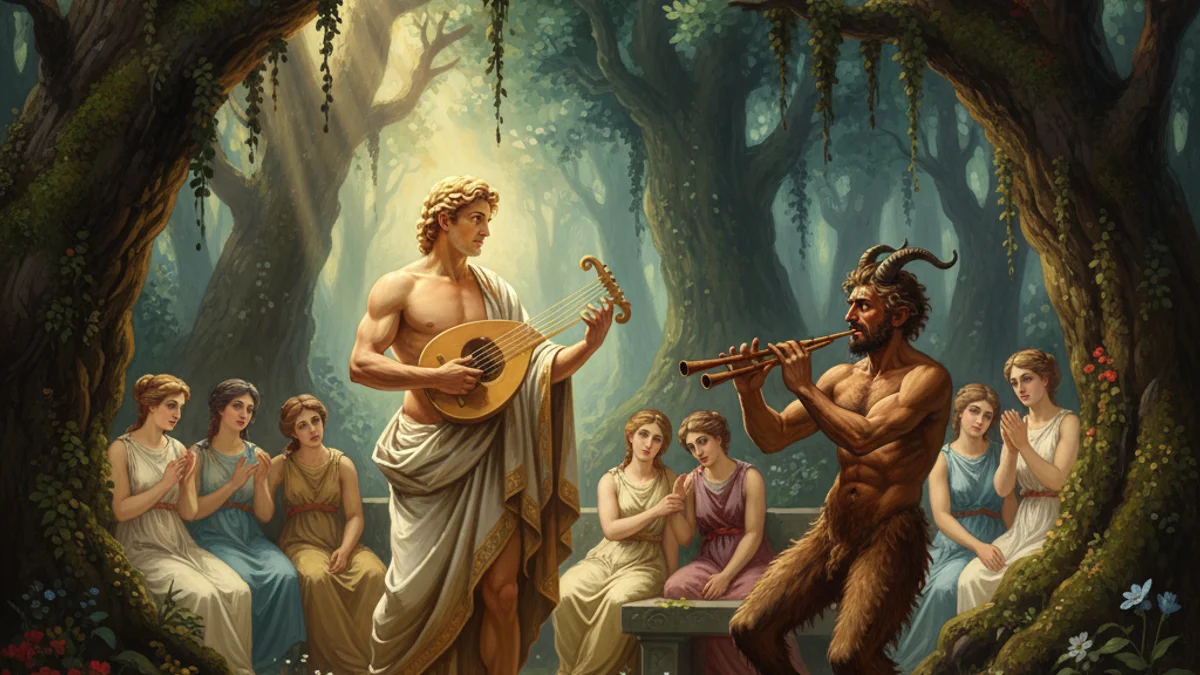
The goddess Athena once crafted the aulos, a double-piped flute, but discarded it when she saw how the effort of playing it distorted her face. The satyr Marsyas found the instrument and, through tireless practice, attained a skill that rivaled the gods. Blinded by his own talent, Marsyas challenged Apollo, the god of music, to a contest. The Muses were appointed as judges, with the winner allowed to do whatever he wished to the loser. Marsyas played the flute with earthy passion, while Apollo played his golden lyre with celestial grace. The Muses were initially torn, but Apollo then challenged Marsyas to play his instrument upside down and sing while playing. While the lyre allowed for both, the flute did not. Apollo was declared the victor. To punish Marsyas for his hubris, Apollo tied the satyr to a pine tree and flayed him alive, a grim reminder that mortal ambition should never overstep divine boundaries.
The Moral
Hubris and the belief that mortal talent can surpass divine perfection lead to inevitable and tragic destruction.
“No mortal skill can match the harmony of the heavens.”
Fun Fact
In ancient Greek art, this story was often used to represent the tension between the rational, ordered music of the lyre and the wild, emotional music of the flute.
Frequently Asked Questions
What is the moral of Apollo and Marsyas?
The story serves as a warning against hubris, teaching that mortals should not challenge the gods or claim superiority over divine forces. It emphasizes the danger of pride and the consequences of overestimating one's own abilities.
Why did Athena throw away the flute?
Athena discarded the aulos because she realized that blowing into the pipes puffed out her cheeks and distorted her beautiful features. When she saw her reflection in a stream, she threw the instrument away in disgust.
How did Apollo win the musical contest?
Apollo won by challenging Marsyas to play his instrument upside down and sing simultaneously. While the lyre's design permitted this, it was physically impossible to do with a flute, securing Apollo's victory through a technicality.
What happened to Marsyas after the contest?
As the winner, Apollo chose a brutal punishment for Marsyas's perceived arrogance. He tied the satyr to a tree and flayed his skin from his body while Marsyas was still alive.
Who were the judges in the myth of Apollo and Marsyas?
The Muses, the goddesses of inspiration and the arts, were the primary judges. In some versions of the myth, King Midas was also present and famously suffered his own punishment for voting against Apollo.
What is the significance of the River Marsyas?
According to the myth, the tears of Marsyas's friends and the forest creatures who mourned his death gathered to form the River Marsyas in Phrygia. Some versions suggest the river was formed from his own blood or the spirit of his music.