Story Summary
Discover The Dancing Bear, a poignant Jewish folklore tale where faith and a Rebbe’s melody transform a moment of humiliation into a spiritual victory.
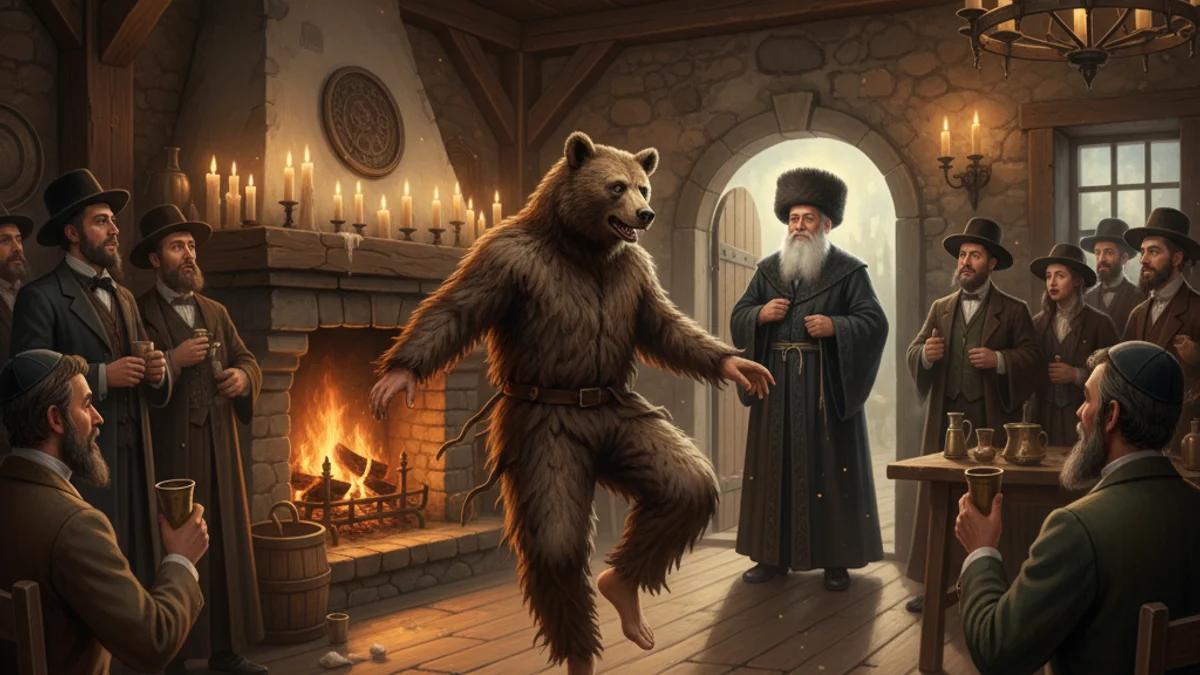
In a small village in Eastern Europe, a poor Jewish innkeeper fell deeply into debt to a cruel and arrogant landlord. Seeking to humiliate the man for the amusement of his wealthy guests, the landlord issued a heartless ultimatum: 'At my banquet tonight, you shall dress in a heavy, moth-eaten bear skin and dance like a beast. If you fail to make my guests laugh, you and your family will be cast out into the freezing winter.' Terrified, the innkeeper donned the suffocating skin, feeling his dignity slip away as he shuffled clumsily across the floor. Just as the mockery reached its peak, the Baal Shem Tov appeared at the edge of the room. The Rebbe looked into the innkeeper's eyes, seeing not a fool in a costume, but a soul of infinite light. The Rebbe began to hum a holy niggun—a wordless melody of deep spiritual power. As the music swelled, the 'bear' stopped his stumbling and began to dance with a celestial, majestic grace that silenced the room. The landlord, struck by a sudden, inexplicable awe and a heavy heart of repentance, fell to his knees, forgave the debt, and begged for the man's blessing. The innkeeper was freed, proving that even in the lowliest of circumstances, a man's inner spark can never be extinguished.
The Moral
True human dignity is an internal light that cannot be taken away by external humiliation or hardship.
“A man may be forced to wear the skin of a beast, but his soul remains the image of the Divine.”
Fun Fact
This story belongs to the genre of Hasidic Tales, which were popularized by writers like Martin Buber to share the mystical teachings of the soul with a wider audience.
Frequently Asked Questions
What is the moral of The Dancing Bear?
The moral is that every human being possesses an inherent divine dignity that cannot be erased by poverty or mockery. It teaches that faith and spiritual support can transform suffering into a source of inspiration.
Who is the Baal Shem Tov in Jewish folklore?
The Baal Shem Tov was the 18th-century founder of Hasidic Judaism, known in folklore as a mystic and miracle worker. He often appears in stories to help the downtrodden and reveal the hidden holiness in everyday life.
Why was the innkeeper forced to dress as a bear?
The innkeeper owed a significant debt to his landlord and could not pay it. The cruel landlord used this debt to coerce the man into performing a humiliating act for the entertainment of his guests.
What does the bear skin symbolize in the story?
The bear skin symbolizes the external, often ugly or difficult circumstances that hide a person's true essence. It represents the 'garments' of the physical world that can mask the beauty of the soul.
How does the Rebbe save the innkeeper?
The Rebbe saves him not through physical force, but through a spiritual melody called a niggun. This music connects the innkeeper to his higher self, giving him the grace to transcend his humiliation and change the landlord's heart.
Is The Dancing Bear based on a true event?
While the story is a legend within Hasidic tradition, it reflects the very real social dynamics and hardships faced by Jewish communities in Eastern Europe during the 18th and 19th centuries.
Discussion (0)
Share your thoughts on this story
No comments yet. Be the first to share your thoughts!