Story Summary
Explore the legacy of Plato's Academy, the world's first university, where ancient thinkers gathered in olive groves to define the foundations of Western thought.
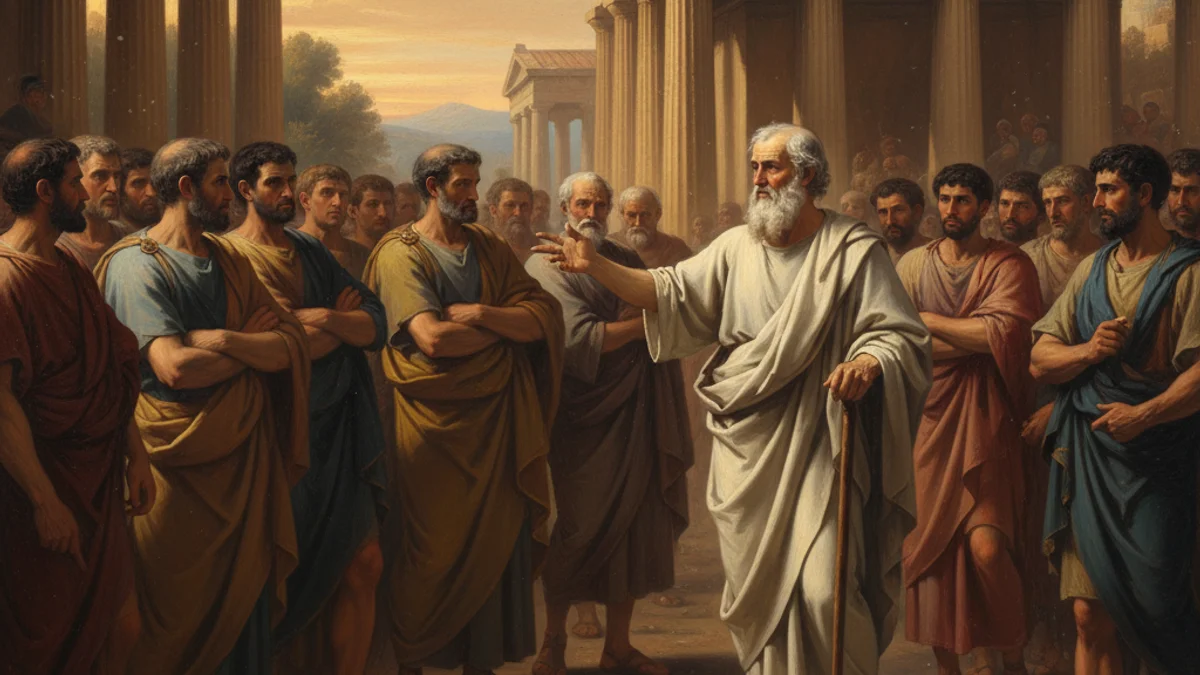
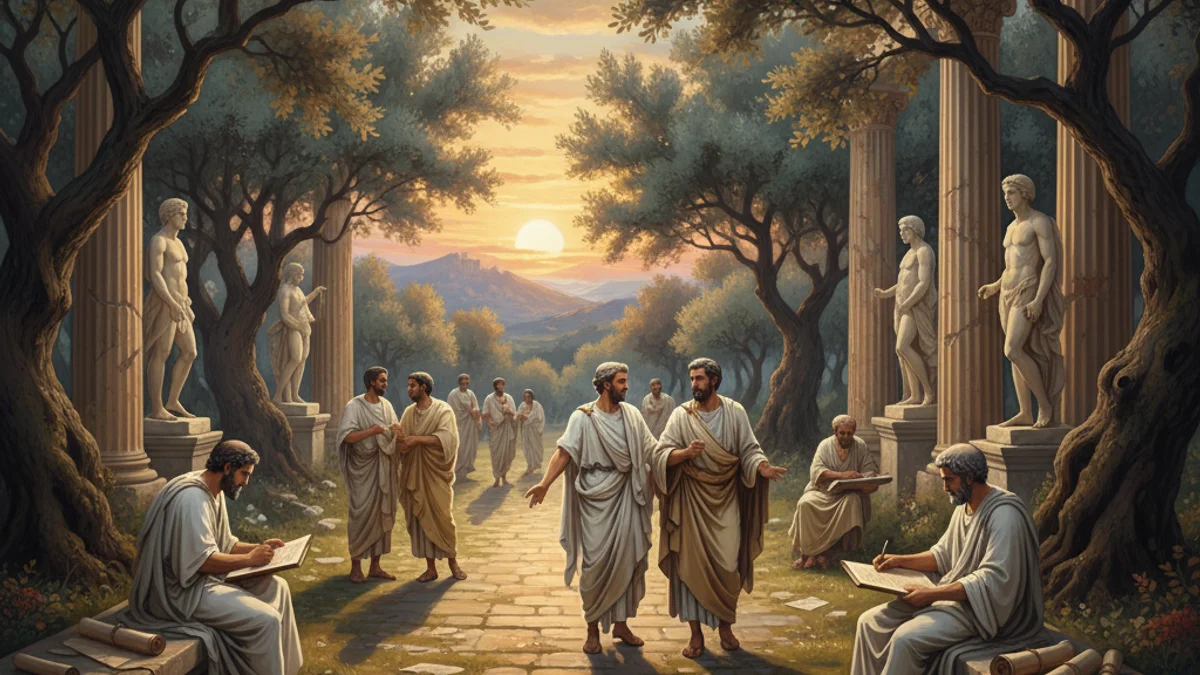
After the death of his mentor Socrates, Plato traveled the Mediterranean before returning to Athens in 387 BCE. In a sacred grove of olive trees dedicated to the hero Hekademos, he founded his school, the Academy. Legend says the entrance bore the inscription: 'Let no one ignorant of geometry enter here,' reflecting Plato's belief that mathematical reasoning was the gateway to higher truth. Unlike modern schools, the Academy was a community of seekers where scholars walked among the trees, engaging in dialectic—the rigorous process of question and answer. For nine centuries, it served as the intellectual heart of the ancient world, producing minds like Aristotle and shaping the foundations of Western science and politics. It was more than a school; it was the birthplace of the university and the idea that the pursuit of knowledge is a lifelong, communal journey.
The Moral
True wisdom is found through disciplined reasoning and the collaborative pursuit of knowledge within a community of seekers.
“The direction in which education starts a man will determine his future in life.”
Fun Fact
The modern word 'academy' is derived directly from the name of the grove, 'Hekademeia,' where Plato taught his students.
Frequently Asked Questions
What was the purpose of Plato's Academy?
The Academy was founded to train leaders and philosophers to think critically and seek the truth. It aimed to apply philosophical principles to politics and the governance of society.
Where was Plato's Academy located?
It was located just outside the city walls of ancient Athens in a public grove named after the hero Hekademos. This location provided a peaceful environment for contemplation and discussion.
Who was the most famous student of the Academy?
Aristotle was the most famous student, arriving at the age of seventeen and staying for twenty years. He eventually founded his own school, the Lyceum, after Plato's death.
What was the significance of geometry at the Academy?
Plato believed geometry was essential because it trained the mind to think abstractly. He viewed mathematical certainty as a necessary step toward understanding the ultimate nature of reality.
How long did the Academy remain in operation?
The Academy operated for nearly nine centuries with some interruptions. It was famously closed by the Byzantine Emperor Justinian in 529 AD as part of a crackdown on pagan institutions.
How did teaching work at the Academy?
The Academy used the Socratic method, focusing on dialogue, debate, and lectures. Students and teachers worked together as a community rather than through a rigid hierarchy.