Story Summary
Discover the Zen wisdom in The Taste of Banzo's Sword, a tale of Matajuro Yagyu's journey from a rejected son to a master through patience and presence.
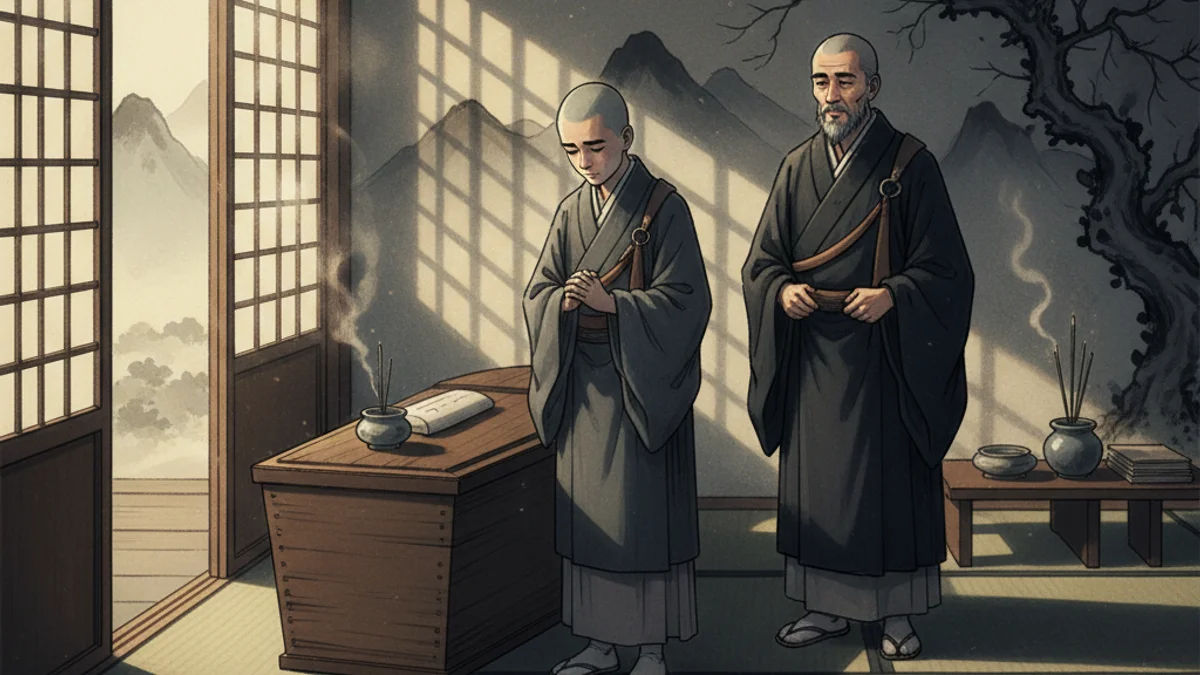
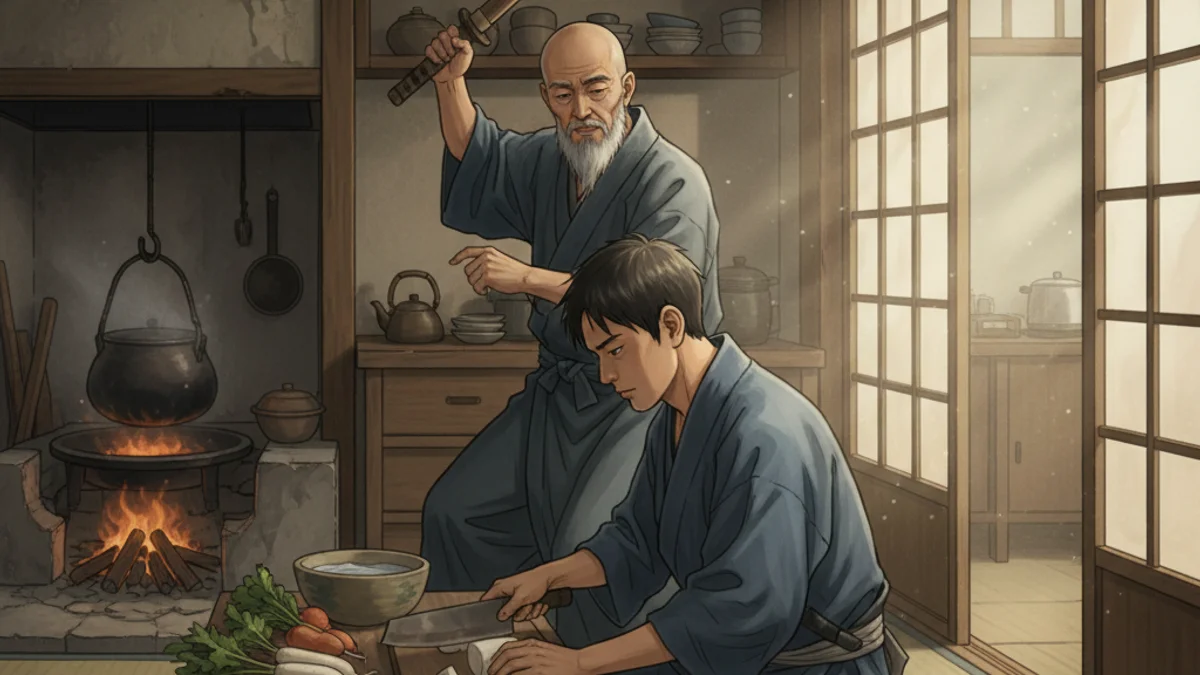
Matajuro Yagyu, the son of a renowned swordsman, was disowned by his father for his perceived lack of talent. Desperate to prove himself, he sought out the legendary master Banzo. When Matajuro asked how long it would take to become a master, Banzo replied, 'Ten years.' Dissatisfied, Matajuro promised to work twice as hard and asked how long it would take then. 'Thirty years,' Banzo replied. For the next several years, Matajuro was forbidden from even touching a sword. Instead, he was made to cook, clean, and garden. Suddenly, Banzo began to ambush him with a wooden sword during his daily chores. Matajuro had to develop a constant, intuitive awareness to avoid the surprise strikes. Only when he had achieved this state of total presence and spontaneous reaction did Banzo begin his formal instruction, for Matajuro had already learned the true essence of the sword.
The Moral
True mastery cannot be rushed; it requires the patience to build a foundation of constant awareness and the ego-less dedication to the process over the result.
“When you are in such a hurry for results, you will seldom learn quickly.”
Fun Fact
The Yagyu family mentioned in this story actually founded the Yagyu Shinkage-ryu, one of the most influential schools of Japanese swordsmanship in history.
Frequently Asked Questions
What is the moral of The Taste of Banzo's Sword?
The story teaches that impatience and ego are obstacles to learning. True mastery comes from total presence and a foundation of mindfulness rather than just technical practice.
Why did Banzo increase the training time when Matajuro offered to work harder?
Banzo knew that an obsession with speed and results creates a distracted mind. By increasing the time, he forced Matajuro to let go of his hurry and focus on the current moment.
What do the household chores represent in the story?
The chores represent 'Mushu' or 'no-mind' practice. They were designed to strip away Matajuro's ego and build physical discipline and alertness without the distraction of a weapon.
Is Matajuro Yagyu a real historical figure?
Yes, the Yagyu family was a real and famous lineage of swordsmen who served as the official instructors to the Tokugawa Shoguns in feudal Japan.
What is the 'taste' of the sword referred to in the title?
The 'taste' refers to the constant, underlying awareness of danger and readiness. It is the internal feeling of the sword's presence that exists even when one is not holding it.
Why did Banzo attack Matajuro during his daily chores?
The random attacks taught Matajuro that mastery is not a performance reserved for the dojo. It must be a natural, spontaneous part of one's being at every moment of the day.
Discussion (0)
Share your thoughts on this story
No comments yet. Be the first to share your thoughts!