Story Summary
Discover The Fairy and the Woodcutter, a Korean myth about a man who marries a celestial being but loses everything after failing to follow a deer's warning.
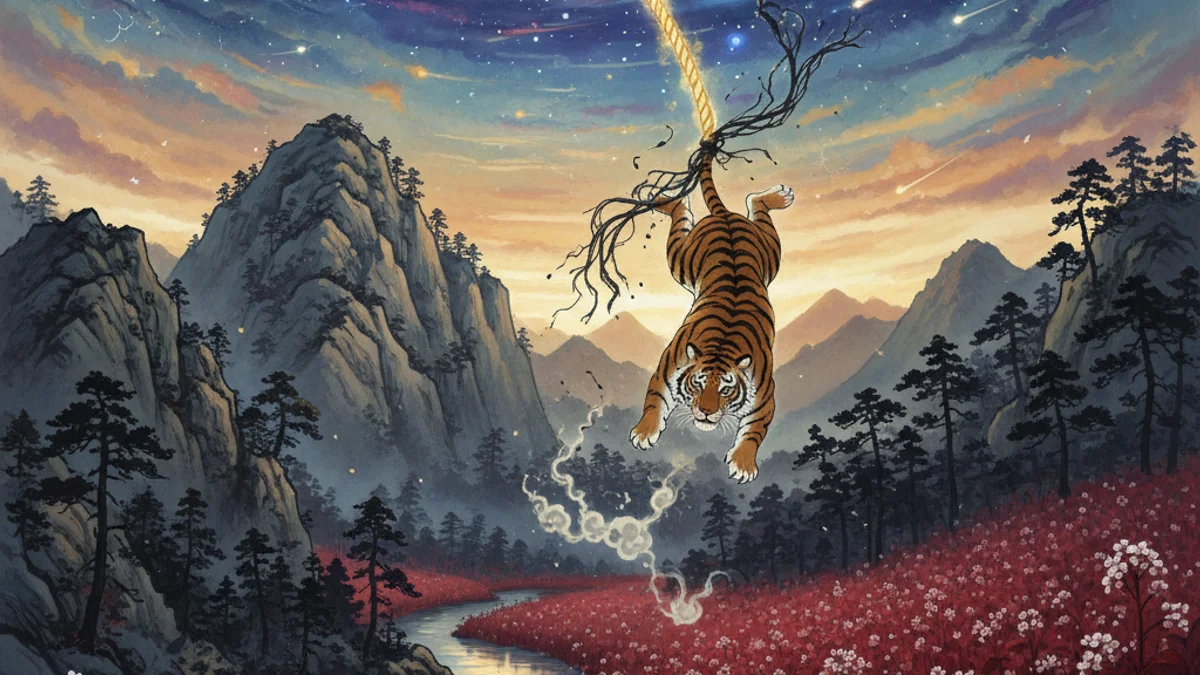
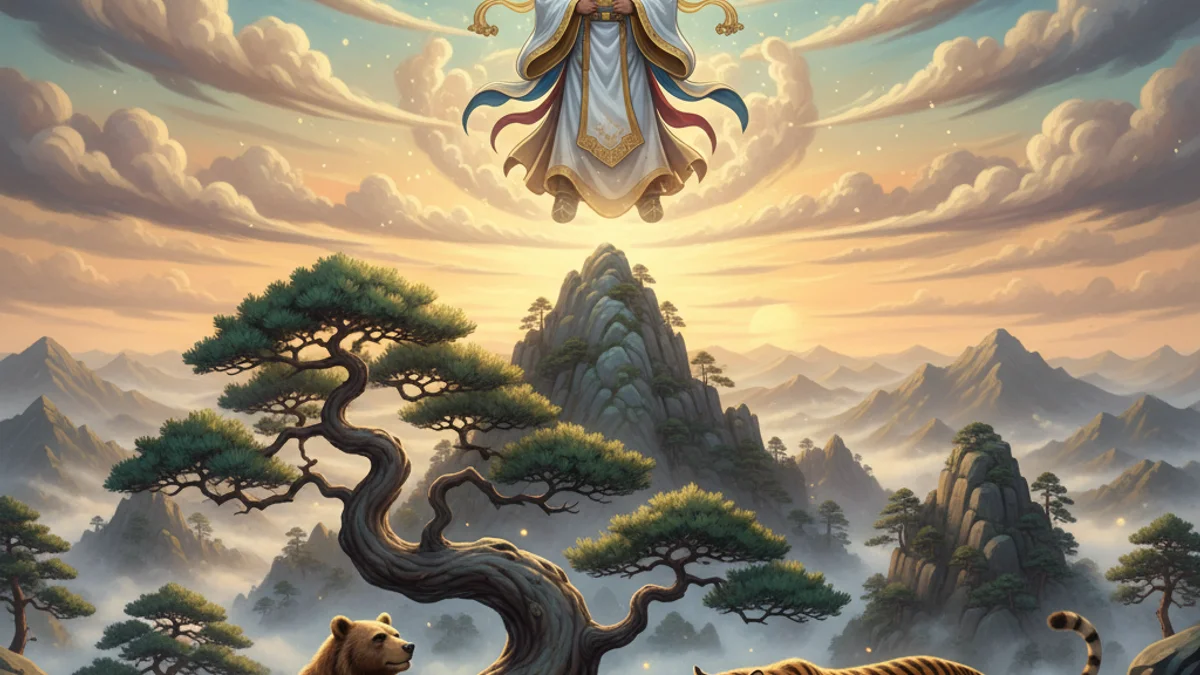
In the ancient mountains of Korea, a poor but kind woodcutter saved a deer from a hunter. In gratitude, the magical deer told him how to find a wife: he must go to a secret pond where fairies bathe and hide one set of celestial robes. The woodcutter followed the advice, and the fairy, unable to return to heaven without her clothes, married him. They lived happily for years and had two children. However, the deer had warned the woodcutter never to return the robes until they had three children. Overcome by his wife's homesickness, the woodcutter eventually showed her the hidden clothes. Immediately, the fairy donned the robes, took a child in each arm, and ascended to the heavens. Heartbroken, the woodcutter consulted the deer again and used a magical bucket to reach the celestial kingdom. Though reunited with his family, he missed his mother on Earth. He was given a dragon-horse to visit her but warned never to touch the ground. While eating a bowl of hot ginger porridge his mother prepared, he spilled some, the horse bolted, and he fell. Stuck on Earth forever, he eventually turned into a rooster, forever crowing at the sky for his lost family.
The Moral
True happiness cannot be built on deception, and one must respect the weight of warnings and the consequences of one's choices.
“Do not give her the robes until she has borne you three children, for only then will she be unable to leave.”
Fun Fact
The ending where the woodcutter turns into a rooster is an aetiological myth, a story intended to explain why a physical or social phenomenon—in this case, the crowing of a rooster—exists.
Frequently Asked Questions
What is the moral of The Fairy and the Woodcutter?
The story emphasizes that foundations built on dishonesty or theft, like stealing the fairy's robes, lead to ultimate loss. It also explores the tension between earthly duties and heavenly desires.
Why did the woodcutter steal the fairy's clothes?
A magical deer he saved gave him the secret to finding a wife, advising him to take the clothes so the fairy could not fly back to heaven. This act represents the woodcutter's desperation and the moral complexity of the tale.
Why did the fairy leave her husband and children?
The fairy belonged to the celestial realm and could only return once she had her magical robes. Her departure symbolizes the pull of one's true nature and home over earthly attachments.
What happened to the woodcutter at the end of the story?
After falling from his dragon-horse and being unable to return to heaven, he died of a broken heart. He transformed into a rooster, which is why roosters are said to crow while looking toward the heavens.
Why was the number of children significant in the deer's warning?
The deer warned that the woodcutter needed three children because a human can only carry two children (one in each arm). With three, the fairy would have been unable to fly away with all of them at once.
Is The Fairy and the Woodcutter unique to Korea?
While it is a cornerstone of Korean folklore, it belongs to the global 'Swan Maiden' motif found in many cultures. However, the specific ending involving the dragon-horse and the rooster is uniquely Korean.
Discussion (0)
Share your thoughts on this story
No comments yet. Be the first to share your thoughts!