Story Summary
Explore the legend of The Arrow Bundle, where Genghis Khan teaches his sons a vital lesson on unity and strength. Discover why a united tribe is unbreakable.
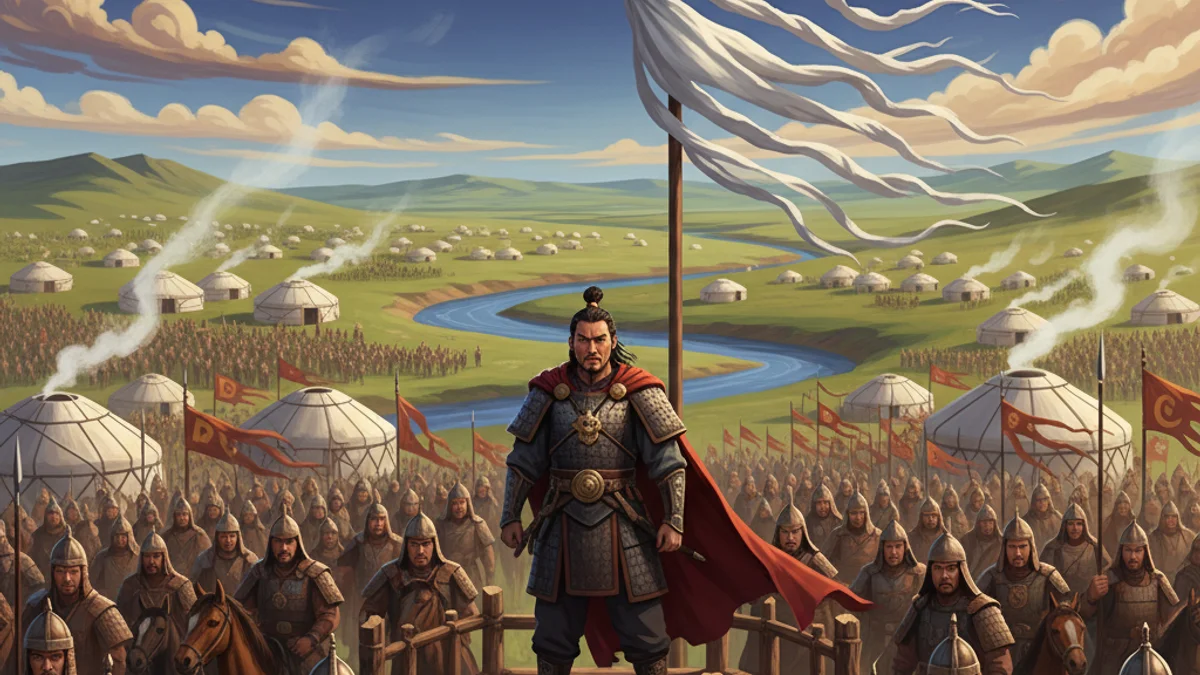
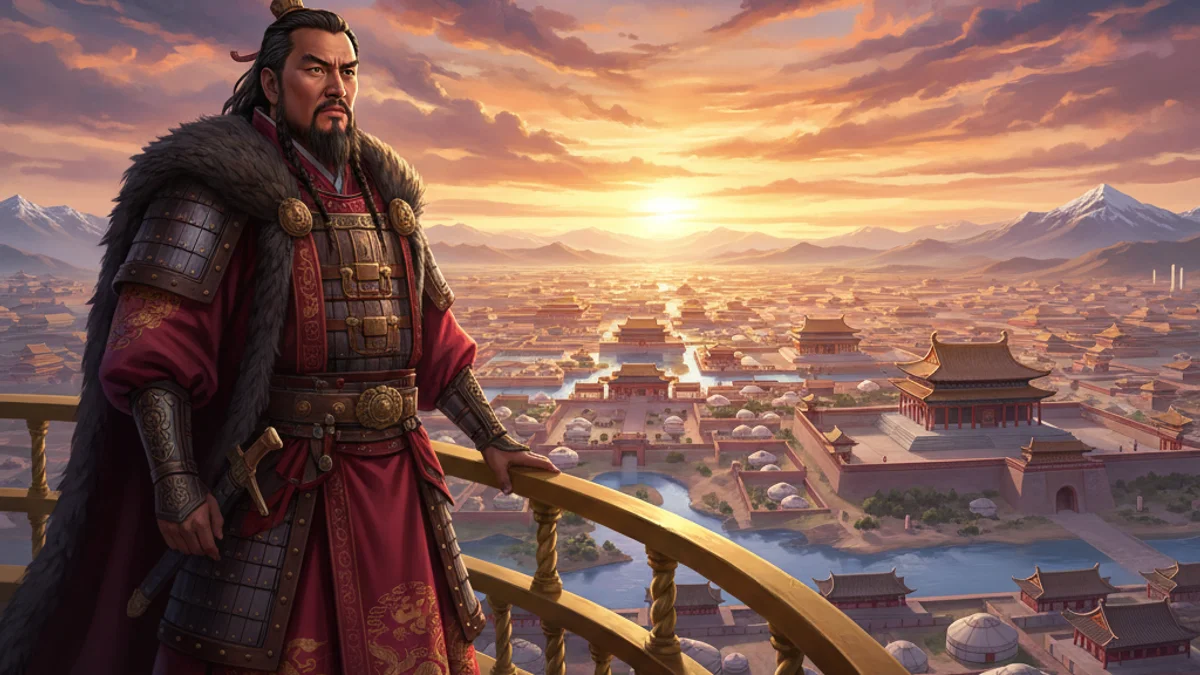
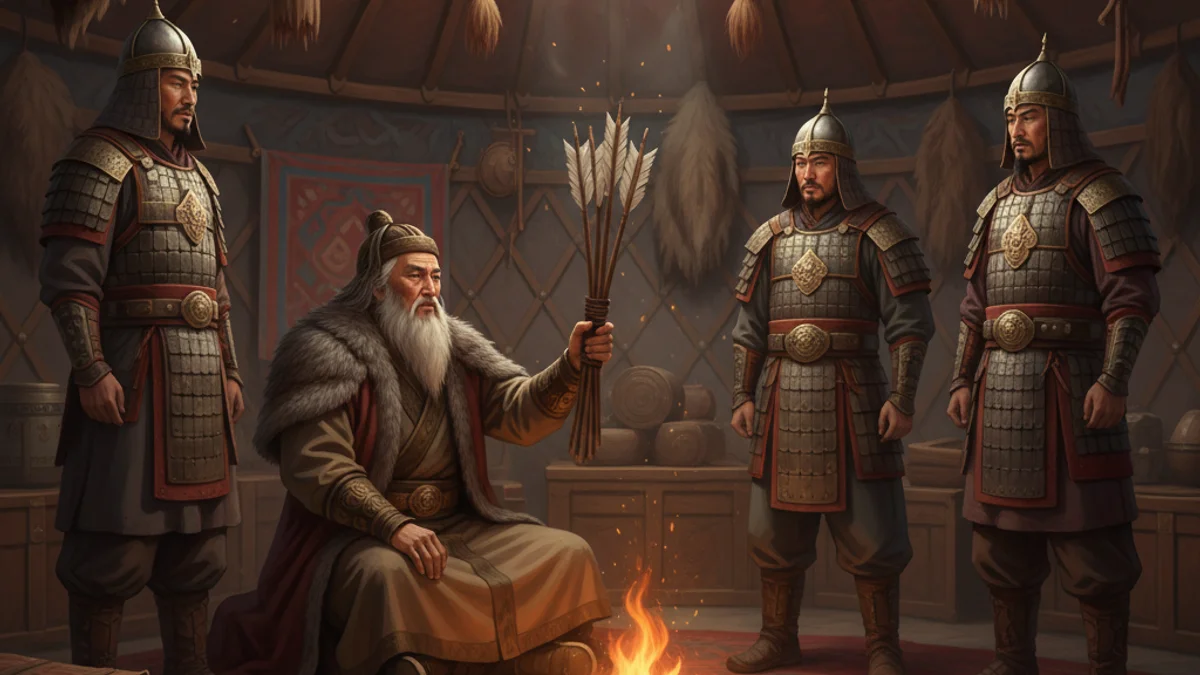
As the Great Khan neared the end of his days, he watched his sons grow increasingly fractious, their rivalries threatening the empire he had spent a lifetime forging. To teach them a lesson that words could not convey, Genghis Khan summoned his sons to his presence. He handed each of them a single arrow and commanded them to break it. With ease, each son snapped the wooden shaft in two. Then, the Khan took several arrows and bound them tightly together with a leather cord. He handed the bundle to his eldest son and ordered him to break it. Despite his great strength, the son could not even bend the bundle. The Khan passed it to each brother in turn, and each failed. 'Separately,' Genghis Khan told them, 'you are as fragile as a single arrow. But so long as you remain bound together in purpose and loyalty, no enemy can ever hope to break you.'
The Moral
Unity provides an unbreakable strength that no individual can possess alone.
“Separately, you are as fragile as a single arrow; bound together, no enemy can break you.”
Fun Fact
This parable is so powerful that it appears in various forms across many cultures, including Aesop's Fables and the Japanese legend of Mori Motonari.
Frequently Asked Questions
What is the moral of The Arrow Bundle?
The moral is that there is strength in unity. While an individual is easily overcome, a group that stands together is indestructible.
Who originally told the story of the arrows in Mongol history?
While often attributed to Genghis Khan, the legend first appears in 'The Secret History of the Mongols' told by his ancestor, the mother Alan Gua, to her five sons.
Is The Arrow Bundle a true story?
It is a legendary account found in the 13th-century text 'The Secret History of the Mongols.' While it may be based on real events, it functions primarily as a foundation myth for Mongol unity.
How many arrows were in the bundle?
In the historical texts, there were five arrows, representing the five sons of the foremother Alan Gua, though later folklore often adapts this to Genghis Khan's four main heirs.
What does the arrow represent in Mongolian culture?
The arrow is a symbol of the warrior, but in this context, it represents the individual's vulnerability when separated from the protection of the family or tribe.
Why is this story significant to the Mongol Empire?
It served as a political and social blueprint for the Mongol tribes, emphasizing that their survival and eventual conquest of the world depended entirely on their ability to remain a cohesive unit.
Discussion (0)
Share your thoughts on this story
No comments yet. Be the first to share your thoughts!