Story Summary
Explore the legend of The Kamikaze Divine Wind, where massive typhoons thwarted Kublai Khan's Mongol invasions and saved Japan from certain conquest in the 1200s.
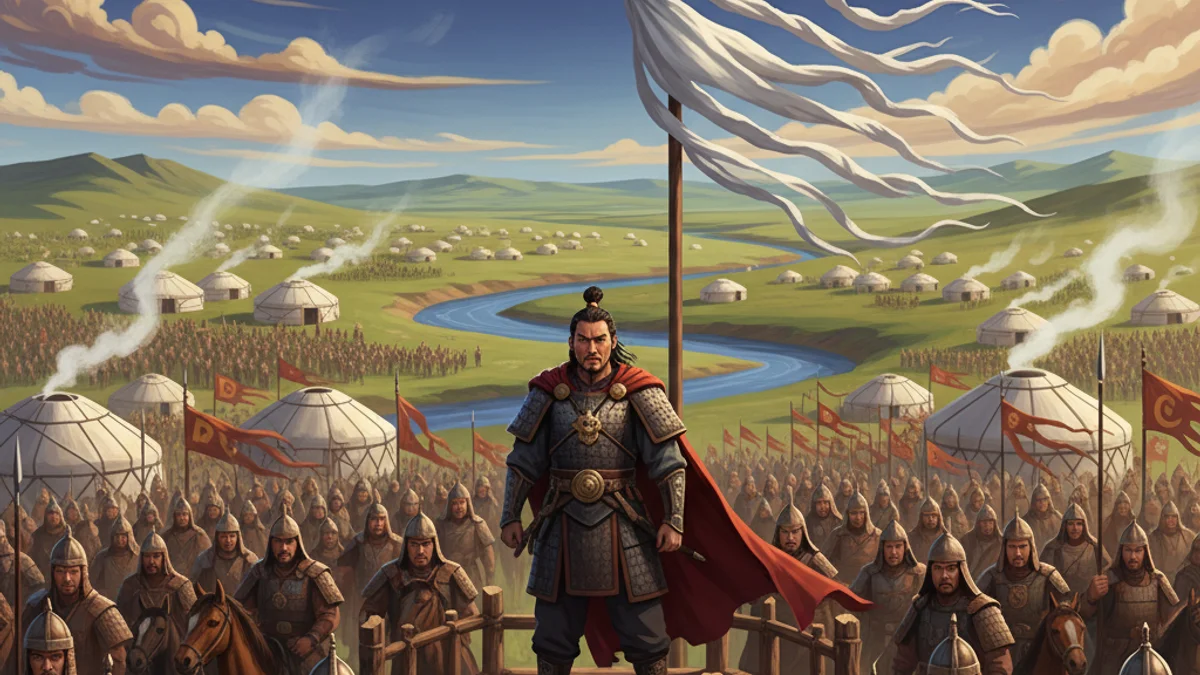
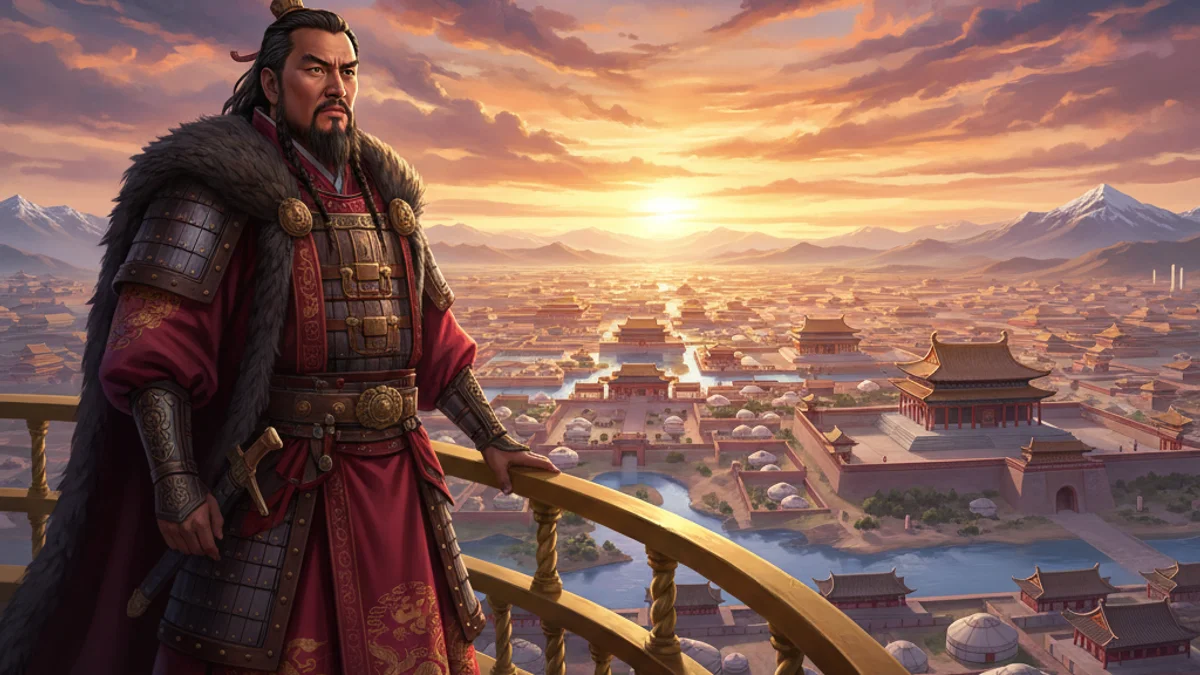
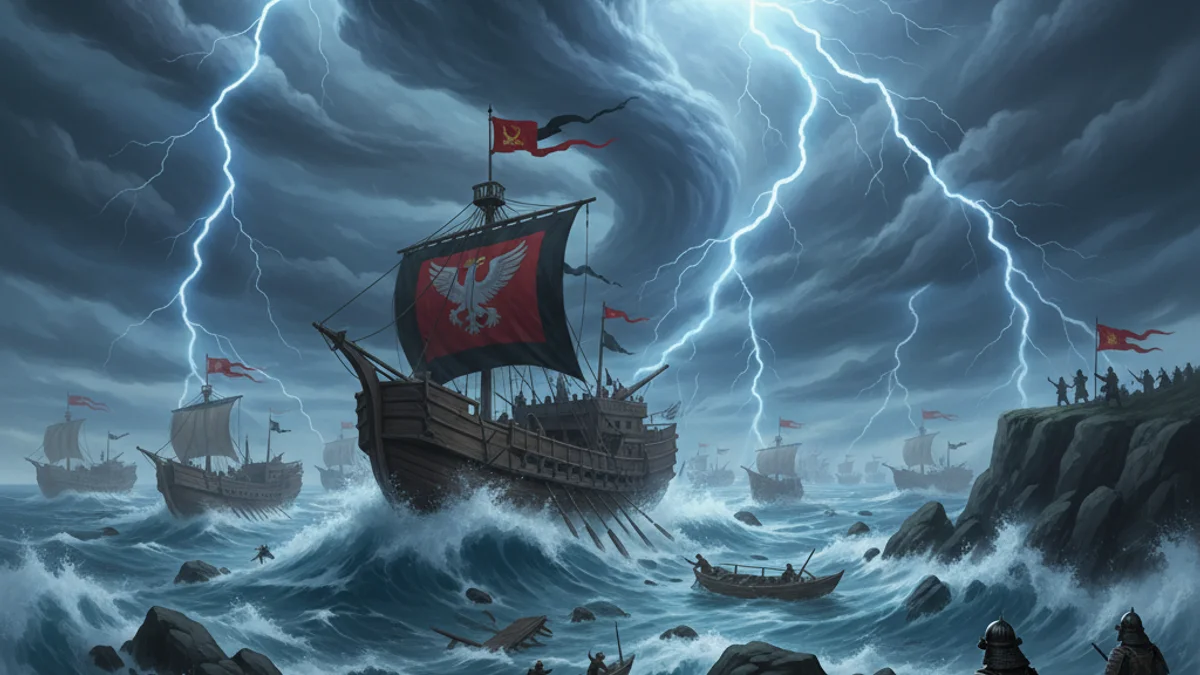
In the 13th century, Kublai Khan, the Great Khan of the Mongol Empire, turned his sights toward the islands of Japan. Having conquered much of the known world with his unstoppable horsemen, the Khan demanded tribute from the Japanese. When they refused, he launched two of the largest naval armadas in human history. In 1274 and again in 1281, thousands of ships carrying tens of thousands of Mongol, Chinese, and Korean warriors descended upon Hakata Bay. The Japanese samurai fought with desperate bravery, but they were severely outnumbered and struggled against the Mongols' gunpowder bombs and coordinated tactics. However, just as the Mongol victory seemed inevitable, the skies darkened and the sea rose in a violent fury. Massive typhoons, which the Japanese called 'Kamikaze' or 'Divine Wind,' struck the coast, smashing the Mongol fleets against the rocks and swallowing the Great Khan’s ambitions. Nature succeeded where swords could not, preserving Japan’s independence and ending the Mongol dream of maritime empire.
The Moral
Even the most powerful human empires are subject to the overwhelming and unpredictable forces of nature.
“The Great Khan ruled the land, but the gods of the wind ruled the sea.”
Fun Fact
Archaeological underwater excavations in Hakata Bay have uncovered Mongol shipwrecks and stone anchors that corroborate the scale of the storm's destruction.
Frequently Asked Questions
What is the moral of The Kamikaze Divine Wind?
The story teaches that human ambition and military might have limits, and that nature remains the ultimate, unpredictable force that can humble even the greatest conquerors.
Who was Kublai Khan in this story?
Kublai Khan was the grandson of Genghis Khan and the founder of the Yuan Dynasty. He sought to expand the Mongol Empire into the sea by conquering Japan.
Did the Kamikaze really happen historically?
Yes, historical and geological records confirm that two major typhoons struck the coast of Japan during the Mongol invasions of 1274 and 1281, decimating their fleets.
What does the word Kamikaze mean?
The word Kamikaze translates to 'Divine Wind.' It was named by the Japanese who believed the storms were sent by the gods (Kami) to protect the nation.
How did the Mongols try to invade Japan?
The Mongols launched two massive naval invasions from China and Korea, utilizing thousands of ships and advanced weaponry like explosive bombs and crossbows.
Why were the Mongol invasions of Japan significant?
These invasions were among the largest naval operations in history prior to modern times and marked the limit of Mongol expansion in the East.
Discussion (0)
Share your thoughts on this story
No comments yet. Be the first to share your thoughts!