Story Summary
Experience the powerful legend of The Corn Woman, a Native American myth about Selu’s sacrifice to provide sustenance and the sacred origins of maize for all.
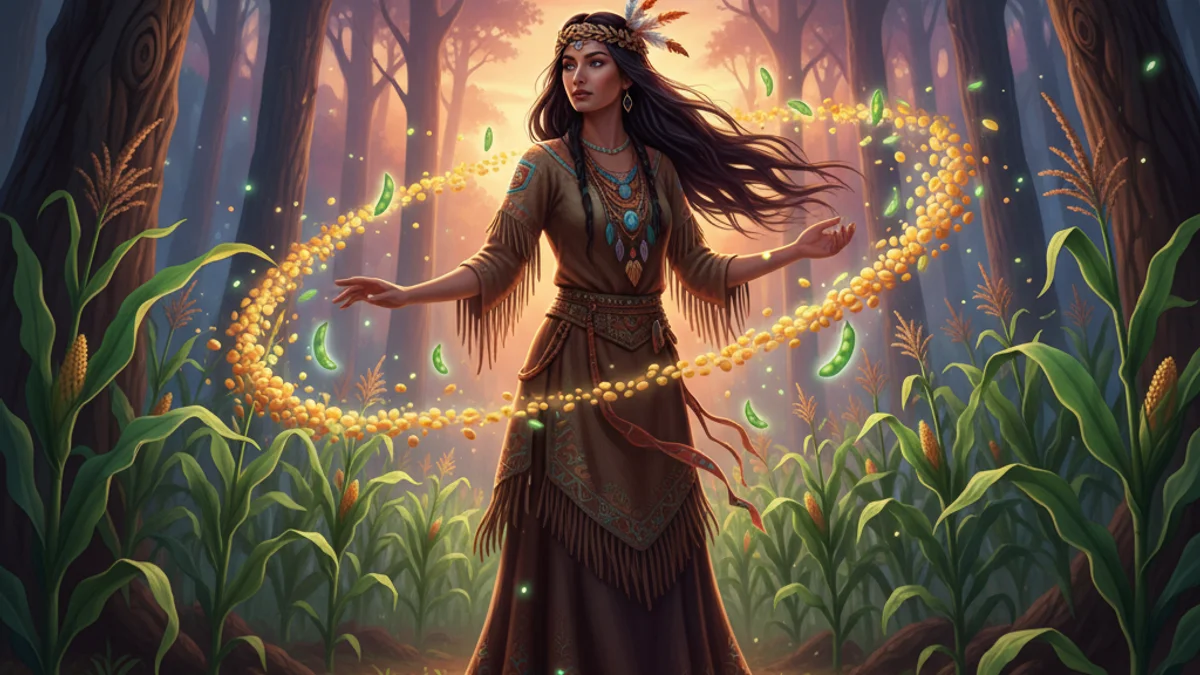
Long ago, Selu, the Corn Woman, lived with her two sons in a time of mystery. Each day, she would enter her storehouse and emerge with baskets brimming with corn and beans, despite no crops being planted. Her sons, filled with curiosity and suspicion, spied on her through a narrow crack in the wall. To their shock, they saw Selu rub her belly to produce corn and her sides to produce beans. Fearing her magic was witchcraft, the boys conspired to end her life. Selu, knowing their thoughts, instructed them that after her death, they must clear a path and drag her body over the ground seven times. They followed her command, and as her blood soaked into the earth, tall stalks of corn sprang up, providing food for all generations to come. Her life became the grain that sustained her people.
The Moral
Abundance is born from sacrifice, and we must respect the sacred relationship between the earth and the food it provides.
“Where my blood touches the earth, the green stalks shall rise to feed you.”
Fun Fact
The Cherokee still honor Selu during the Green Corn Ceremony, a festival of renewal and thanksgiving for the year's harvest.
Frequently Asked Questions
Who is the Corn Woman in Native American mythology?
In Cherokee and other Southeastern traditions, she is Selu, the first woman and the spirit of the corn. She represents the divine feminine and the source of all agricultural life.
Why did the sons decide to kill Selu?
The sons did not understand the nature of her power and believed her ability to produce food from her body was dark magic or witchcraft. Their fear led them to plot against her.
What is the significance of the blood in the story?
The blood symbolizes the life force of the mother being transferred to the earth. It illustrates the concept that life must be given to sustain new life through the harvest.
What does the number seven represent in the legend?
Seven is a sacred number in Cherokee culture, representing the seven clans and the directions. Dragging her body seven times ensured the blessing reached the entire community.
How does this story explain the origin of farming?
The myth suggests that while corn was a gift, it required the clearing of land and the labor of the sons to grow. It marks the transition from gathering to organized agriculture.
What are the 'Three Sisters' related to this myth?
The Three Sisters are corn, beans, and squash, which are often grown together. In many versions of this legend, Selu provides both corn and beans from her own body.