Story Summary
Explore the Maori creation myth Rangi and Papa Separated. Witness how Tāne-mahuta forced the Sky Father and Earth Mother apart to bring light to the universe.
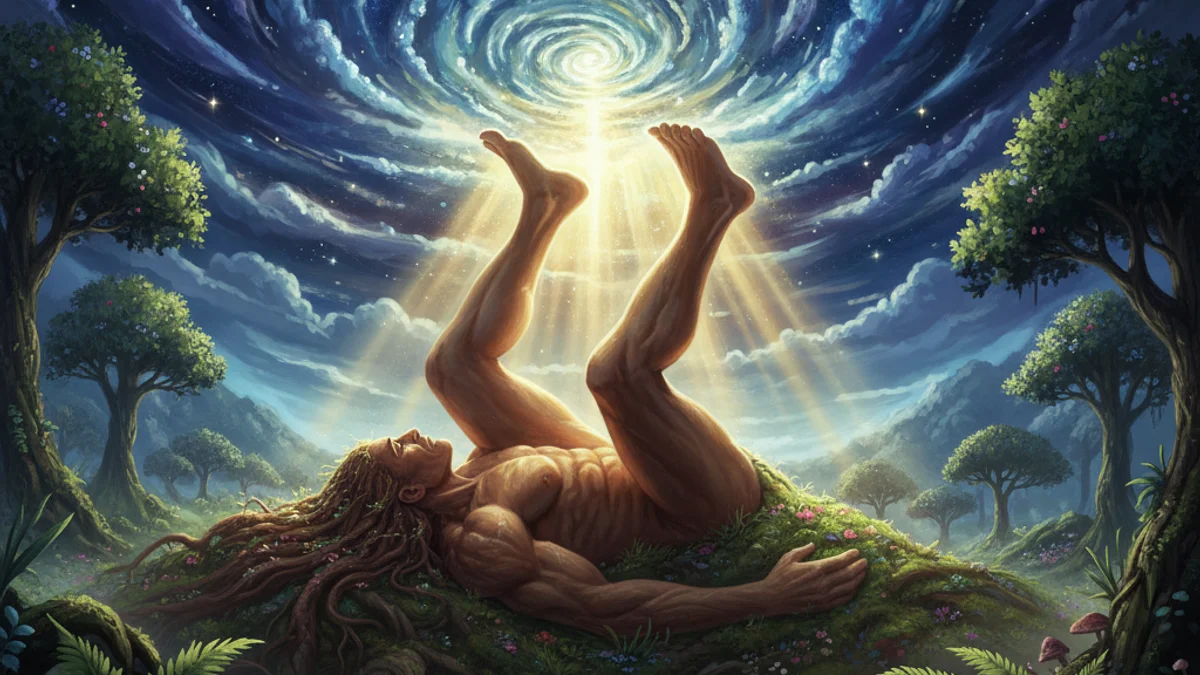
In the beginning, there was only darkness. Ranginui, the Sky Father, and Papatūānuku, the Earth Mother, were locked in a tight, eternal embrace. Their many children were trapped in the cramped, sunless space between them, yearning for light and room to grow. Tūmatauenga, the god of war, suggested they kill their parents, but Tāne-mahuta, the god of the forests, proposed a different path: to push them apart. One by one, the brothers tried to separate their parents, but failed. Finally, Tāne-mahuta placed his back against his mother and his feet against his father. With agonizing strength, he thrust his legs upward, snapping the bonds of darkness. Light flooded the world for the first time. Though separated, the love between Rangi and Papa remained; his tears fall as rain upon her bosom, and her sighs rise as mist toward the heavens.
The Moral
Growth and progress often require the pain of separation and the courage to break away from the familiar to find the light.
“In the darkness of their embrace, the world waited for the first breath of light.”
Fun Fact
In some Maori traditions, the red ochre clay used in sacred carvings is believed to be the blood spilled during the violent separation of Rangi and Papa.
Frequently Asked Questions
What is the moral of Rangi and Papa Separated?
The story teaches that for life and knowledge to flourish, change and separation are sometimes necessary. It highlights the balance between the pain of loss and the beauty of independence and growth.
Who are the children of Rangi and Papa?
Their children are the primary atua, or gods, of the Maori pantheon. Key figures include Tāne-mahuta (forests), Tūmatauenga (war), Tangaroa (sea), and Tāwhirimātea (weather).
Why did Tāne-mahuta separate his parents?
The children were tired of living in perpetual darkness and confinement. Tāne-mahuta realized that only by separating the sky and earth could light enter the world and allow living things to thrive.
What do rain and mist represent in this myth?
Rain is said to be the tears of Ranginui as he mourns the loss of his wife. Mist is the sigh of Papatūānuku, rising up to show her eternal longing for the sky.
Which brother opposed the separation?
Tāwhirimātea, the god of winds and storms, was the only brother who disagreed with the plan. Out of anger, he followed his father to the sky and continues to attack the earth and sea with storms.
How does this story explain the origin of humans?
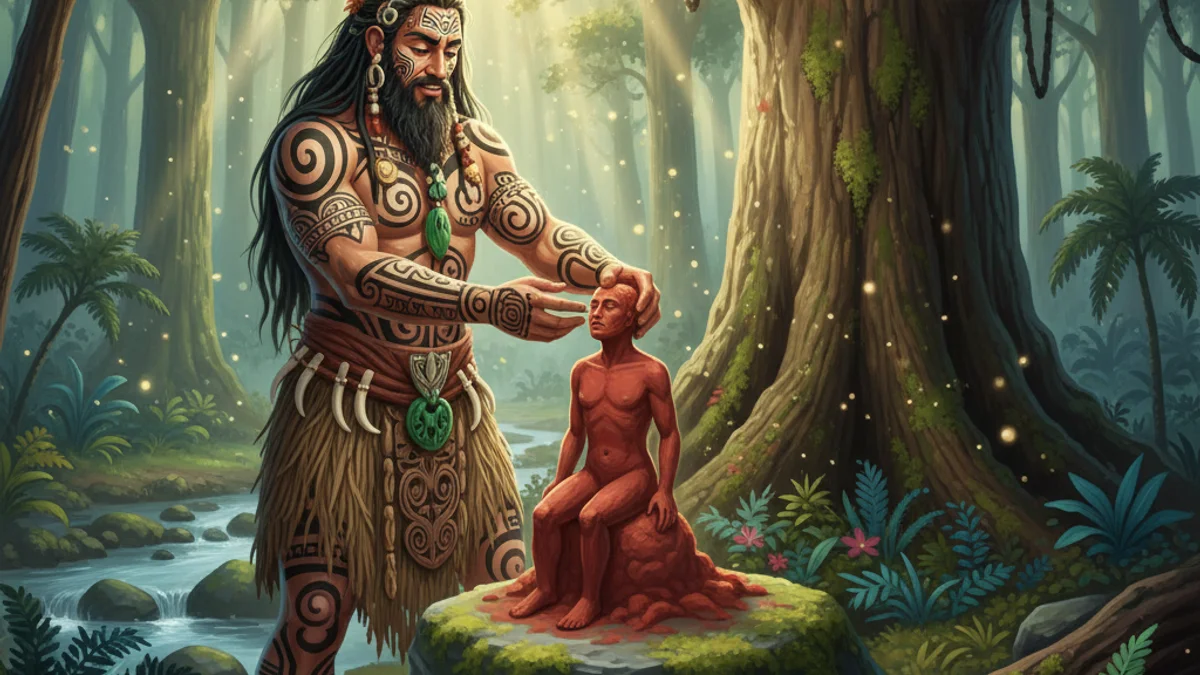
In Maori tradition, after the separation, Tāne-mahuta fashioned the first woman, Hine-ahu-one, from the red clay of the earth. This link connects all humans to both the earth and the divine lineage of the atua.