Story Summary
Explore the final stand of an empire in Napoleon at Waterloo. Learn how the legendary French leader faced his ultimate defeat through strategy and courage.
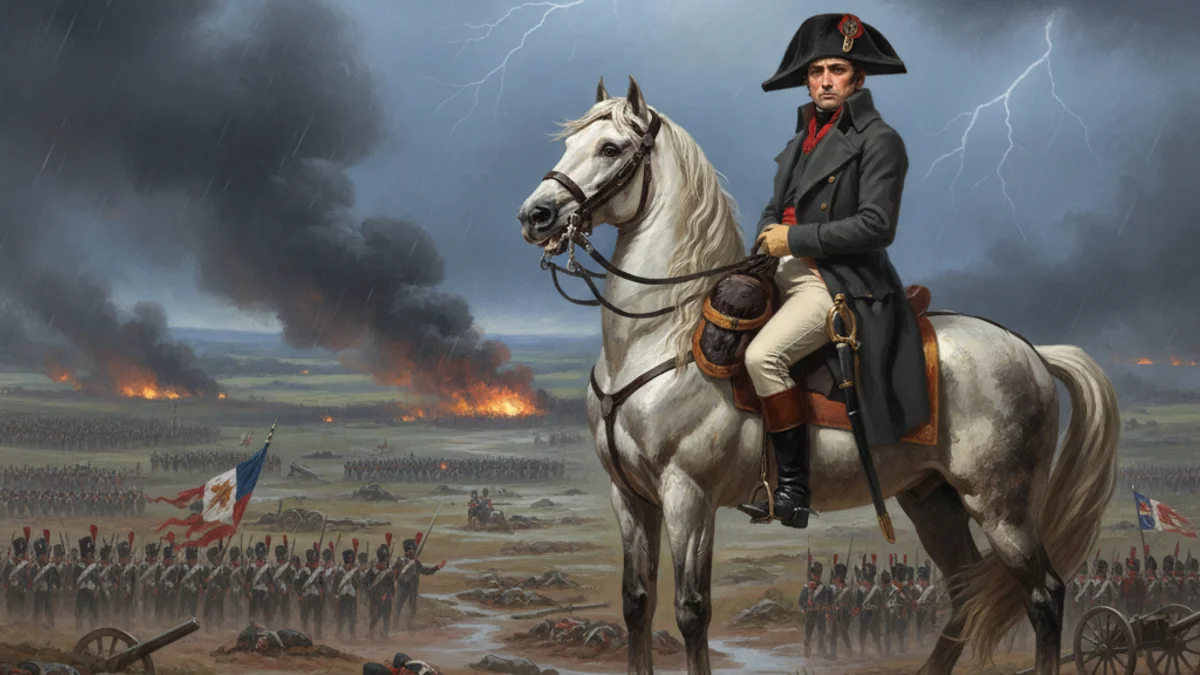
On the rain-soaked fields of June 1815, Napoleon Bonaparte stood at the precipice of destiny. Having escaped exile, the Emperor had rallied an army through the sheer force of his personality. At Waterloo, he faced the combined might of the Duke of Wellington and the Prussian forces. Throughout the day, Napoleon exhibited the calm, decisive leadership that had defined his career, directing massive cavalry charges and holding his ground as the mud hampered his artillery. He waited for the perfect moment to deploy his elite Old Guard, believing his tactical genius could overcome the odds. However, a series of communication failures and the timely arrival of Prussian reinforcements turned the tide. As the sun set, Napoleon realized the battle was lost. Even in defeat, he remained with his men until the very end, demonstrating that true leadership is tested not just in victory, but in how one carries the burden of a final, world-altering loss.
The Moral
True leadership requires recognizing the limits of one's own power and understanding that even the greatest genius cannot control every variable of fate.
“Every man's life is a fairy tale written by God's fingers, but even the greatest kings must know when the story ends.”
Fun Fact
The phrase 'to meet one's Waterloo' became a common idiom in the English language meaning to suffer a final, decisive defeat.
Frequently Asked Questions
What is the moral of Napoleon at Waterloo?
The moral is that even the most brilliant leaders have limits and must face the consequences of timing and overextension. It teaches that greatness is often subject to the unpredictable forces of nature and history.
Why did Napoleon lose the Battle of Waterloo?
Napoleon lost due to several factors, including the muddy terrain that delayed his artillery, communication errors with his marshals, and the timely arrival of the Prussian army. These elements combined to overwhelm the French forces.
Who was Napoleon's main opponent at Waterloo?
His primary adversary was Arthur Wellesley, the Duke of Wellington, who led the Anglo-allied army. Wellington was later joined by the Prussian forces led by Gebhard Leberecht von Blücher.
What was the significance of the Old Guard?
The Old Guard was Napoleon's elite veteran unit, famous for their loyalty and bravery. Their retreat at the end of the battle signaled the final collapse of French morale and the end of Napoleon's reign.
How did Napoleon's leadership style show at Waterloo?
He demonstrated his usual tactical brilliance and ability to inspire his troops despite being outnumbered. However, some historians argue his health and overconfidence led to uncharacteristic delays in his decision-making.
What happened to Napoleon after the battle?
Following his defeat at Waterloo, Napoleon abdicated the throne for a second time. He was eventually exiled by the British to the remote island of Saint Helena, where he spent the rest of his life.