Story Summary
Discover the dark legend of Zahhak the Snake King, a tyrant whose pact with a demon led to a thousand-year reign of terror in this epic Shahnameh myth.
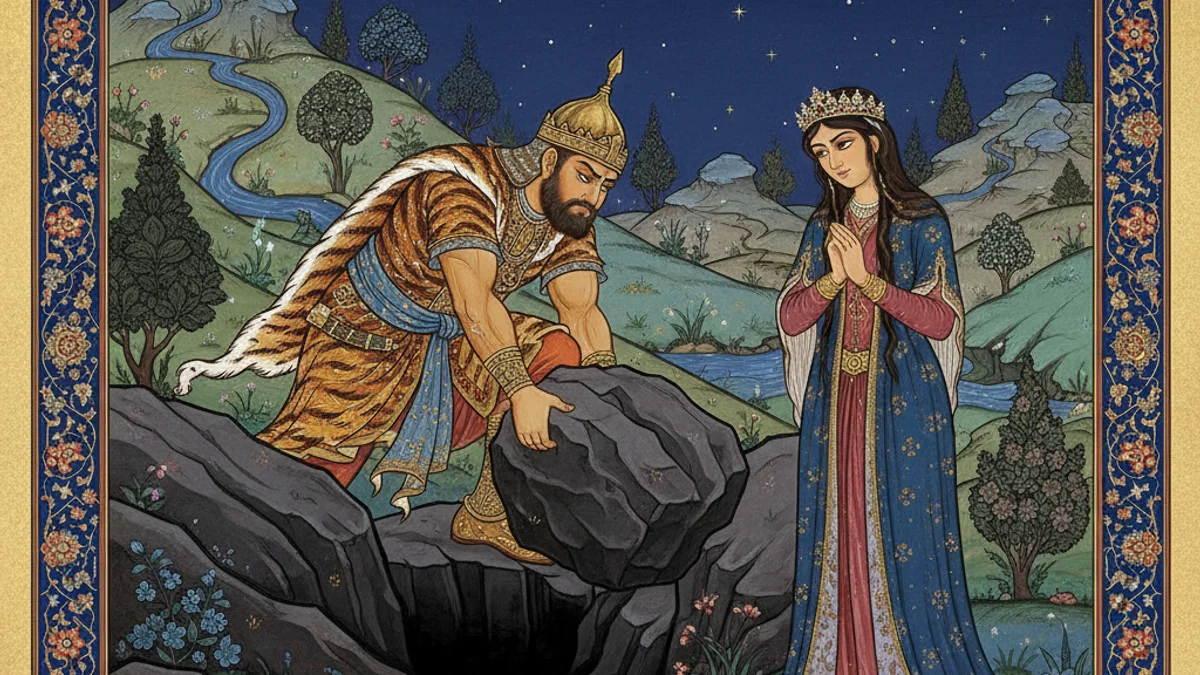
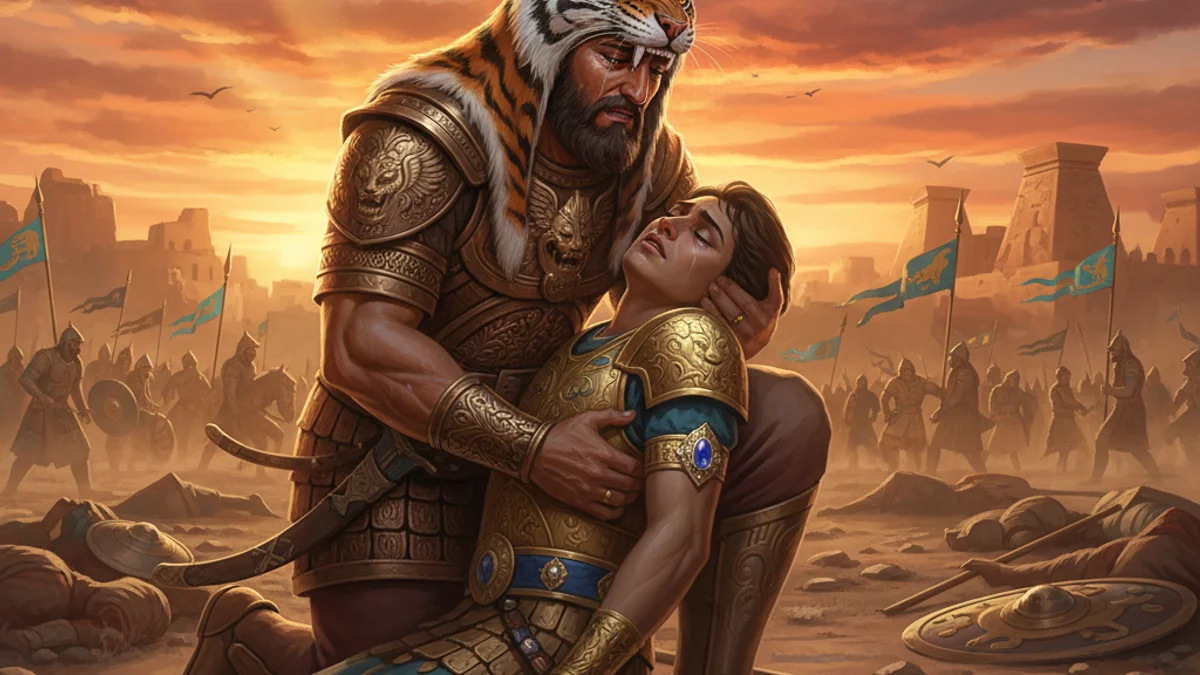
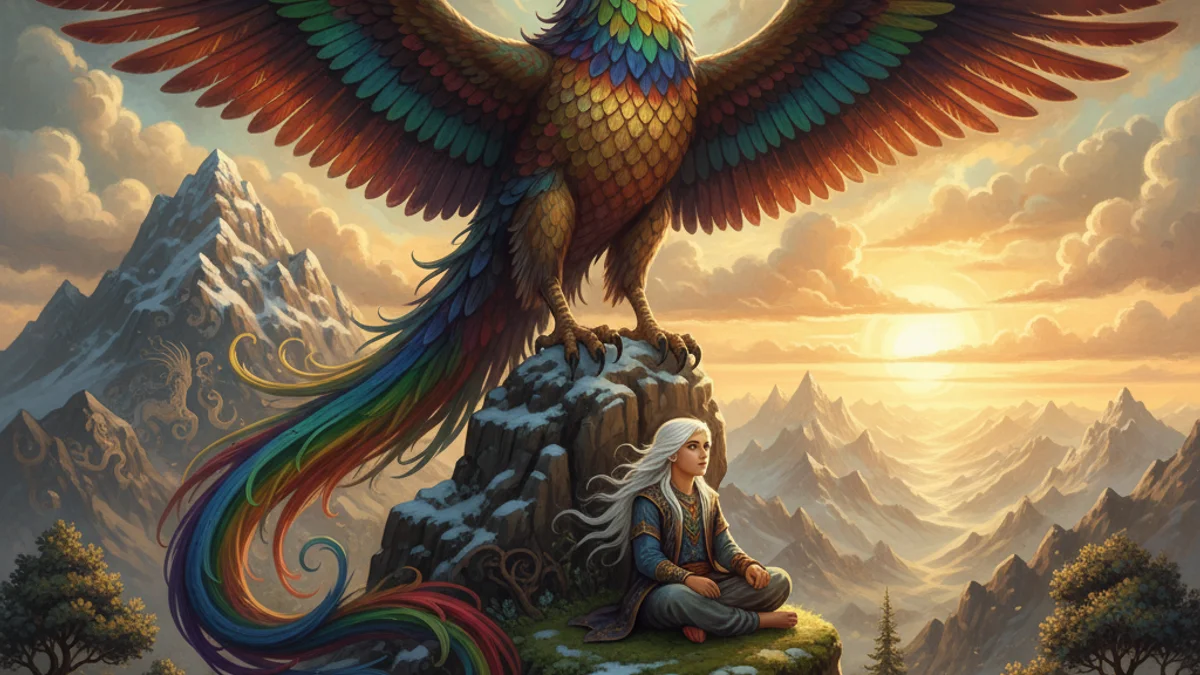
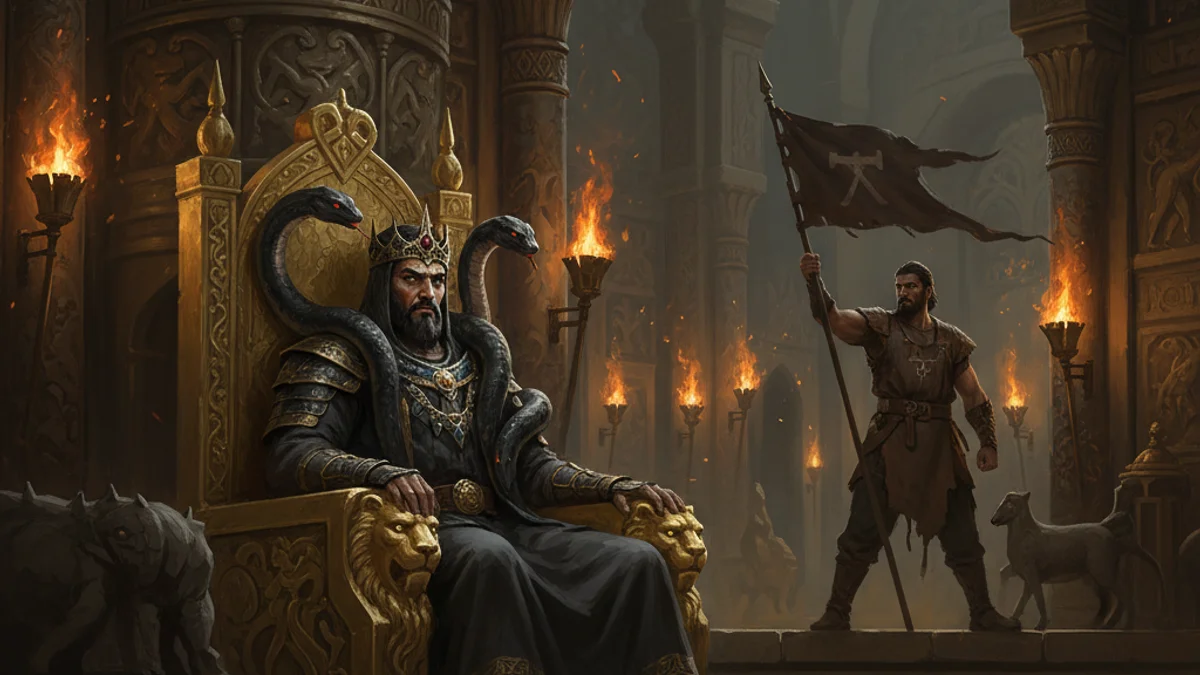
Zahhak was once a young prince who, tempted by the demon Iblis, murdered his virtuous father to seize the throne. To cement their bond, Iblis disguised himself as a master cook and eventually asked to kiss Zahhak’s shoulders as a reward for his service. From those spots, two black serpents sprouted that could not be cut off. To appease the snakes' hunger and prevent them from eating Zahhak himself, he was forced to feed them the brains of two young men every day. His reign of terror lasted a thousand years, plunging Persia into darkness and fear. Eventually, a blacksmith named Kaveh, having lost many sons to the snakes, raised his leather apron as a banner of rebellion. He joined forces with Fereydun, a youth of royal blood. Together, they led the people to overthrow the tyrant. Fereydun did not kill Zahhak but instead chained him forever inside a cave on Mount Damavand, symbolizing that while evil can be restrained, the struggle against it never truly ends.
The Moral
Absolute power gained through evil means leads to madness and ruin, proving that justice will eventually rise from the collective will of the oppressed.
“The snakes on his shoulders were the hunger of his own ambition, feeding on the very people he swore to protect.”
Fun Fact
Zahhak’s imprisonment on Mount Damavand is a popular theme in Iranian folklore; some legends say the sound of his heartbeat can still be heard echoing from the mountain's depths.
Frequently Asked Questions
What is the moral of Zahhak the Snake King?
The story teaches that tyranny is unsustainable and that evil, no matter how powerful, will eventually be overthrown by the collective will of the people. It also warns against the corrupting influence of ambition and the consequences of making pacts with malevolent forces.
How did Zahhak get the snakes on his shoulders?
Zahhak was tricked by the demon Iblis, who appeared as a master cook. After serving the king delicious meals, Iblis asked to kiss Zahhak’s shoulders as a reward; as soon as he did, two black serpents grew from the skin, representing the king's internal corruption.
Who finally defeated Zahhak?
The tyrant was defeated by Fereydun, a descendant of the ancient kings, with the help of Kaveh the Blacksmith. Kaveh incited a popular rebellion, and Fereydun captured Zahhak, binding him in chains within a cave on Mount Damavand.
What is the significance of Kaveh's apron?
Kaveh's leather blacksmith apron, known as the Derafsh Kaviani, became a legendary symbol of Persian independence and resistance against tyranny. It represents the power of the common man to stand up against oppressive rulers.
Why wasn't Zahhak killed at the end of the story?
Fereydun was advised by a divine messenger not to kill Zahhak because his death might unleash even greater chaos or because his time had not yet truly ended. Instead, he was imprisoned on Mount Damavand to suffer until the end of the world.
Is Zahhak a real historical figure?
While the Shahnameh contains historical elements, Zahhak is primarily a mythological figure. He is based on 'Azi Dahaka,' a dragon-like demon from ancient Zoroastrian scriptures, personifying the concept of 'the lie' and social disorder.