Story Summary
Discover the legendary Chinese tale of Lady White Snake, a spirit who finds human love with Xu Xian, only to be challenged by the monk Fahai at West Lake.
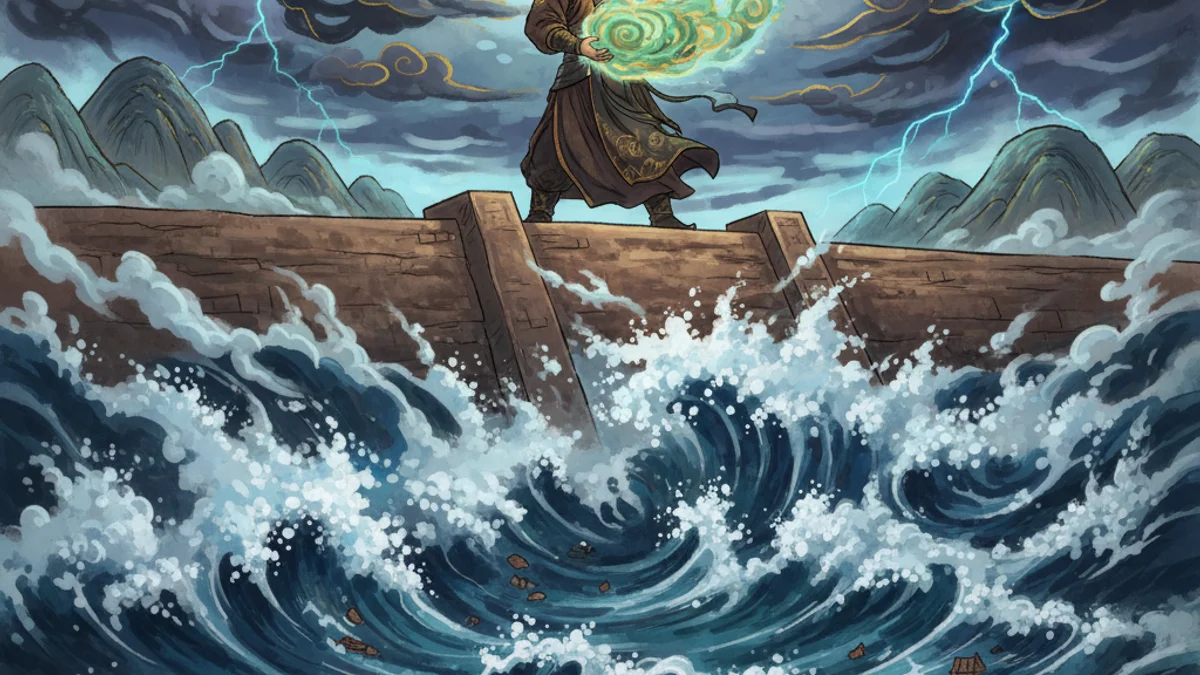
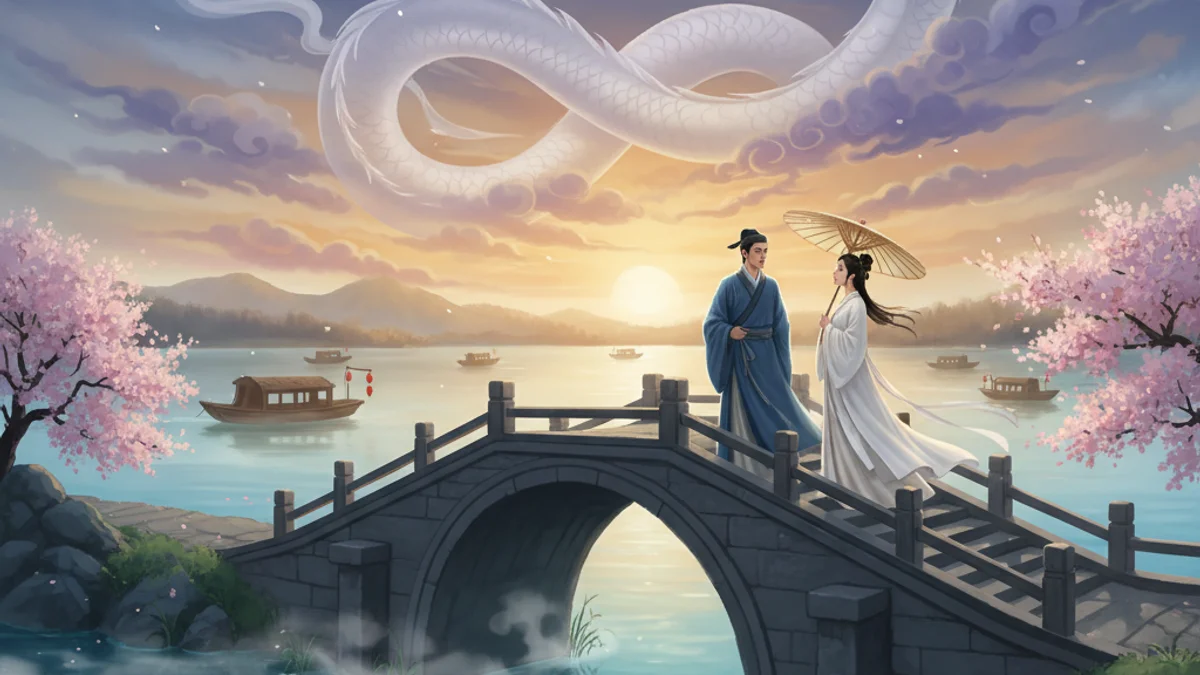
In the misty mountains of Emei, a powerful white snake spirit named Bai Suzhen spent a thousand years practicing Taoist magic to achieve a human form. Desiring to experience the mortal world, she descended to Hangzhou's West Lake accompanied by her companion, a green snake spirit named Xiaoqing. During a sudden rainstorm at the Broken Bridge, a kind scholar named Xu Xian offered them his umbrella. This simple act of kindness sparked a deep romance, and the two were soon married, opening a medicine shop to heal the poor. However, their happiness was observed by Fahai, a rigid Buddhist monk who believed spirits and humans must never coexist. Fahai convinced Xu Xian to serve Bai Suzhen realgar wine during the Dragon Boat Festival, a potion that forced her back into her serpent form. The sight of the giant white snake literally scared Xu Xian to death. Desperate to save her husband, Bai Suzhen risked her life to steal a magical herb from the Kunlun Mountains to revive him. Though Xu Xian returned to life and accepted her true nature, Fahai remained relentless, eventually imprisoning Bai Suzhen beneath the Leifeng Pagoda. She remained there for years until her son, who grew up to be a top scholar, offered such sincere prayers that the pagoda collapsed, finally reuniting the family.
The Moral
True love and devotion transcend physical forms and origins, proving that the purity of one's heart is more important than their outward appearance.
“Whether spirit or human, a heart that loves truly is the most divine thing in all the world.”
Fun Fact
The real Leifeng Pagoda actually collapsed in 1924; many locals at the time joked that the Lady White Snake had finally broken free of her prison.
Frequently Asked Questions
What is the moral of Lady White Snake (Extended)?
The story emphasizes that love and virtue are defined by actions rather than one's species or origin. It also serves as a critique of rigid, dogmatic prejudice represented by the monk Fahai.
Why did realgar wine reveal Bai Suzhen's true form?
In Chinese folklore, realgar was traditionally believed to ward off pests, snakes, and evil spirits. Because Bai Suzhen was a snake spirit, the medicinal properties of the wine overwhelmed her magic.
Who is the antagonist in the story?
The primary antagonist is Abbot Fahai, a monk who views the world in black and white. He believes all spirits are inherently evil and must be suppressed, regardless of their benevolent actions.
What is the significance of the Leifeng Pagoda?
The Leifeng Pagoda is the physical site in Hangzhou where Bai Suzhen was famously imprisoned. It symbolizes the weight of social tradition and the barriers placed between the lovers.
How does the extended version of the story end?
In the most popular versions, Bai Suzhen is eventually freed after her son passes the imperial examinations and performs acts of filial piety that move the heavens to collapse the pagoda.
Is Lady White Snake based on a true story?
While it is a myth, it is rooted in centuries of oral tradition dating back to the Tang Dynasty. It has become one of China's 'Four Great Folktales' and is deeply tied to the geography of Hangzhou.