Story Summary
Discover the story of Kisagotami and the Mustard Seed. A grieving mother learns the universal truth of death and the path to peace through the Buddha's wisdom.
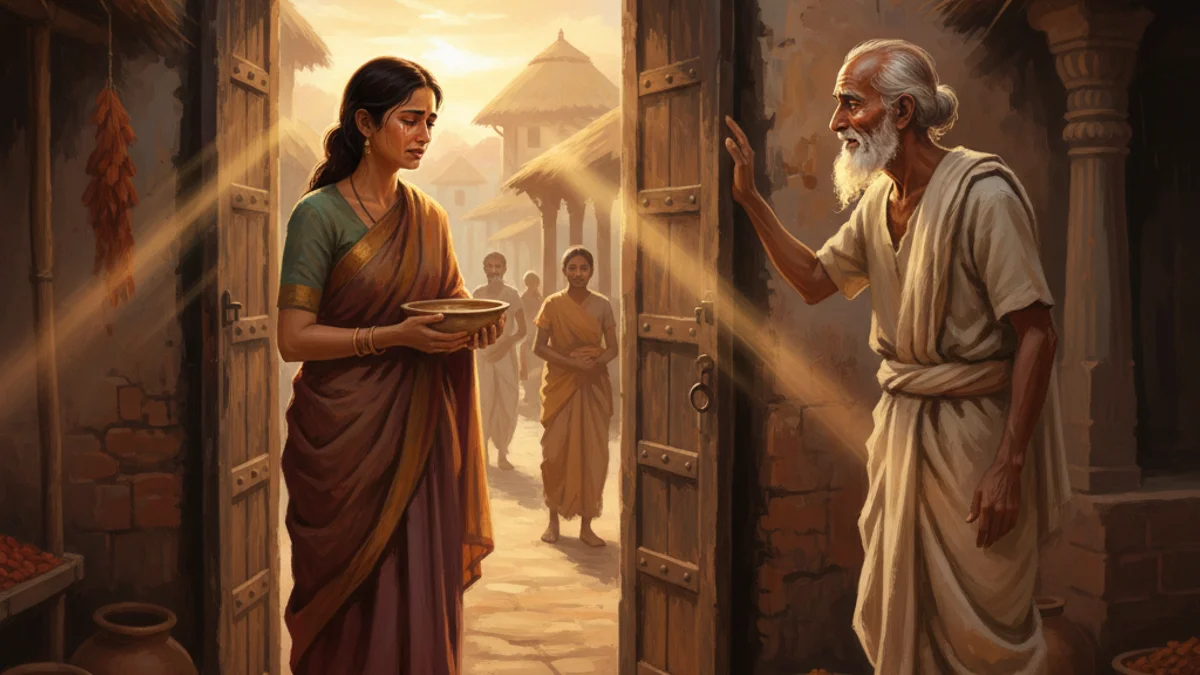
Kisagotami was a young mother whose only child died suddenly. Refusing to accept his death, she carried the boy's body from house to house, pleading for medicine. Eventually, she was directed to the Buddha. The Buddha told her he could heal her child if she brought him a handful of mustard seeds from a house where no one had ever lost a loved one. Hopeful, Kisagotami went through the village. At every door, people were willing to give seeds, but when she asked if death had visited their home, every family replied with stories of loss—a father, a daughter, a servant, or a friend. She realized that she was not alone in her sorrow; death is a path all must walk. Returning to the Buddha, she found peace in the truth of impermanence and entered the path of enlightenment.
The Moral
Death is a universal truth and an inevitable part of life that affects everyone; accepting impermanence is the first step toward peace.
“The living are few, but the dead are many.”
Fun Fact
The story of Kisagotami is frequently used in modern psychology and grief counseling to illustrate the healing power of 'common humanity.'
Frequently Asked Questions
What is the moral of Kisagotami and the Mustard Seed?
The moral is that death is an inevitable and universal part of the human experience. By realizing that everyone suffers loss, one can find the strength to move past personal grief and accept the nature of reality.
Why did the Buddha ask for mustard seeds?
Mustard seeds were a common household item in ancient India. By choosing something so accessible, the Buddha showed that while the seeds were easy to find, a home untouched by death was impossible to find.
Who was Kisagotami in Buddhist history?
Kisagotami was a woman who became a prominent follower and an Arhat (enlightened being) after the Buddha helped her overcome the crushing grief of losing her only son.
What does the mustard seed symbolize in this story?
The mustard seed represents the small, common nature of life and death. It serves as a tool for Kisagotami to connect her individual pain to the collective experience of all living beings.
How did Kisagotami's perspective change?
Initially, she was blinded by her personal tragedy, but through her search, her focus shifted from 'my child has died' to 'death comes to all,' leading her to spiritual awakening.
Is this story part of the original Jataka Tales?
While often included in collections of Buddhist parables and Jataka-style stories, it is most famously found in the commentary on the Dhammapada as a teaching on the nature of suffering.
Discussion (0)
Share your thoughts on this story
No comments yet. Be the first to share your thoughts!