Story Summary
Discover the legend of The Scorpion King, the predynastic ruler who unified Upper Egypt. Explore the myth and history of this powerful Egyptian Pharaoh legend.
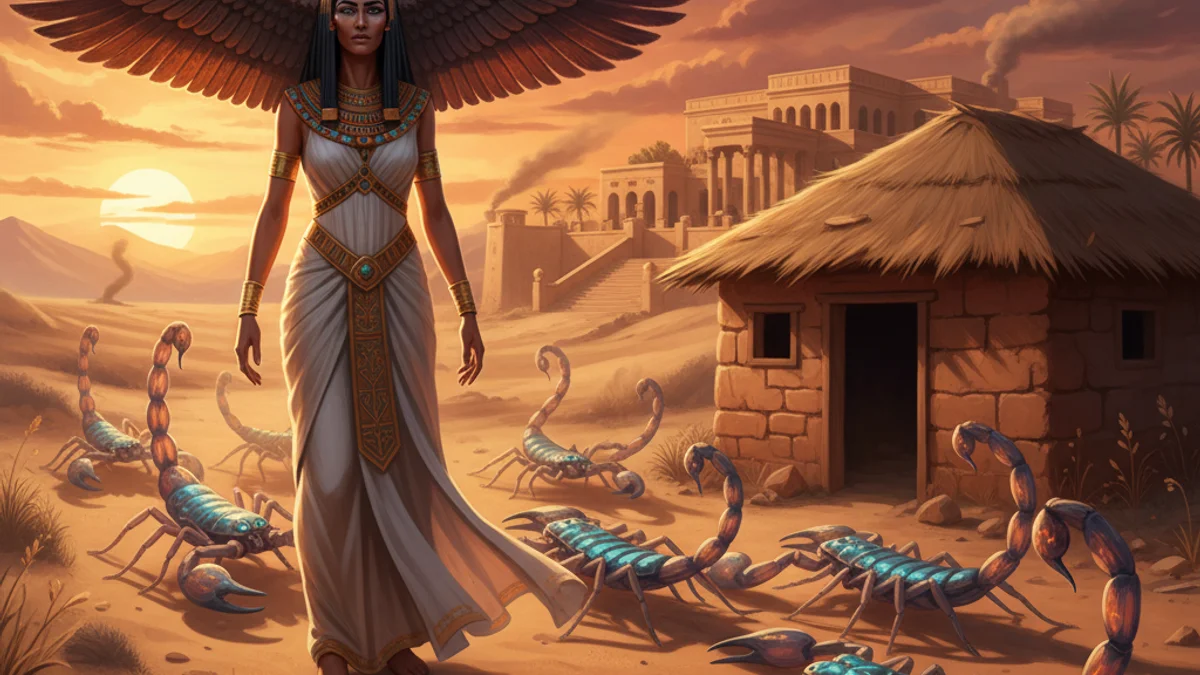
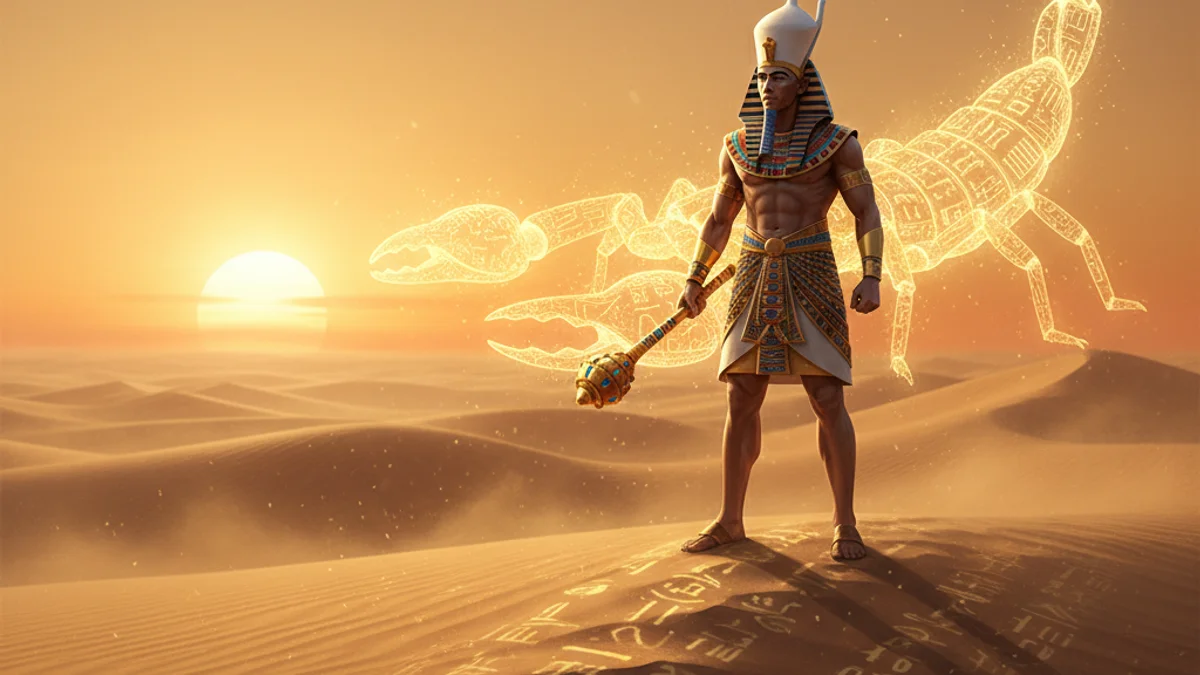
Long ago, before the Pyramids touched the sky, Egypt was a land of warring tribes and fractured kingdoms. In the south, a warrior-king arose, known only as the Scorpion. Under the protection of the goddess Serket, he sought to bring order to the chaos of the Nile. With his ivory mace in hand, he led his armies across the scorching sands, conquering rivals not just through force, but through a vision of a unified land. He founded cities and established the first irrigation systems, transforming the desert into a cradle of life. Though his name faded into the mists of time, his legacy of unification paved the way for the great Pharaohs who followed, proving that a single sting of ambition could change the course of history.
The Moral
True leadership is the ability to transform a divided people into a unified civilization through vision and strength.
“He who carries the sting of the desert shall wear the crown of the valley.”
Fun Fact
The 'Scorpion Macehead,' a decorated ceremonial weapon found in 1897, is the primary evidence for the king's existence and depicts him performing a ritual for the Nile.
Frequently Asked Questions
What is the moral of The Scorpion King?
The moral is that lasting greatness comes from unification and the courage to bring order to chaos. It teaches that a leader's true legacy is the foundation they lay for future generations.
Was the Scorpion King a real historical figure?
Yes, archaeological evidence like the Scorpion Macehead suggests he was a real predynastic ruler named Selk or Serqet. He lived around 3200 BCE, shortly before the official First Dynasty began.
What is the meaning of the Scorpion symbol?
In ancient Egypt, the scorpion was a symbol of the goddess Serket, representing both danger and healing. For the King, it signified his lethal power in battle and his role as a protector.
How did the Scorpion King unite Egypt?
He campaigned against rival tribes in the south and expanded his influence through strategic warfare and agricultural development. This consolidated power in Upper Egypt, setting the stage for total unification by later kings.
Is the movie The Scorpion King historically accurate?
The Hollywood movie is largely fictional and inspired by fantasy rather than historical records. While it uses the name of the ancient ruler, the plot and setting are not based on Egyptian archaeology.
Who was the Scorpion King's successor?
History suggests he was succeeded by Narmer, often credited as the first Pharaoh to fully unite Upper and Lower Egypt. The Scorpion King is seen as the direct predecessor who made Narmer's conquest possible.
Discussion (0)
Share your thoughts on this story
No comments yet. Be the first to share your thoughts!