Story Summary
Discover the classic Turkish tale of Keloglan the Bald Boy, a clever youth who uses his wits and kindness to overcome giants and win the heart of a princess.
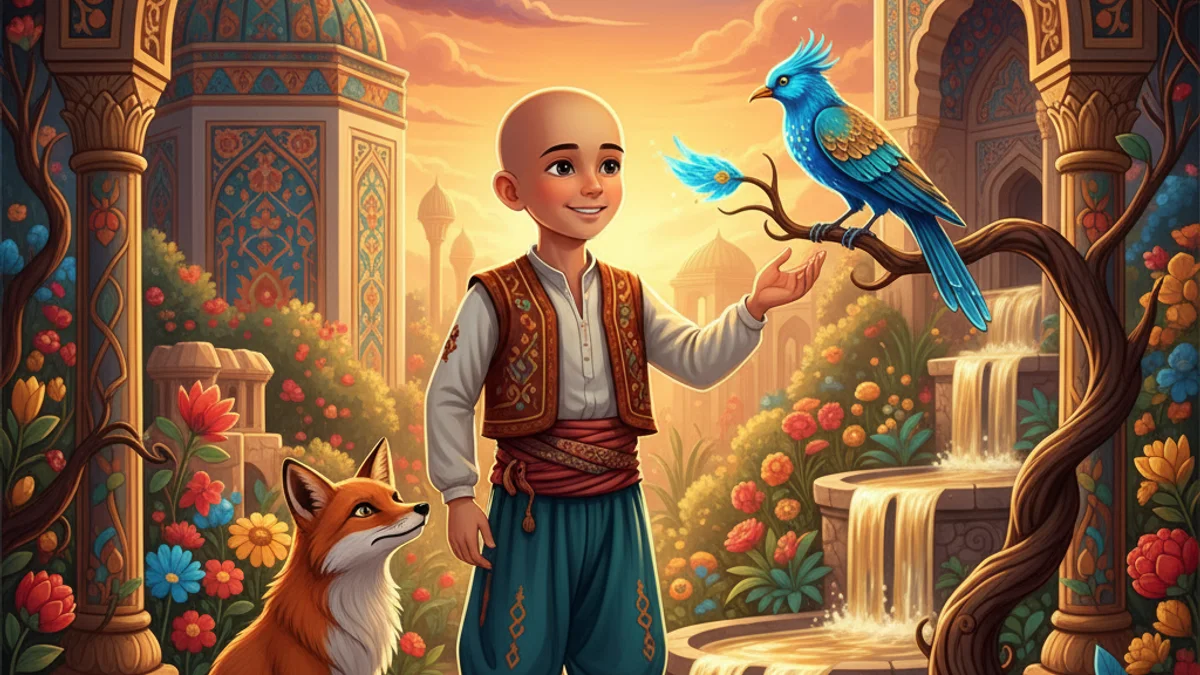
Keloglan lived with his aging mother in a small hut, often mocked by his neighbors for his bald head and perceived laziness. However, beneath his humble appearance lay a sharp wit and a heart of gold. One day, the Sultan announced that whoever could find a cure for his daughter’s mysterious silence would marry her. While the wealthy and powerful failed, Keloglan set off with nothing but his mother's blessing. Along his journey, he showed kindness to a struggling ant, a thirsty fish, and a trapped bird. These creatures later repaid his kindness by helping him solve three impossible riddles set by the Sultan’s Vizier. With his quick thinking and the help of his animal friends, Keloglan made the princess laugh for the first time in years. The Sultan, impressed by the boy's wisdom and character, realized that brilliance is not found in a crown, but in the mind of the one who wears it. Keloglan married the princess, proving that even the lowliest can rise to greatness through wit and kindness.
The Moral
True wisdom and success come from a kind heart and a sharp mind, rather than physical beauty or inherited wealth.
“I may have no hair on my head, but I have a thousand bright ideas inside it.”
Fun Fact
Keloglan is often compared to characters like Aladdin or Jack from Jack and the Beanstalk, but he is unique for his reliance on verbal wit over magical items.
Frequently Asked Questions
What is the moral of Keloglan the Bald Boy?
The moral is that intelligence, honesty, and kindness are far more valuable than physical appearance or social status. It teaches that even the most underestimated person can achieve greatness through their wits.
Who is Keloglan in Turkish folklore?
Keloglan is a legendary folk hero in Turkish culture, characterized as a poor, bald boy who lives with his mother. He is a 'trickster' archetype who uses his cleverness to outsmart the greedy and powerful.
What does the name Keloglan mean?
The name 'Keloglan' literally translates to 'Bald Boy' in Turkish. 'Kel' means bald, and 'oglan' means boy or young man.
Is Keloglan a real person?
Keloglan is a fictional character from oral tradition. He represents the common person's struggle against injustice and the triumph of the underdog in Anatolian storytelling.
What are the common themes in Keloglan stories?
Common themes include the importance of maternal blessings, the reward for helping animals, and the use of humor and riddles to solve complex problems.
How did Keloglan become popular?
He became popular through centuries of oral storytelling in villages. In modern times, his popularity was cemented through numerous Turkish films and animated series that brought his adventures to life.
Discussion (0)
Share your thoughts on this story
No comments yet. Be the first to share your thoughts!