Story Summary
Explore the Chinook legend of Bluejay and Ioi as the trickster travels to the spirit world to visit his sister, only to find that life and death follow different rules.
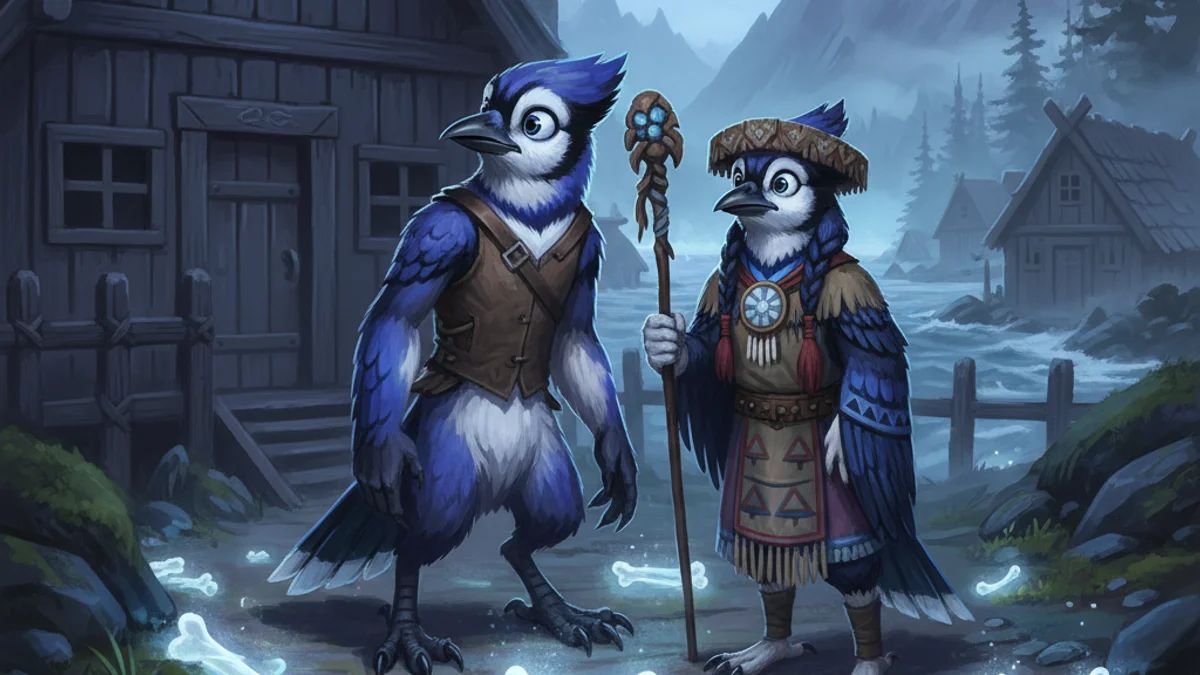
In the traditions of the Chinook people, Ioi was a young woman who was married off to a ghost. Her brother, Bluejay, a notorious trickster and a bit of a fool, decided to visit her in the Land of the Dead. When he arrived, he found the village strangely quiet. His sister greeted him, but he saw no one else, only piles of whitened bones scattered near the cedar houses. Ioi explained that these were her new family and neighbors. During the day, the spirits were merely bones, but at night, they returned to their human forms to hunt and dance. Disbelieving and arrogant, Bluejay decided to 'fix' things. He began rearranging the bones, swapping skulls and limbs between different piles to create what he thought were better matches. When darkness fell and the ghosts rose, the village descended into horror. Husbands had the legs of children, and wives had the arms of old men. The spirits wailed in confusion and pain. Bluejay realized too late that the laws of the living do not apply to the dead, and his meddling had caused great suffering in a world he could never truly understand.
The Moral
Respect the customs and nature of others, especially when entering a world or culture that is not your own.
“He sought to fix what was not broken, only to find that the dead have their own perfection.”
Fun Fact
In Chinookan mythology, Bluejay is considered the 'clown' of the spirit world, and his stories were often told to teach children about social taboos through humor.
Frequently Asked Questions
What is the moral of Bluejay and Ioi?
The moral is to respect the traditions and states of being of others. It warns against the arrogance of assuming one's own perspective is superior, especially when dealing with the unknown or the sacred.
Who is Bluejay in Native American mythology?
In Chinook and other Pacific Northwest cultures, Bluejay is a common trickster figure. Unlike the clever Coyote, Bluejay is often depicted as well-meaning but foolish, frequently causing trouble through his ego and lack of common sense.
What happens to the ghosts in the story?
Because Bluejay meddles with their bones during the day, the ghosts wake up at night with mismatched body parts. This causes them great distress and physical confusion, highlighting the consequences of Bluejay's interference.
Why did Bluejay go to the Land of the Dead?
Bluejay went to visit his sister, Ioi, who had been married to a ghost. He was curious about her new life and wanted to see the spirit world for himself, though he was ill-prepared for its rules.
What do the bones represent in Chinook culture?
In the context of this myth, the bones represent the transition between the physical and spiritual realms. They show that while the dead may appear inanimate to the living, they possess their own vibrant life and dignity in their own time.
How does Bluejay differ from other trickster figures?
While many tricksters are cunning and malicious, Bluejay often acts out of a misguided sense of helpfulness or simple curiosity. His failures are usually the result of his 'numbskull' nature rather than true evil.