Story Summary
Discover the legend of Kukulkan the Feathered Serpent, the Mayan deity of wind and wisdom who brought agriculture and science to the ancient civilization.
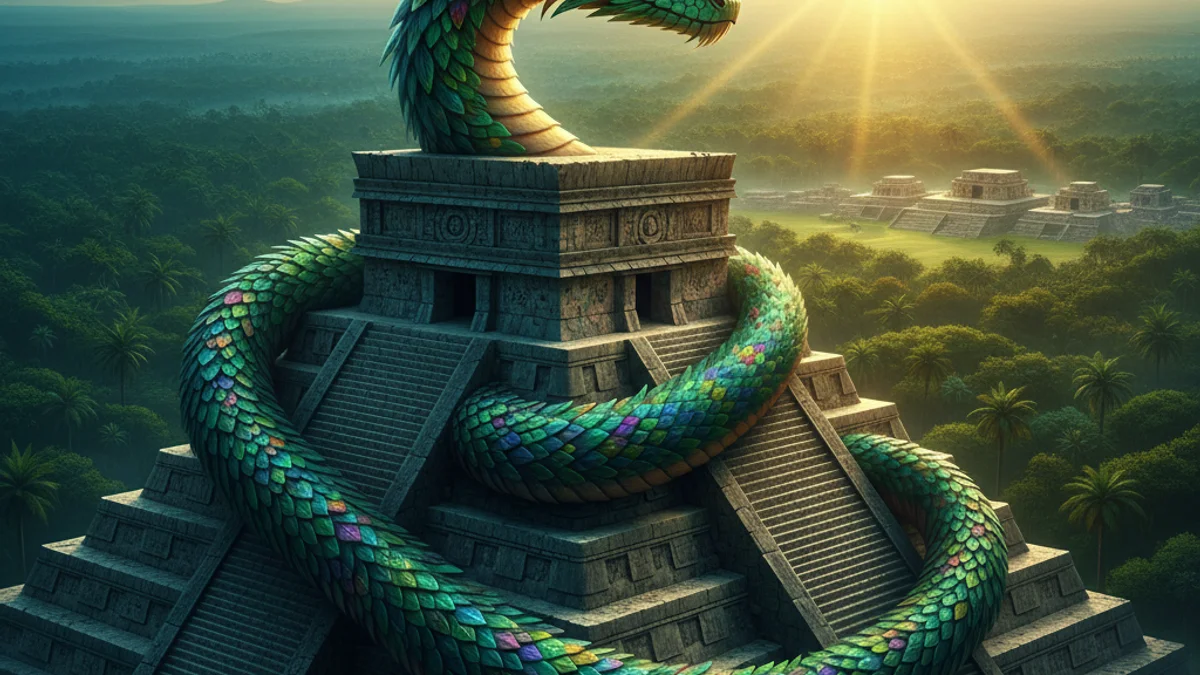
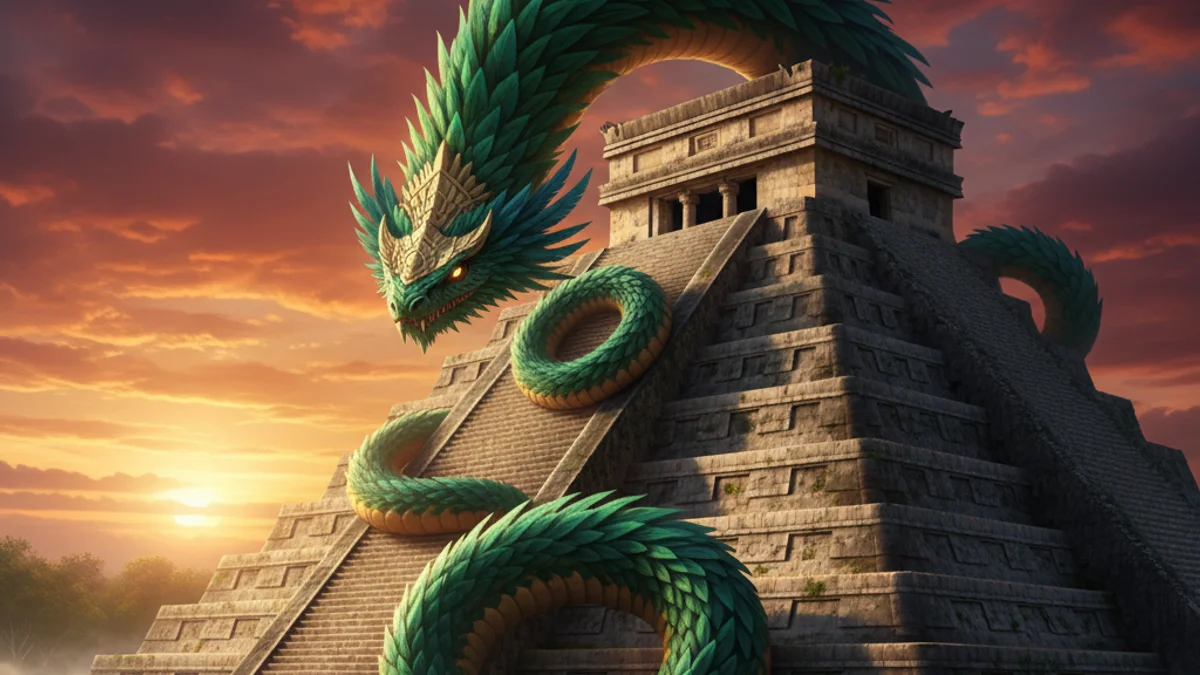
In the beginning, before the sun warmed the earth, Kukulkan, the Feathered Serpent, moved through the primordial waters. Alongside the creator god Tepeu, he breathed life into the world, shaping the mountains and the valleys from the void. But Kukulkan was more than a creator; he was a teacher. He descended from the heavens clad in shimmering green quetzal feathers, bringing the gift of maize to the hungry people. He taught them the secrets of the stars, the rhythm of time, and the laws of justice. He oversaw the construction of great cities, most notably Chichen Itza, where his spirit was said to dwell. When his work was done, he promised to return one day, vanishing into the eastern sea as a morning star, leaving behind a legacy of wisdom and the shadow of his serpent form dancing upon the temple steps during the equinox.
The Moral
True leadership involves sharing knowledge and empowering others to thrive through wisdom, discipline, and respect for the natural world.
“He was the wind that carried the seeds and the wisdom that taught the hands to plant them.”
Fun Fact
The 'serpent shadow' effect at Chichen Itza is so precise that it only appears for a short time during the equinoxes, showcasing the advanced Mayan understanding of astronomy.
Frequently Asked Questions
What is the moral of Kukulkan the Feathered Serpent?
The story emphasizes that a true deity or leader provides the tools for civilization to sustain itself rather than just ruling through power. It highlights the importance of knowledge, agriculture, and the connection between the divine and the natural world.
What is the difference between Kukulkan and Quetzalcoatl?
Kukulkan is the Yucatec Maya version of the Feathered Serpent, while Quetzalcoatl is the Aztec equivalent. While they share many attributes like wind, wisdom, and creation, their worship and specific myths varied across different Mesoamerican cultures.
How is Kukulkan associated with Chichen Itza?
The pyramid known as El Castillo was built in his honor. During the spring and autumn equinoxes, the sunlight hits the stairs in a way that creates a shadow resembling a giant serpent descending the temple to join the stone heads at the base.
What gifts did Kukulkan bring to the Maya?
He is credited with bringing the gift of maize (corn) to the people, which became the staple of their diet. He also taught them mathematics, astronomy, the calendar system, and the laws required to maintain an organized society.
What do the feathers and the serpent symbolize?
The feathers represent the heavens and the ability to fly or communicate with the gods, while the serpent represents the earth and physical existence. Together, Kukulkan symbolizes the union of the sky and the earth.
Did Kukulkan ever leave the people?
Legend says that after establishing Mayan civilization, he departed across the sea to the east. He promised his followers that he would return one day, a prophecy that remained central to Mayan belief for centuries.
Discussion (0)
Share your thoughts on this story
No comments yet. Be the first to share your thoughts!