Story Summary
Discover The Fall of Quetzalcoatl, the tragic Aztec myth of the feathered serpent god who was tricked into disgrace by Tezcatlipoca and fled his golden city.
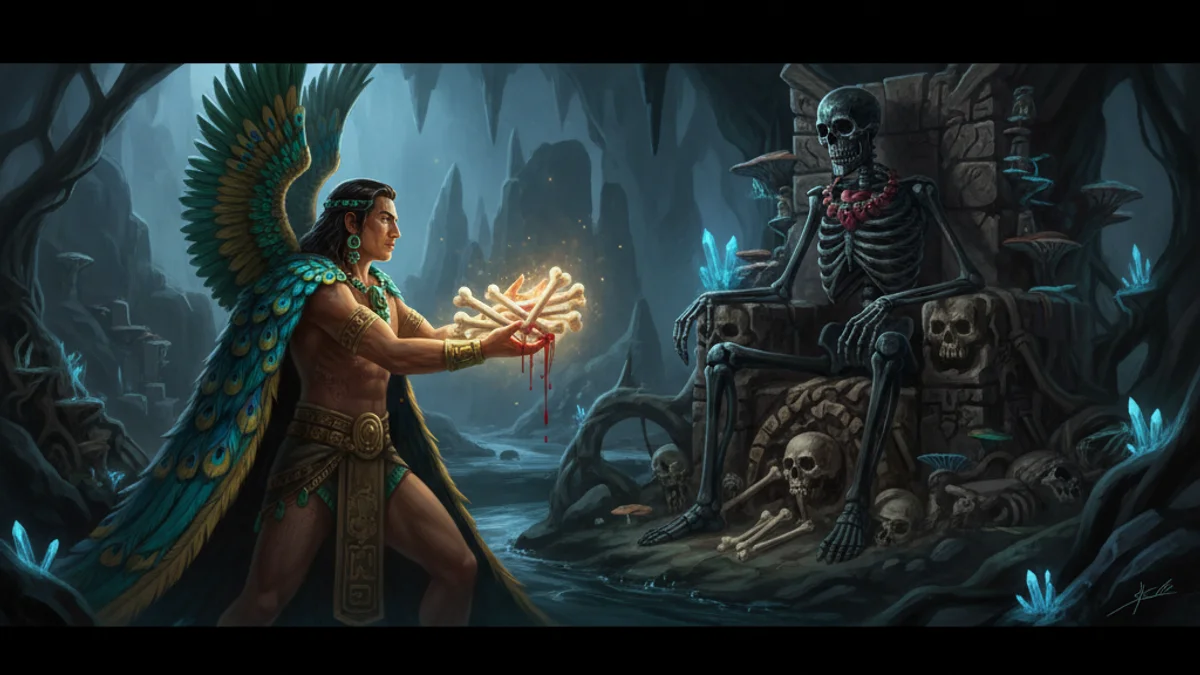
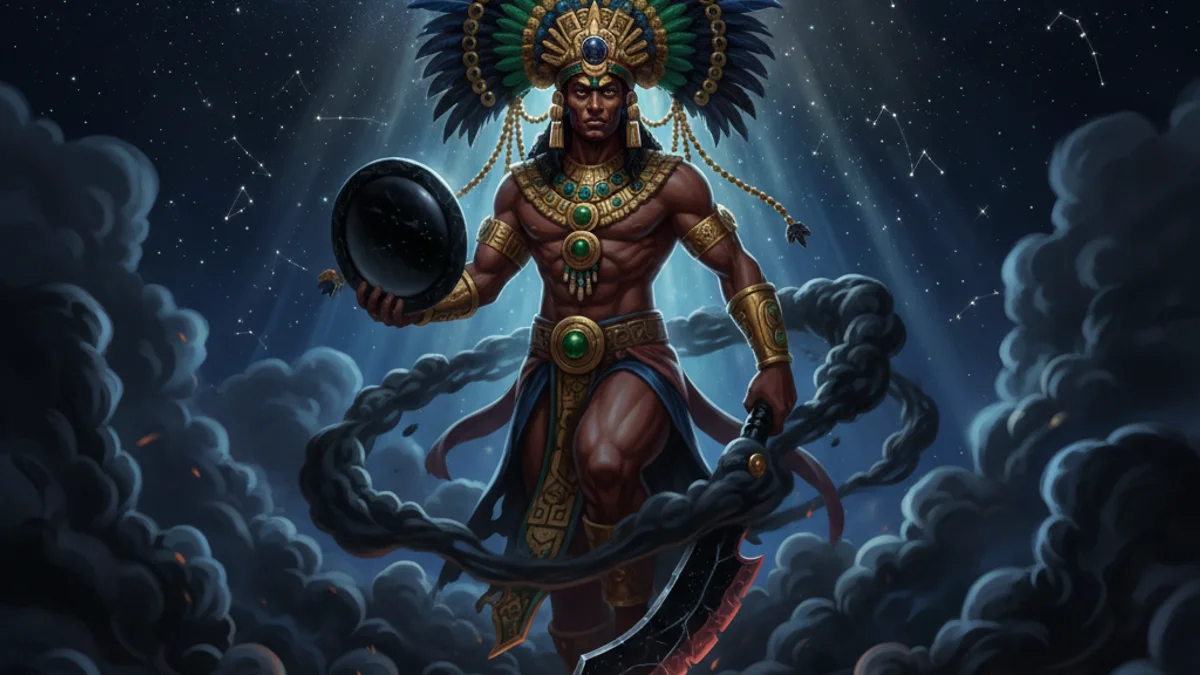
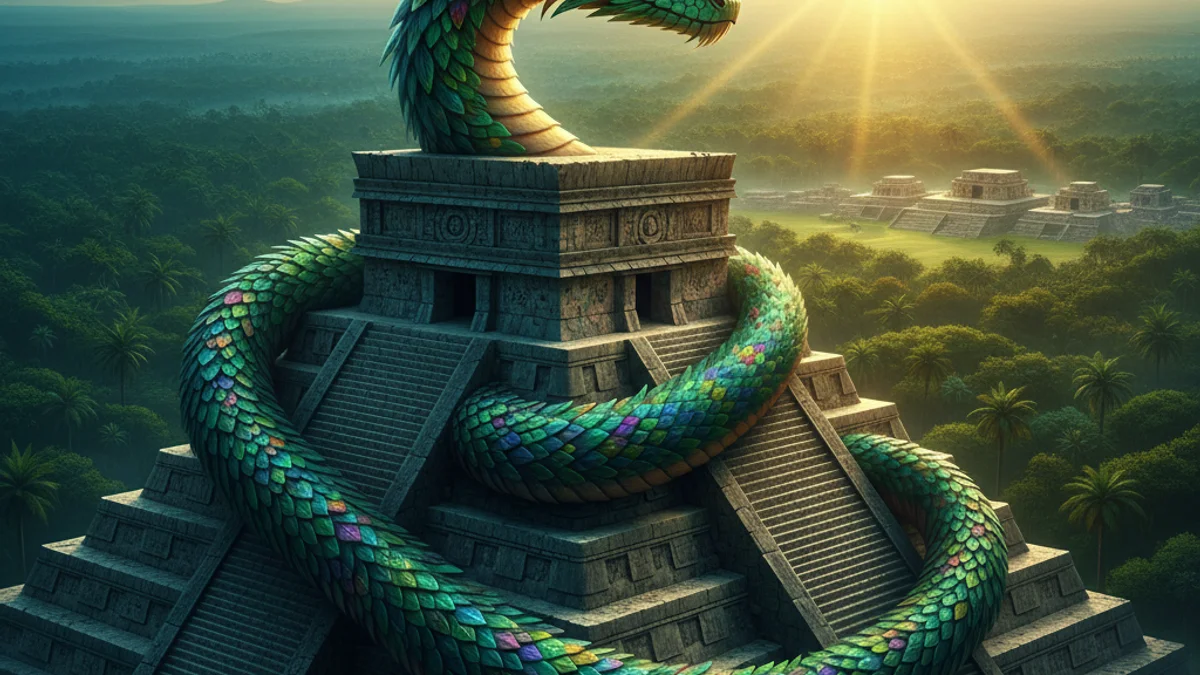
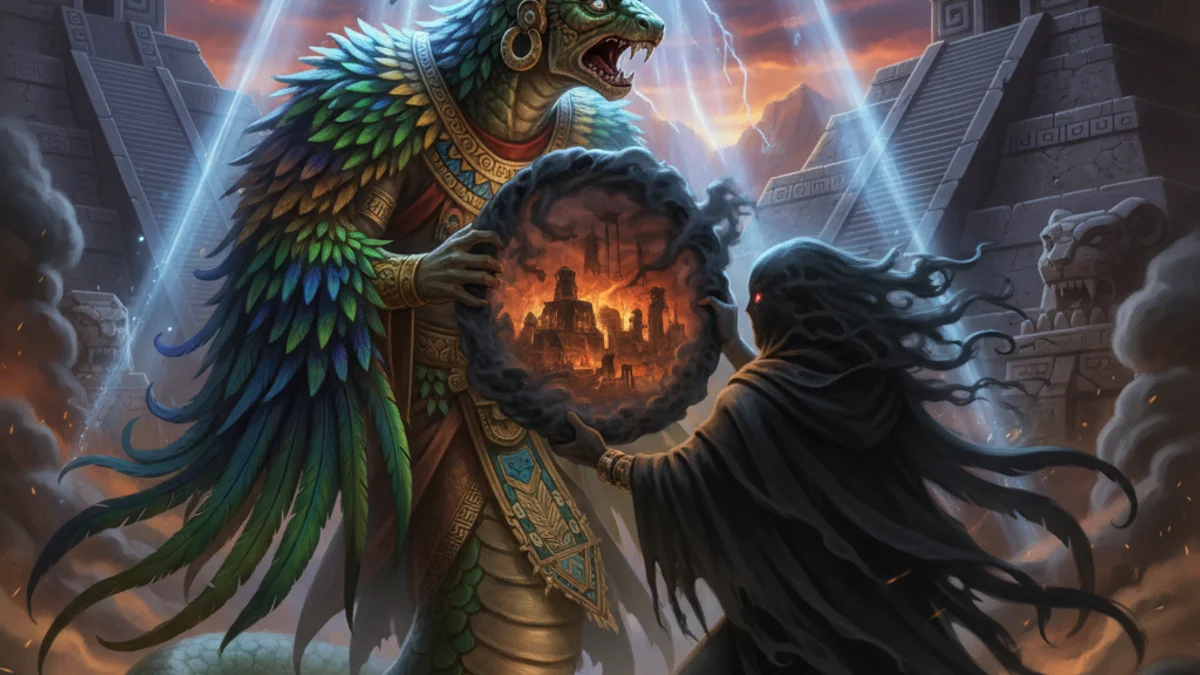
In the golden age of the city of Tollan, the god-king Quetzalcoatl ruled with wisdom, teaching his people the arts, agriculture, and the movement of the stars. He was the Plumed Serpent, a beacon of peace who refused human sacrifice. This era of prosperity angered his brother, Tezcatlipoca, the god of the night sky and the 'Smoking Mirror.' Seeking to sow chaos, Tezcatlipoca disguised himself as an old man and presented Quetzalcoatl with a mirror of polished obsidian. For the first time, Quetzalcoatl saw his own face; he saw the wrinkles of age and the toll of time, and he fell into a deep despair over his mortality. Seizing the moment, Tezcatlipoca offered him 'medicine' to soothe his sorrow—a potent, fermented pulque. Quetzalcoatl drank until his senses were dulled, leading him to neglect his sacred duties and break his vows of chastity with his sister, Quetzalpetlatl. When the sun rose and the haze of intoxication lifted, the weight of his shame was unbearable. Realizing he had lost his purity and the right to rule, Quetzalcoatl ordered his treasures buried and his palaces of jade burned. He journeyed to the eastern shore, where he either sailed away on a raft of serpents or consumed himself in a divine fire, promising his people that one day, in a year of his name, he would return to reclaim his kingdom.
The Moral
Even the most virtuous can fall through pride and the loss of self-control; true leadership requires unwavering integrity and the mastery of one's own desires.
“I have seen the face of my own end in the smoke of the mirror.”
Fun Fact
In many versions of the myth, Quetzalcoatl's departure marks the transition from the golden age of the Toltecs to a more turbulent era of Mexican history.
Frequently Asked Questions
What is the moral of The Fall of Quetzalcoatl?
The story warns against the dangers of vanity and the loss of self-discipline. It teaches that even a divine leader can lose everything by succumbing to earthly temptations and failing to uphold their sacred responsibilities.
Why did Tezcatlipoca want to trick Quetzalcoatl?
Tezcatlipoca represented chaos, war, and the night, making him the natural rival to Quetzalcoatl's order and peace. He sought to end the era of bloodless worship and prove that no one, not even a god-king, was immune to corruption.
What happened to Quetzalcoatl after he left Tollan?
According to the legends, he traveled to the coast and vanished. Some versions say he set himself on fire and his heart became the Morning Star (Venus), while others say he sailed into the East on a raft of serpents.
What does the 'Smoking Mirror' symbolize?
The obsidian mirror of Tezcatlipoca symbolizes the harsh reality of the physical world and mortality. By forcing Quetzalcoatl to see his own aging face, Tezcatlipoca shattered the god's sense of divine perfection and eternal youth.
Was Quetzalcoatl a real person?
Many historians believe the myth is based on a historical Toltec ruler named Ce Acatl Topiltzin Quetzalcoatl. Over centuries, the life of this priest-king and the legends of the feathered serpent deity became blended into a single narrative.
How did Quetzalcoatl's promise to return affect the Aztecs?
The prophecy of his return in a 'One Reed' year had a profound impact on history. Some colonial accounts suggest that Emperor Moctezuma II initially feared the arrival of Hernán Cortés was the fulfillment of this divine return.
Discussion (0)
Share your thoughts on this story
No comments yet. Be the first to share your thoughts!