Story Summary
Discover the inspiring story of Florence Nightingale's Lamp, exploring how her nightly rounds and dedication to sanitation revolutionized the nursing profession.
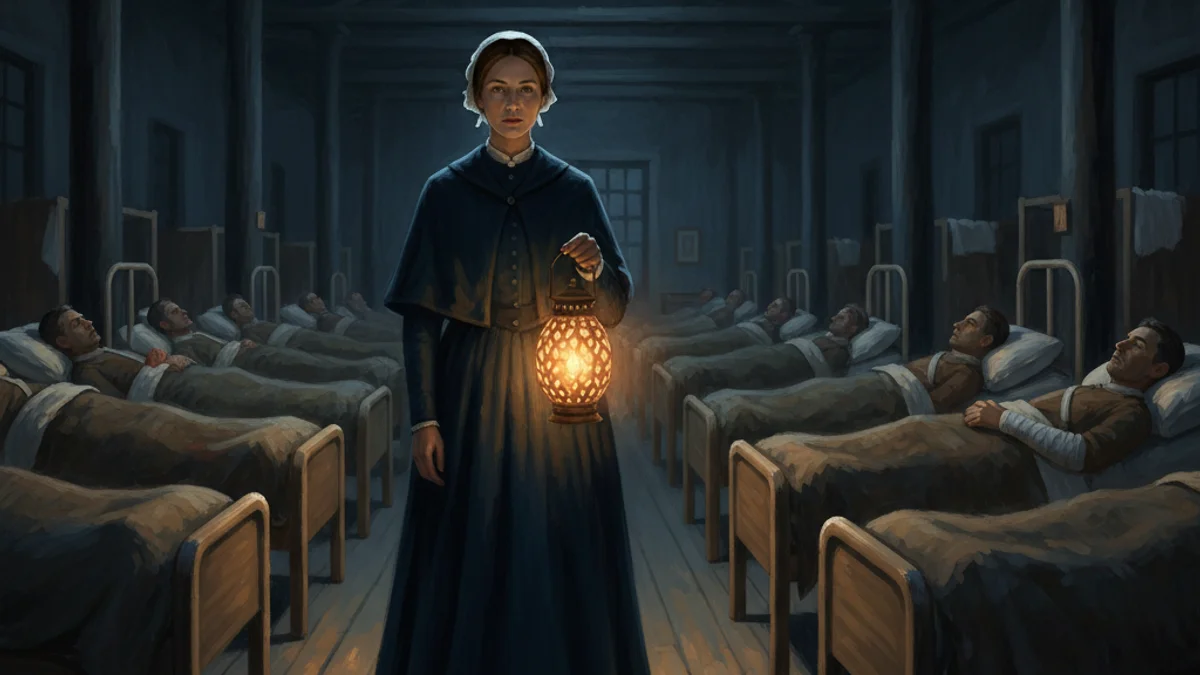
During the Crimean War in the 1850s, news reached England of the horrific conditions facing wounded soldiers at the Scutari hospital. Florence Nightingale, a woman of deep conviction and medical training, led a team of nurses to the front lines. She found a place of filth, disease, and despair. Undeterred, Florence organized the kitchen, scrubbed the wards, and insisted on proper ventilation and hygiene. Her most enduring legacy, however, occurred after the sun went down. While the other officials slept, Florence moved through the dark, four miles of corridors, carrying a small Turkish lantern. She checked on every soldier, offering a kind word, a sip of water, or a steadying hand. To the suffering men, she was a 'ministering angel,' and the sight of her flickering lamp became a symbol of hope and the birth of modern nursing.
The Moral
True leadership and compassion are found in the quiet, consistent service to others during their darkest hours.
“I attribute my success to this: I never gave or took any excuse.”
Fun Fact
Florence Nightingale was a brilliant mathematician and was the first female member of the Royal Statistical Society, using 'rose diagrams' to prove that most soldiers died from poor sanitation rather than battle wounds.
Frequently Asked Questions
What is the moral of Florence Nightingale's Lamp?
The moral is that dedicated service, compassion, and attention to detail can bring light to the darkest situations and change the world. It teaches that one person's commitment to care can transform an entire institution.
Why was she called 'The Lady with the Lamp'?
She earned the nickname because she would walk through the dark hospital wards at night to check on wounded soldiers. Her presence with the lantern provided immense psychological comfort to the men who were far from home.
What war did Florence Nightingale serve in?
She served during the Crimean War (1853–1856), primarily at the Selimiye Barracks in Scutari. It was here that she implemented her revolutionary ideas on hygiene and patient care.
How did Florence Nightingale change nursing?
She transformed nursing from an untrained job into a respected profession by emphasizing sanitation, nutrition, and data collection. She founded the first secular nursing school in the world at St Thomas' Hospital in London.
What kind of lamp did Florence Nightingale actually use?
While often depicted with a solid brass lamp, she actually carried a 'fanoos,' which is a traditional Turkish folding paper lantern. This type of lantern was common in the region where she served.
Was Florence Nightingale a real person?
Yes, Florence Nightingale was a real historical figure born in 1820. She was a social reformer, statistician, and the founder of modern nursing, known globally for her work in the 19th century.
Discussion (0)
Share your thoughts on this story
No comments yet. Be the first to share your thoughts!