Story Summary
Experience the wonder of The Baal Shem Tov's Miracle, a Hasidic tale where faith turns ice into light. Discover how deep devotion brings hope to the darkness.
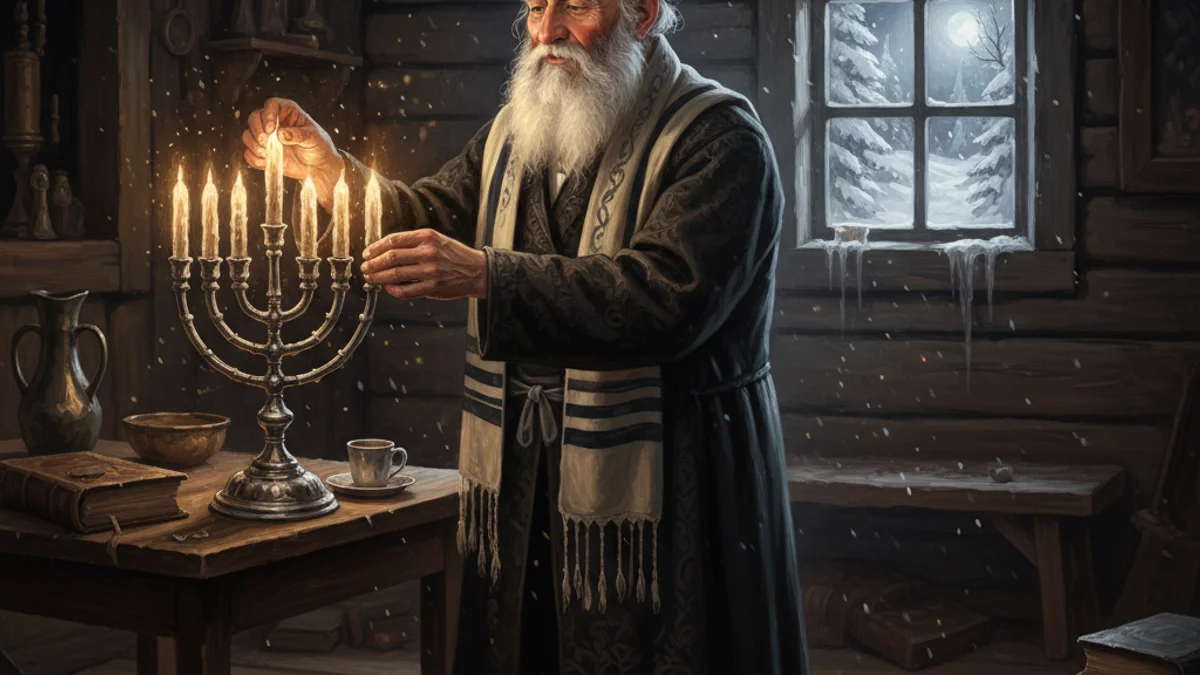
Once, on a freezing Friday evening, the Baal Shem Tov arrived at the humble cottage of a poor family. They were devastated because they had no oil to light the Sabbath candles, and the holy day was fast approaching. Seeing their distress and the darkness creeping into their home, the Master walked outside and gathered several long icicles hanging from the eaves. He placed them into the candelabra and prayed with such fervor that the laws of nature bowed to his will. He declared, 'He who told oil to burn can also tell ice to burn.' To the family's amazement, the ice caught fire, emitting a warm, golden glow that lasted throughout the entire Sabbath, filling their home with peace and divine light.
The Moral
True faith can transcend the physical laws of the world and find light in the coldest of circumstances.
“He who told oil to burn can also tell ice to burn.”
Fun Fact
In Hasidic folklore, the Baal Shem Tov is often associated with nature, frequently performing miracles involving rivers, forests, and animals to show God's presence everywhere.
Frequently Asked Questions
What is the moral of The Baal Shem Tov's Miracle?
The story teaches that faith can overcome any obstacle. It suggests that the Divine is not bound by nature and can bring warmth and light even from the coldest elements.
Who was the Baal Shem Tov?
Israel ben Eliezer, known as the Baal Shem Tov, was an 18th-century mystic and the founder of Hasidic Judaism. He emphasized serving God through joy and sincere prayer.
Why did the Baal Shem Tov use ice for the miracle?
The family was too poor to afford oil for the Sabbath. By using ice, the Master demonstrated that God’s power is universal and that holiness can be found in the most mundane or unlikely objects.
What does the name 'Baal Shem Tov' mean?
The title translates to 'Master of the Good Name.' It was given to him because he was believed to have the secret knowledge of God's names to perform miracles and healings.
Are Hasidic tales considered historical facts?
These stories are generally viewed as hagiographies or legends. They are told to inspire spiritual devotion and illustrate moral lessons rather than to provide a strictly chronological history.
Why is the Sabbath light significant in this story?
Lighting candles for the Sabbath is a vital Jewish tradition that brings peace and sanctity to the home. The miracle ensured the family could observe the holy day with dignity despite their poverty.
Discussion (0)
Share your thoughts on this story
No comments yet. Be the first to share your thoughts!