Story Summary
Discover the classic Turkish tale of Nasreddin Hodja and the Donkey. This famous fable illustrates why trying to please everyone is a futile and impossible task.
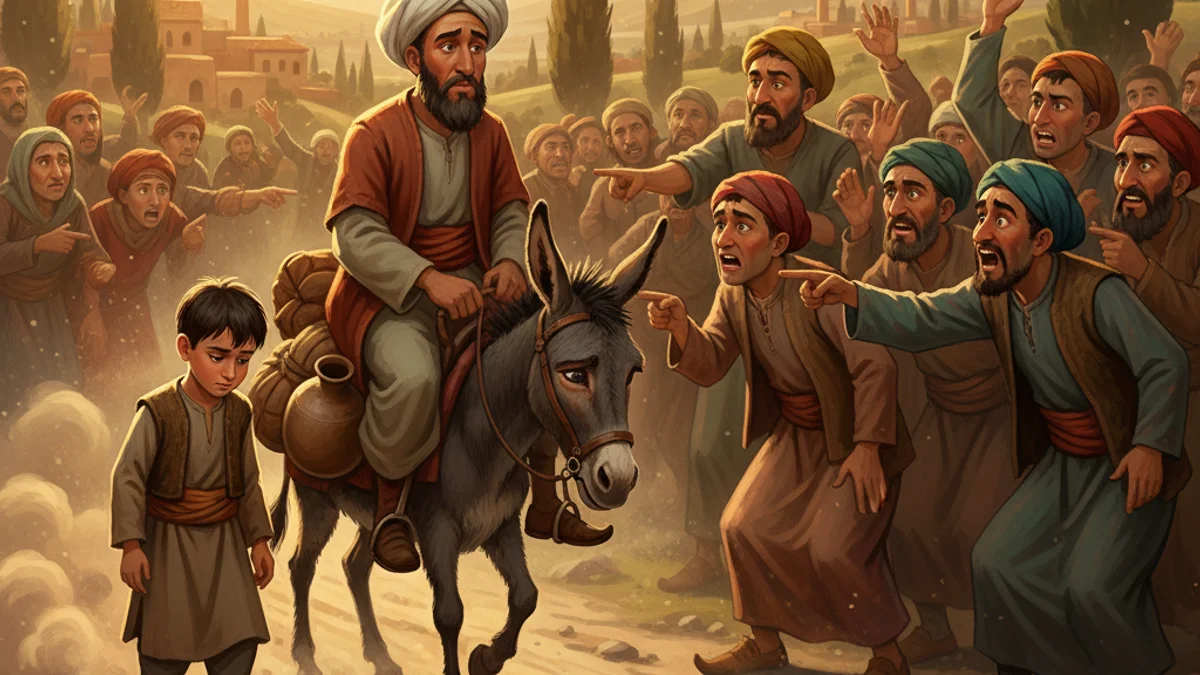
One day, Nasreddin Hodja and his young son set off for the market, leading their donkey. As they walked, a passerby mocked them: 'Look at those fools! Why walk when you have a donkey?' Hearing this, Hodja put his son on the donkey and continued on foot. Soon, they passed another group who whispered, 'What a disrespectful boy, riding while his elderly father walks!' They swapped places, but then people grumbled, 'What a cruel father, making his poor child walk!' Frustrated, they both climbed onto the donkey, only for onlookers to cry, 'Poor animal! That's too much weight for one beast.' Finally, they decided to walk side-by-side without riding at all, only for the crowd to laugh at them for being foolish. Hodja turned to his son and said, 'You see? No matter what you do, someone will find fault. It is better to follow your own path.'
The Moral
You cannot please everyone, so it is best to follow your own judgment and common sense rather than the opinions of others.
“No matter what you do, someone will always find a reason to complain.”
Fun Fact
UNESCO declared 1996–1997 the International Nasreddin Hodja Year to celebrate his contribution to world humor, wisdom, and literature.
Frequently Asked Questions
What is the moral of Nasreddin Hodja and the Donkey?
The moral is that it is impossible to satisfy everyone's opinions. If you try to please the world, you will only end up frustrated, so you should trust your own conscience instead.
Who was Nasreddin Hodja?
Nasreddin Hodja was a 13th-century philosopher, satirist, and wise man from Anatolia (modern-day Turkey). He is famous for his humorous anecdotes and tales that hide deep philosophical truths.
Is Nasreddin Hodja a real person?
Historians believe he was a real person who lived in Akşehir, Turkey, during the Seljuk period. However, many stories have been attributed to him over the centuries across the Islamic world.
What does the donkey represent in these stories?
In Turkish folklore, the donkey is often a symbol of the common man's struggles and patience. It serves as a comedic yet essential companion that helps highlight the absurdities of human nature.
Are there other versions of this story?
Yes, this specific fable is found in many cultures, including Aesop's Fables. In Nasreddin's version, the humor focuses on the social commentary and the absurdity of public criticism.
Why is Nasreddin Hodja important to Turkish culture?
He is a symbol of Turkish wit and common sense. His stories are used to teach children life lessons and are celebrated for their ability to criticize society through gentle humor and irony.
Discussion (0)
Share your thoughts on this story
No comments yet. Be the first to share your thoughts!