Story Summary
Explore the Zen story of The Muddy Road, where Tanzan teaches Ekido a profound lesson on letting go and the difference between physical acts and mental baggage.
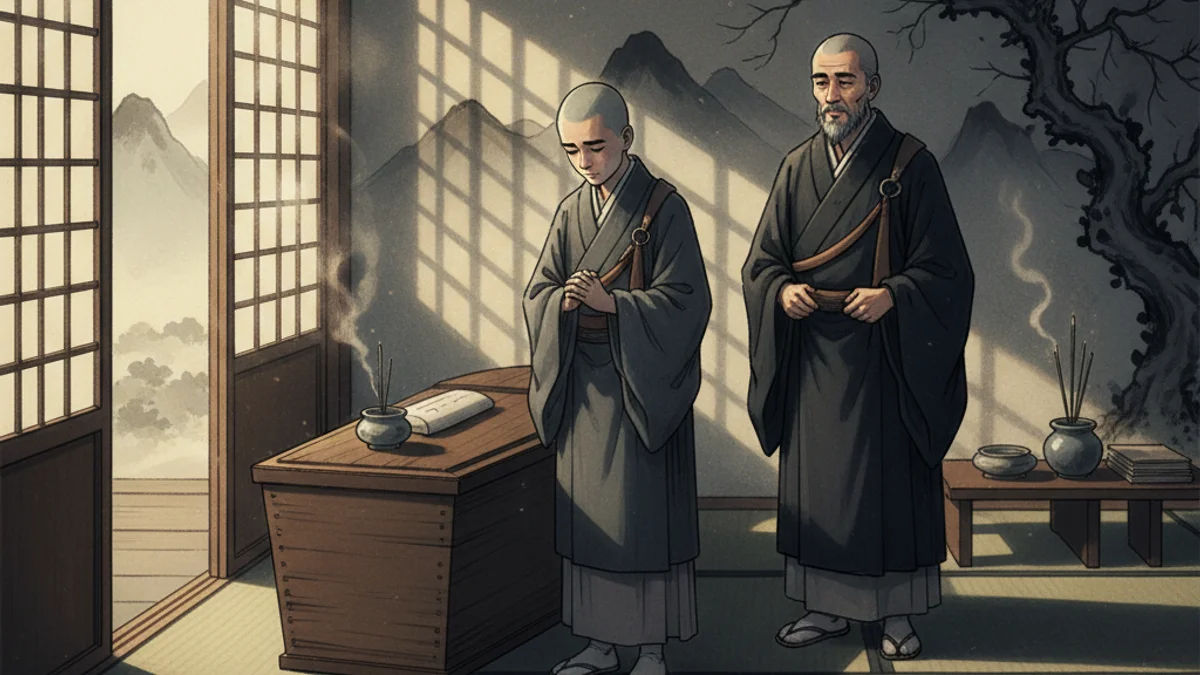
Tanzan and Ekido were once traveling together down a muddy road. A heavy rain was still falling. Coming around a bend, they met a lovely girl in a silk kimono and sash, unable to cross the intersection because of the deep mud. 'Come on, girl,' said Tanzan at once. Lifting her in his arms, he carried her over the mud and set her down on the other side. Ekido did not speak again until that night when they reached a lodging temple. Then he no longer could restrain himself. 'We monks don't go near women,' he told Tanzan, 'especially not young and lovely ones. It is dangerous. Why did you do that?' 'I left the girl there,' said Tanzan. 'Are you still carrying her?'
The Moral
True purity and detachment are found in the mind, not just in following external rules. Let go of past events to avoid carrying unnecessary mental burdens.
“I left the girl there. Are you still carrying her?”
Fun Fact
This story is a staple in the collection '101 Zen Stories,' first published in 1939, which compiled transcriptions of Zen anecdotes from the 13th to 19th centuries.
Frequently Asked Questions
What is the moral of The Muddy Road?
The moral is that holding onto rigid rules and judgments can create more mental 'weight' than the actions themselves. It teaches the importance of acting with compassion and then letting go of the moment completely.
Who are Tanzan and Ekido in the story?
Tanzan and Ekido are two monks traveling together. Tanzan represents a practitioner who understands the spirit of Zen, while Ekido represents one who is strictly bound by the letter of the law and external appearances.
Why did Tanzan carry the girl?
Tanzan saw a fellow human being in need and acted out of immediate compassion. He did not see her as a 'temptation' or a 'violation,' but simply as someone who needed help crossing the mud.
What does the mud symbolize in the story?
The mud symbolizes the physical obstacles of life. While Tanzan navigated the physical mud and left it behind, Ekido allowed the 'mental mud' of judgment and resentment to stick to his mind long after the event.
What is the meaning behind Tanzan's final reply?
Tanzan's reply highlights that while he physically touched the woman for a moment, he let her go immediately. Ekido, by obsessing over the rule-breaking, was the one who was truly 'carrying' her in his mind for the rest of the day.
How does this story relate to Zen philosophy?
It emphasizes the concept of 'non-attachment' and living in the present. Zen encourages practitioners to respond to the needs of the moment without being hindered by past prejudices or future anxieties.
Discussion (0)
Share your thoughts on this story
No comments yet. Be the first to share your thoughts!