Story Summary
Explore the timeless wisdom of Confucius and Filial Piety. Learn how the Great Sage defined the deep respect and duty children owe their parents in this tale.
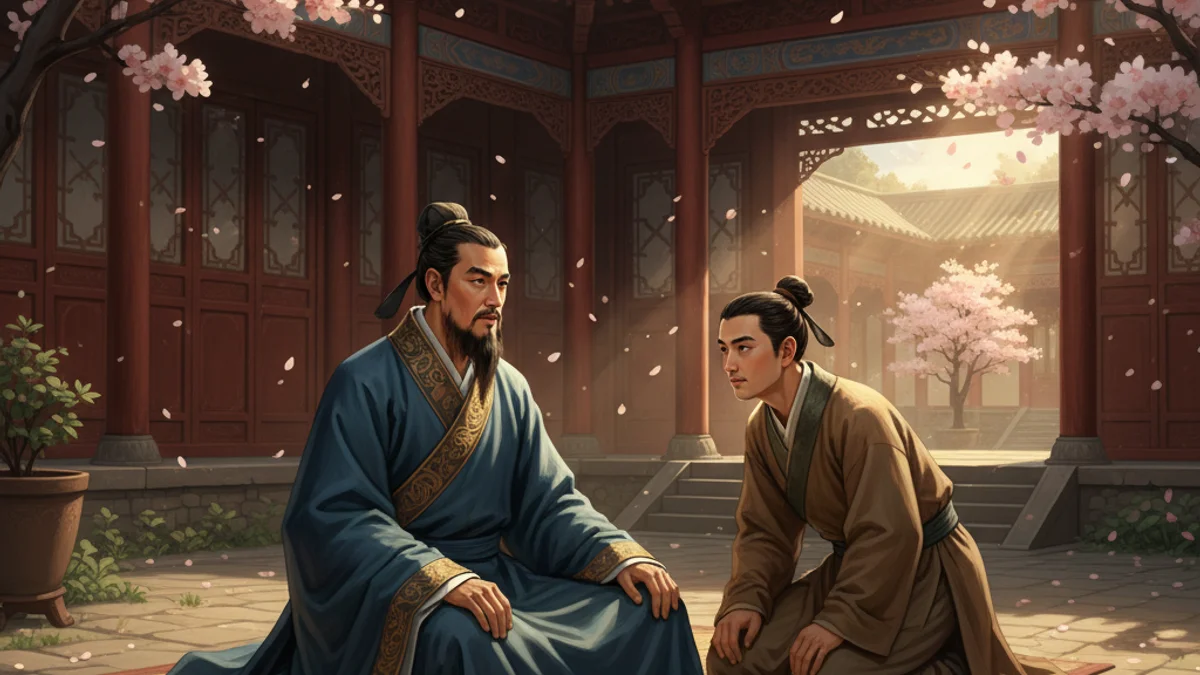
Master Confucius sat in the shade of an apricot tree, surrounded by his devoted disciples. Among them was Zengzi, who asked, 'Is there a single virtue that serves as the root of all goodness?' Confucius replied that Filial Piety, or Xiao, is that foundation. He explained that it is not merely enough to provide food and shelter for one's parents, as even animals are cared for in that way. True filial piety requires reverence—a deep, heartfelt respect that guides one's actions. He taught that by honoring those who gave us life, we learn the discipline and empathy necessary to serve the state and live a life of harmony. To Confucius, the family was the miniature version of the kingdom; if there is peace and respect in the home, there will be order in the world.
The Moral
True filial piety goes beyond providing physical care; it requires deep respect, love, and the cultivation of one's own character to honor one's parents.
“Filial piety is the root of all virtue and the stem out of which all moral teaching grows.”
Fun Fact
The 'Classic of Filial Piety' (Xiao Jing) is one of the shortest Confucian classics but became a fundamental textbook for traditional Chinese education for centuries.
Frequently Asked Questions
What is the moral of Confucius and Filial Piety?
The moral is that true respect for parents is the foundation of all virtue. It emphasizes that providing for parents must be accompanied by genuine reverence and love to be meaningful.
What does Filial Piety mean in Confucianism?
In Confucianism, Filial Piety (Xiao) refers to the virtue of respect for one's parents, elders, and ancestors. It is considered the most fundamental of all virtues and the basis for social order.
Why did Confucius distinguish between feeding parents and honoring them?
Confucius argued that even animals like dogs and horses are provided with food. He believed that without sincere respect and emotional devotion, human care for parents is no different from raising livestock.
Who was the disciple Zengzi in this story?
Zengzi was one of Confucius's most influential disciples. He is traditionally credited with the authorship of the 'Classic of Filial Piety,' which preserves the Master's teachings on the subject.
How does Filial Piety affect society according to Confucius?
Confucius believed that a person who respects their parents is unlikely to defy authority or cause social disorder. Therefore, a society built on strong family values naturally becomes stable and peaceful.
Is Filial Piety still relevant in modern times?
Yes, it remains a core value in many East Asian cultures. While modern expressions may differ, the underlying principle of gratitude and responsibility toward the older generation continues to influence social structures.